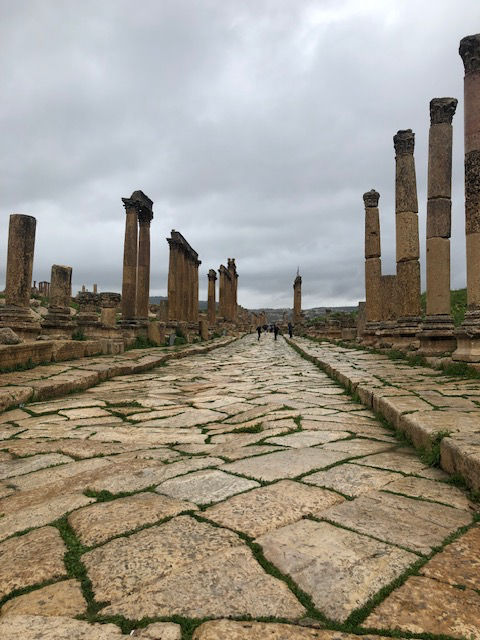
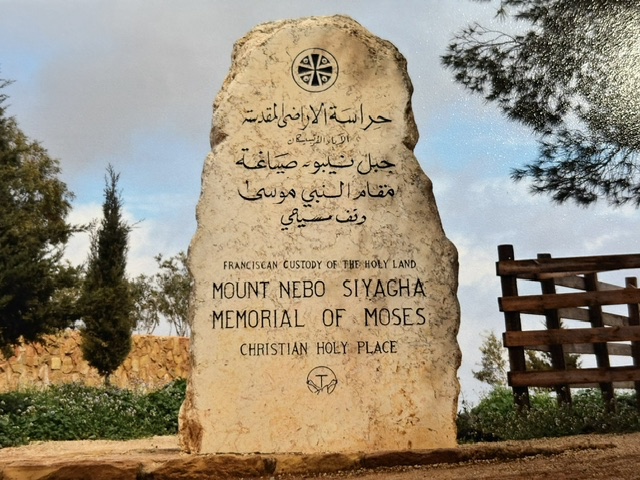
The Desert Landscape of Southern Jordan
Before visitors catch their first glimpse of Petra’s magnificent temples and tombs, they are introduced to one of the world’s most extraordinary landscapes. Near the modern town of Wadi Musa, towering sandstone cliffs, rugged mountains, and windswept desert stretch across southern Jordan, creating a setting that is every bit as remarkable as the ancient city itself.
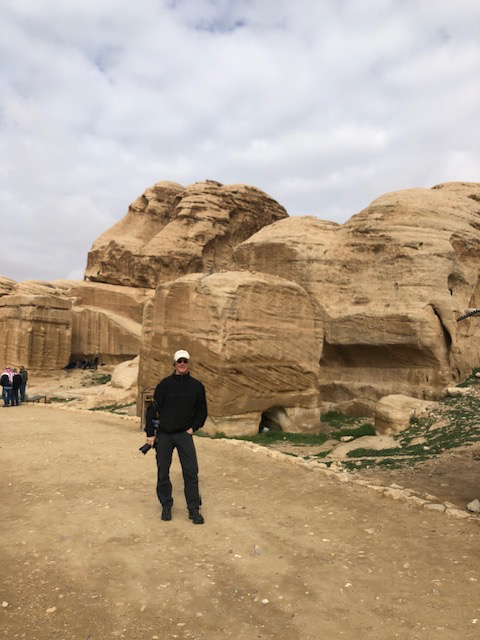
The landscape surrounding Petra was formed more than 500 million years ago as ancient seas, rivers, and deserts deposited layers of sandstone that were later uplifted and sculpted by wind and water. Over countless centuries, erosion carved deep canyons, towering cliffs, and narrow passages through the rock, producing the dramatic scenery that greets visitors today. The rich bands of red, pink, gold, orange, and tan are the result of minerals deposited within the sandstone over millions of years, giving the region its ever-changing palette of color.
This seemingly harsh environment was, in fact, the foundation of one of the ancient world’s greatest civilizations. The Nabataeans recognized the natural advantages of these cliffs and canyons, transforming them into a thriving city while developing sophisticated systems to capture and store rainwater. The landscape provided protection, resources, and the canvas upon which they carved their extraordinary architecture.
This landscape is an essential part of the Petra story. Before admiring the artistry of the Nabataeans, I found myself marveling at the natural world that made their achievements possible. It is a reminder that some of history’s greatest civilizations were built not despite their environment, but because they understood it, respected it, and learned to live in harmony with it.