The West Room at Buckman Tavern
Of all the rooms in Buckman Tavern, none captures the atmosphere of April 19, 1775, more vividly than the West Room. Today it is furnished much as it would have appeared in the eighteenth century, with a long wooden table surrounded by Windsor chairs, pewter mugs, candleholders, and writing materials. It is easy to imagine neighbors gathering here to share a meal and discuss local affairs.
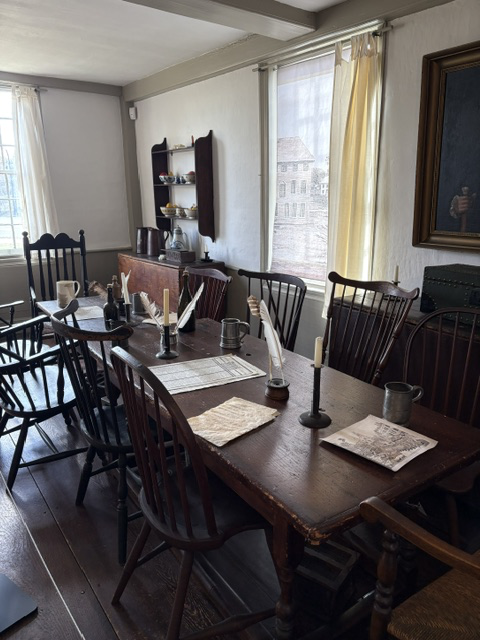
In the hours before the Battle of Lexington, however, this quiet room took on a very different role. During the night of April 18, Captain John Parker’s militia assembled on the Lexington Green after receiving word that British troops were marching from Boston. As they waited for further news, many of the men came into Buckman Tavern to warm themselves, rest, and prepare for what might lie ahead. They sat around tables like this one, checked their muskets and powder, spoke quietly with friends and neighbors, and waited for the next alarm.
It is remarkable to think that many of the men gathered here had known one another their entire lives. They were farmers, craftsmen, shopkeepers, and fathers. The conversations that took place in this room were likely filled with uncertainty. No one knew whether the British column would arrive, whether violence could still be avoided, or whether they would soon be called upon to defend their community.
Before the first shot was fired on Lexington Green, before the Revolution officially began, there was this room filled with ordinary men waiting together in the uncertain hours before dawn. Within minutes of leaving Buckman Tavern, they would cross the road, form ranks on the Green and become part of one of the most significant moments in American history.
Read More From Nancy
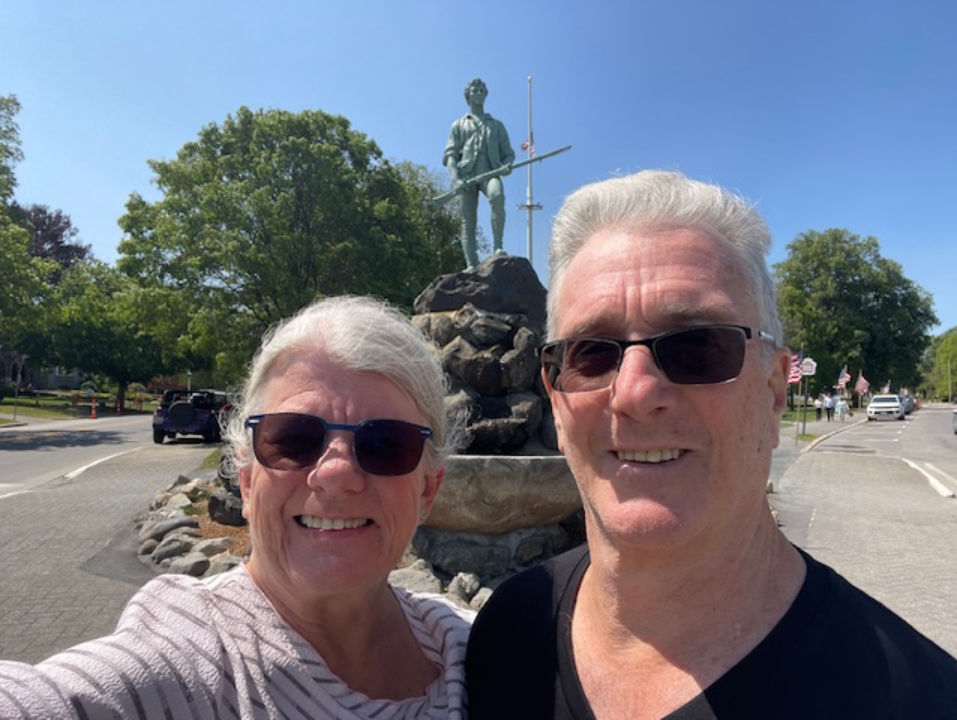
Minuteman Statue
Standing on the Lexington Battle Green, the Minuteman statue captures a single, defining moment in American history: The morning of April 19, 1775. This figure represents Captain John Parker, commander of the Lexington militia, not a professional soldier, but a farmer, husband, and father. Before dawn, he gathered 77 local militiamen on the town common […]
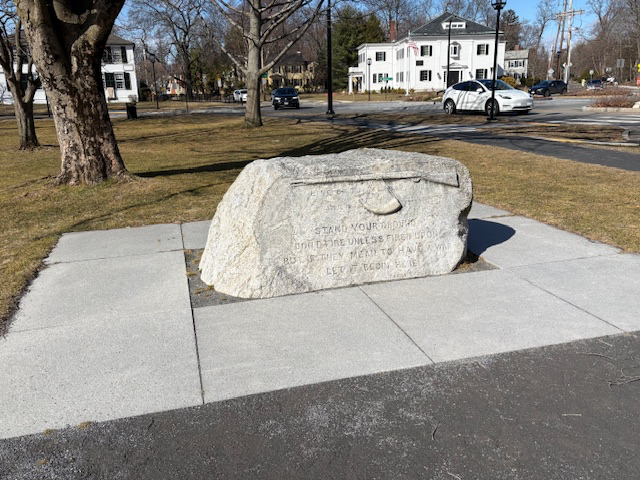
“Stand Your Ground” Monument
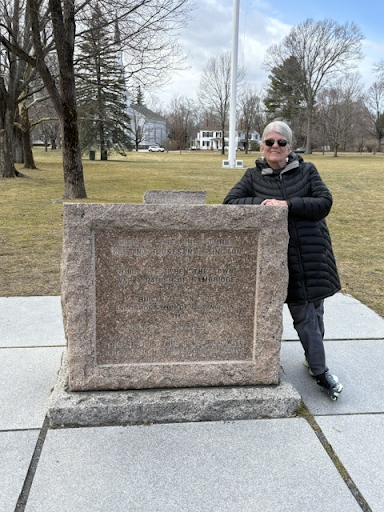
On the Green in Lexington, there is this stone monument, low to the ground, a rough granite boulder. Carved into ts surface are words that carry the weight of a nation’s beginning: “Stand your ground. Don’t fire unless fired upon. But if they mean to have a war, let it begin here.” These words are […]
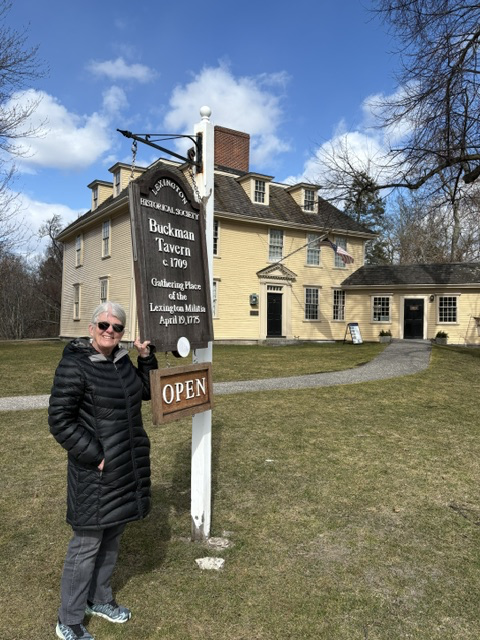
Buckman Tavern
There are some towns that have preserved their colonial roots remarkably well, and Lexington is certainly one of them. Marty and I took a ride over to the town this year simply to walk the familiar sites once again. Since Buckman Tavern was open, we took the opportunity to tour it and revisit one of the places […]

