Gas Rationing
July 1944Dearest Reader,
In 1944, gasoline rationing had become an accepted part of American life. Every driver carried a small ration book, and a lettered windshield sticker determined how much fuel they were permitted each week.
For most families, like my mother’s, the driver had an A-ration card, the most common classification in the country. It allowed only three gallons of gasoline per week, just enough for commuting to work, church and necessary errands.
Cars of the early 1940s were not fuel-efficient, often getting 10 to 15 miles per gallon so a few gallons a week disappeared quickly. In one of her letters, my mother captured the reality of that time:
“If we go too far, I guess it will have to stay here til after the war when there is plenty of gas.”
This sentence reflects the common reality that was felt by millions of Americans. Many families walked or relied on infrequent buses and leisure travel was not common. Rationing gave families a shared sense of sacrifice. My mother’s comment captures this time when Americans lived within wartime limits and waited for a future “when there is plenty of gas”.
Dr. Nancy Watson
Washington
Read More From Nancy
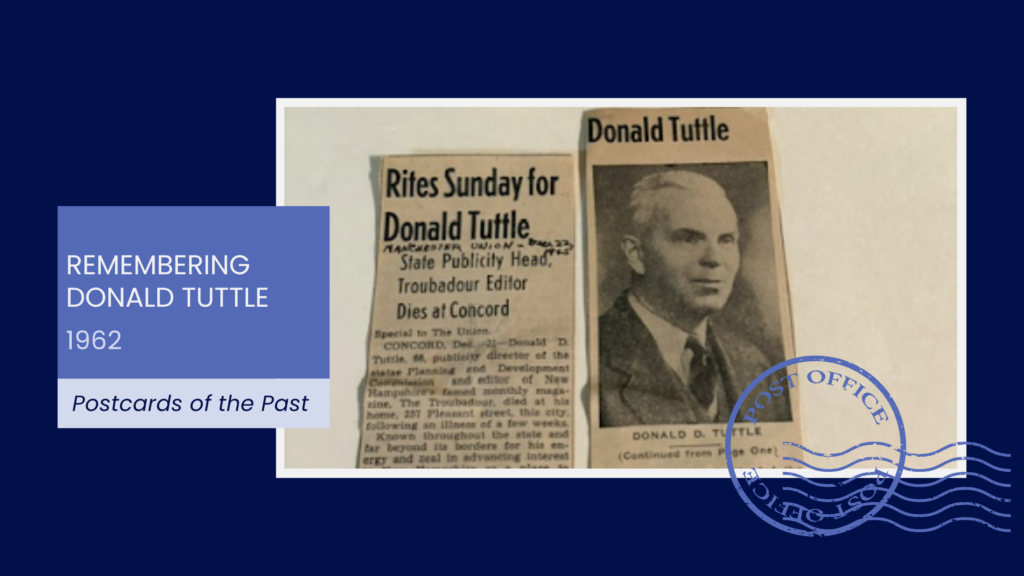
Remembering Donald Tuttle
As I continue sorting through the papers my parents left behind, I occasionally discover someone who was clearly important to them. Donald Tuttle is one of those people. My mother worked for the State of New Hampshire, and among her keepsakes I found not one, but several newspaper clippings announcing Donald Tuttle’s death in 1962. […]
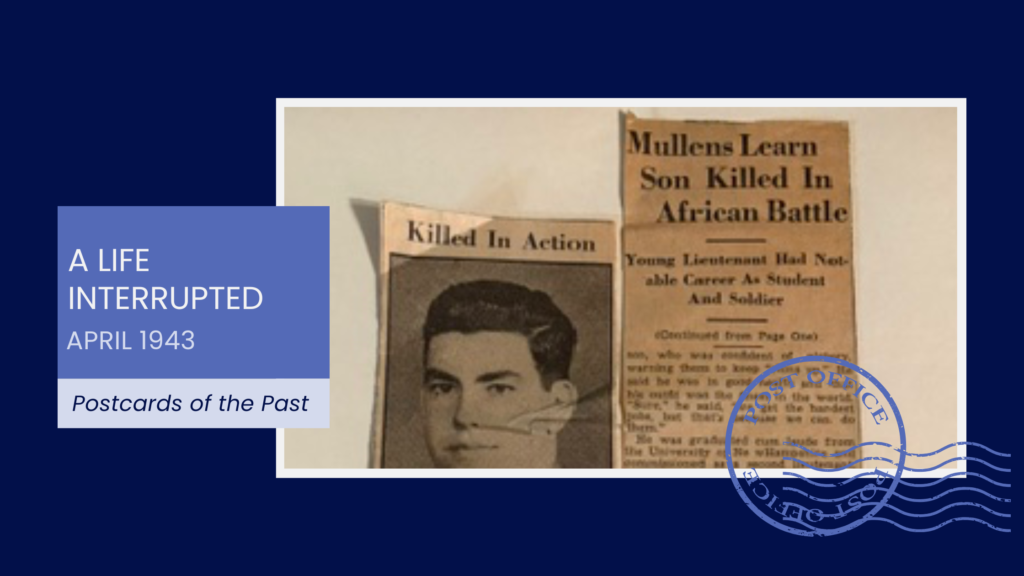
A Life Interrupted
Among the newspaper clippings my parents saved was the story of Lieutenant R. M. Mullen, a young New Hampshire officer who was killed in North Africa during the Second World War. Reading articles like this reminds me that every casualty reported in the newspaper represented far more than a military statistic. Behind each name was […]
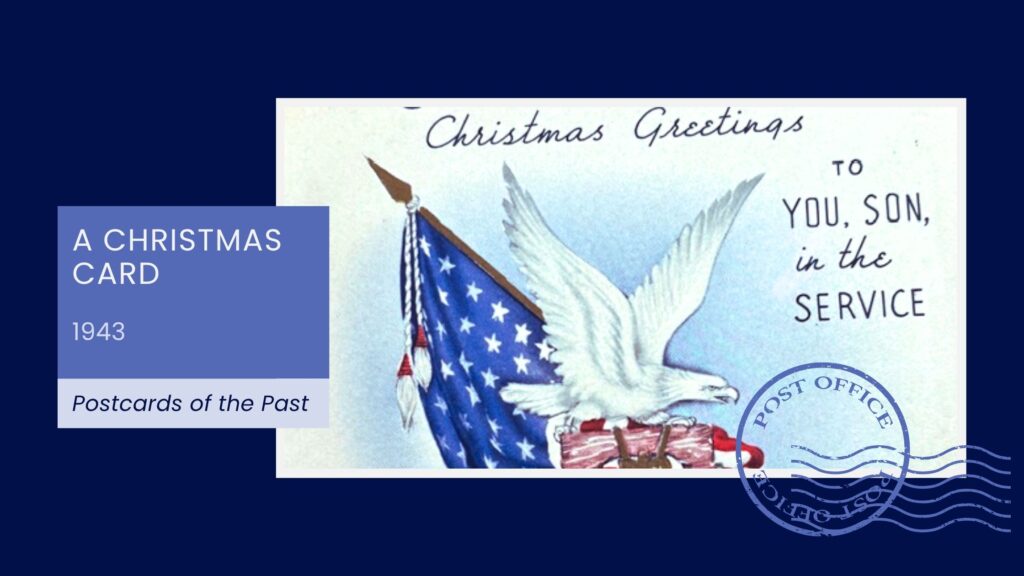
A Christmas Card
In a box of saved letters and photographs, I found a Christmas card my grandmother sent to my father in 1943. The front is not decorated with wreaths or candles. There is no snow, no manger scene, no holly. Instead, it bears an American flag, The Liberty Bell and a white eagle: symbols of a nation […]

