Basalt Cliffs of Pingvellir National Park
Standing before these towering basalt cliffs is Marty during one of our visits to Þingvellir National Park. At first glance, they appear to be nothing more than rugged rock walls sculpted by time. They are the exposed edges of the Earth’s crust, formed by powerful volcanic forces that continue to shape Iceland today.
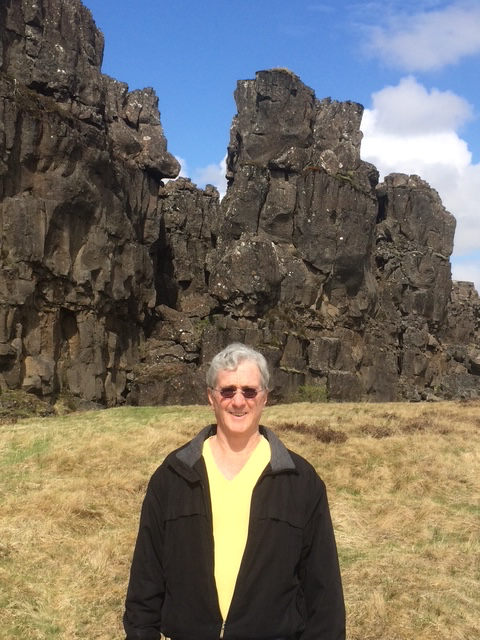
These cliffs are made of basalt, a dark volcanic rock created when molten lava cooled and hardened thousands of years ago. Over countless centuries repeated volcanic eruptions spread layer upon layer of lava across the landscape. As the North American and Eurasian tectonic plates slowly drifted apart, the land fractured, creating the towering walls, deep fissures, and dramatic valleys that define Þingvellir today.
One of the things that impressed me most was the texture of the rock itself. Rather than smooth cliffs, the basalt is broken into massive blocks and vertical columns, giving the impression that the earth had been split apart by an enormous force. Looking closely, you can see countless cracks and fractures that remind you this landscape is still changing. Iceland sits atop one of the most geologically active regions on Earth, and the movement that created these cliffs continues today, although only by a few centimeters each year.
Unlike many mountain ranges that were lifted upward by tectonic collisions, these cliffs were created as the land slowly pulled apart. They are part of a great rift valley that stretches across Iceland, providing a rare opportunity to witness geological processes that are usually hidden beneath the oceans.
Long before people walked this valley or history was recorded here, fire, lava, and the slow movement of the Earth’s crust were creating one of the most remarkable geological landscapes in the world. It is one of those places where you truly gain a sense of both the power of nature and the immense span of geological time.
Read More
Read More From Nancy
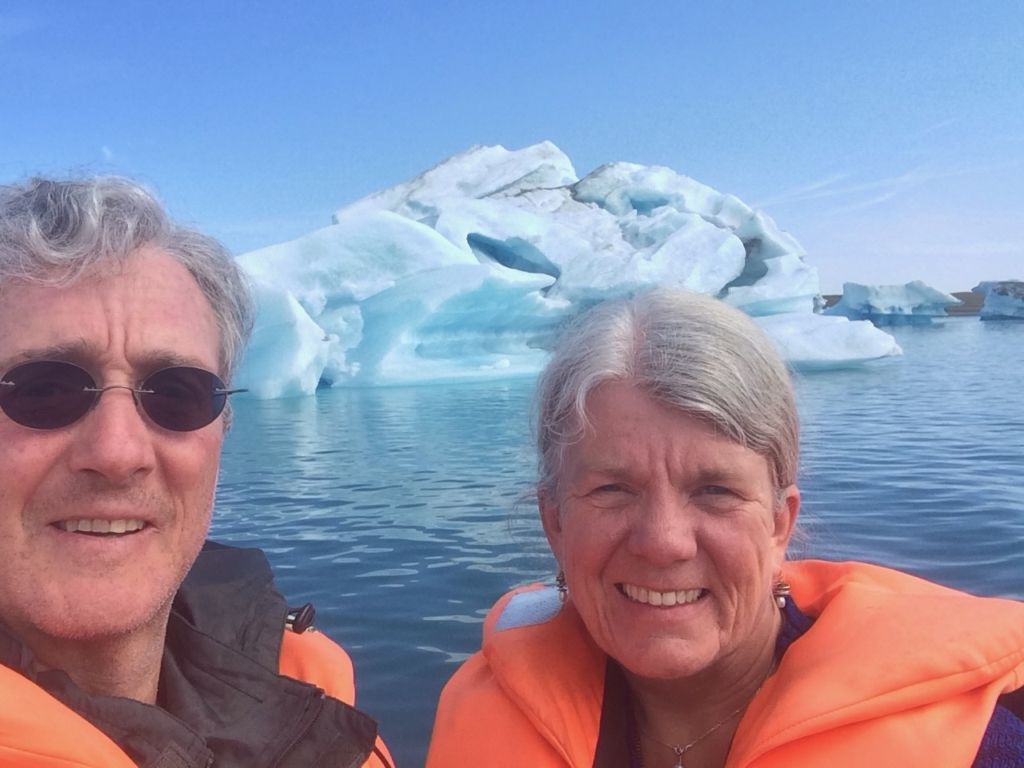
Jukulsarlon Glacier Lagoon
As we drove along Iceland’s Ring Road in the southeastern part of the country, we stopped at Jokulsarlon Glacier Lagoon, one of the well-known natural sites in Iceland. This lagoon is filled with floating icebergs that have broken off from an outlet glacier of Vatnajokull. Vatnajokull is the largest glacier in Europe by volume, and it […]
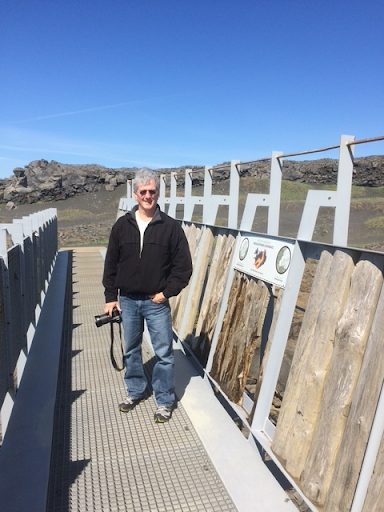
The Bridge Between Two Continents
When we visited the Reykjanes Peninsula in 2016, we found one of Iceland’s extraordinary places: The Bridge Between Two Continents This short metal walkway stretches across a narrow, rocky raving. The ravine marks a section of the Mid-Atlantic Ridge where the North American and Eurasian tectonic plates slowly pull apart. Iceland is the only country […]
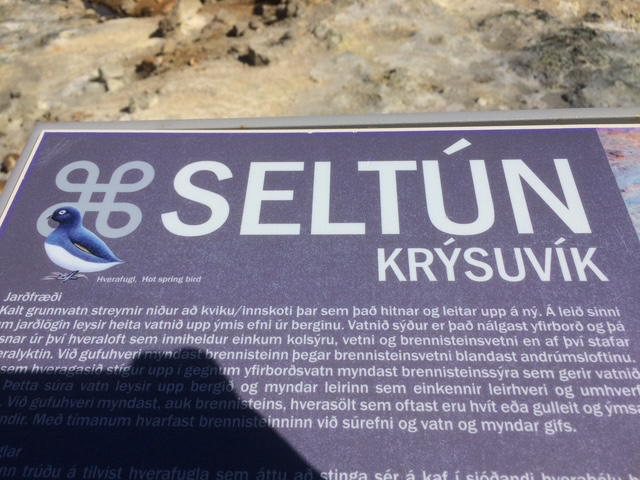
Seltún, Krýsuvík Geothermal Area
During our travels through Iceland, we stopped at Seltún, in the Krýsuvík geothermal area on the Reykjanes Peninsula. Even in a country filled with dramatic landscapes, this was an extraordinary place. The ground itself seemed alive. Seltún lies within an active geothermal region where heat from deep beneath the surface warms groundwater. As that water […]

