The Marrett House
One of the pleasures of traveling through New England is discovering homes that have quietly witnessed the passage of history for centuries. While driving through Standish, Maine, I visited the Marrett House, a place that tells the story not only of one family but also of the growth of an entire community.
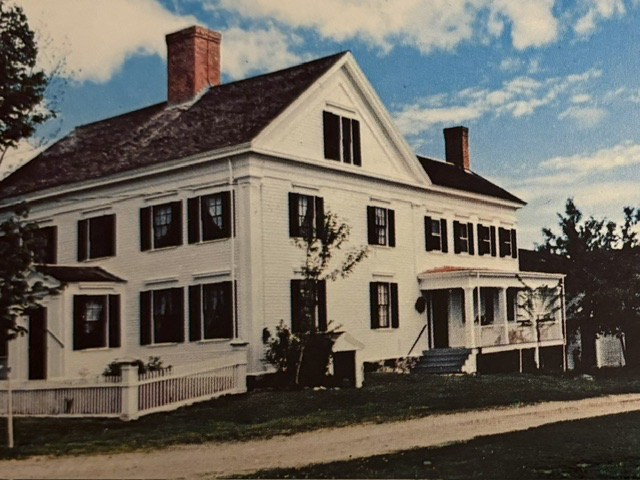
The house was originally built in 1789 for Daniel Barrett, at a time when this part of Maine was still part of Massachusetts. Like many early settlers, Barrett established a working farm, and his home reflected the practical needs of rural New England. In the decades that followed, the property passed to Reverend Daniel Marrett, whose family would occupy the house for nearly 150 years, gradually expanding and adapting it while preserving much of its original character.
What makes the Marrett House so fascinating is that it did not remain frozen in time. As architectural tastes changed, so did the house. Originally built in the balanced Georgian style popular in the late eighteenth century, it was remodeled around 1840 in the Greek Revival style, reflecting the influence of classical architecture that swept across America during the early nineteenth century. Rather than replacing the old home, each generation added its own chapter, allowing the house to evolve while maintaining its connection to the past.
The home also reflects the practical realities of life in northern New England. Like many Maine farmhouses, it was expanded over time into a connected farm complex, allowing family members to move between the house and working areas with greater ease during long winters. Every addition tells a story of changing needs, growing families, and the determination to build a home that would endure.
One room especially captured my attention—the study of Reverend Daniel Marrett. Serving as Standish’s minister for more than sixty years, he was far more than the town’s spiritual leader. From this room he prepared sermons, counseled parishioners, managed church affairs, and pursued his lifelong interest in horticulture. Marrett became well known throughout Maine for his work with apple cultivation and grafting, helping improve fruit varieties throughout the region. During the War of 1812, the house even served an unexpected role when gold from Portland’s banks was stored here for safekeeping, taking advantage of its inland location away from the threat of British naval attack.
Today, the Marrett House is preserved by Historic New England, the region’s oldest preservation organization. Since acquiring the property in 1944, Historic New England has carefully maintained not only the house itself but also its remarkable collection of original furnishings, family papers, gardens, and outbuildings. Their stewardship allows visitors to experience one of the finest preserved rural homes in Maine and to better understand the lives of the families who called it home for generations.

Read More From Nancy
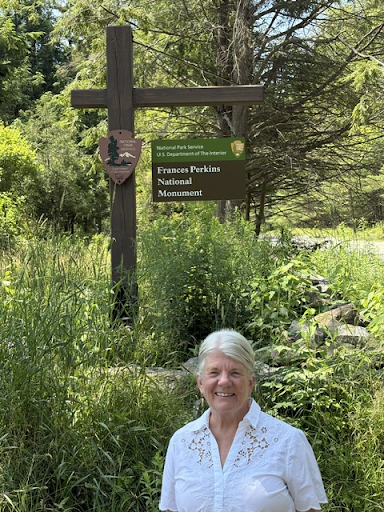
Frances Perkins National Monument
One of America’s newest additions to the National Park System is the Frances Perkins National Monument in Newcastle, Maine. Established in 2024, it preserves the homestead where Frances Perkins spent much of her life reflecting, writing, and welcoming visitors interested in public service. One of the reasons I appreciate the National Park System is that […]
The Hamilton House
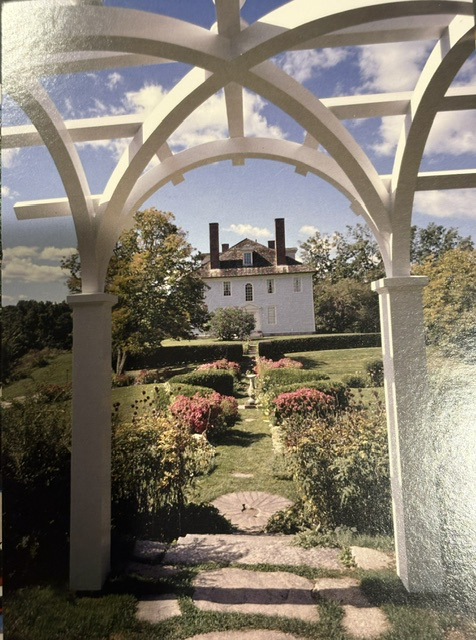
The Hamilton House in South Berwick, Maine is one of the most beautiful historic homes preserved by Historic New England. Overlooking the Salmon Falls River, this elegant Georgian mansion was built around 1785 by merchant and shipbuilder Jonathan Hamilton during a time when this region thrived through maritime trade and shipbuilding. Today, the house stands as both […]
Roosevelt Campobello International Park
I have visited Roosevelt Campobello International Park several times during my travels through the Maritime Provinces. I enjoy exploring presidential homes and historic sites, and this one is especially meaningful because it reveals a side of Franklin Delano Roosevelt that few presidential sites can capture. Rather than focusing on the years of power and leadership, Campobello tells the story of Roosevelt […]

