Chester A. Arthur Birthplace
As Marty and I traveled through Vermont, we made another stop in our quest to visit places connected with America’s presidents. This time, we found ourselves in the quiet town of Fairfield at the birthplace of Chester A. Arthur, the twenty-first President of the United States.
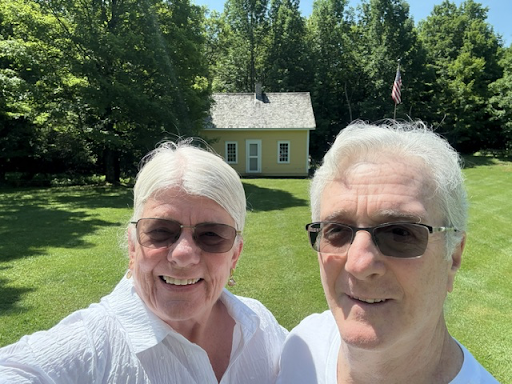
Unlike some presidential birthplaces that have become large museums or national historic sites, Arthur’s birthplace is marked by a simple replica of the parsonage where he was born on October 5, 1829. His father was a Baptist minister, and although the family moved away when Chester was less than a year old, Vermont has continued to honor its connection to one of the nation’s presidents.
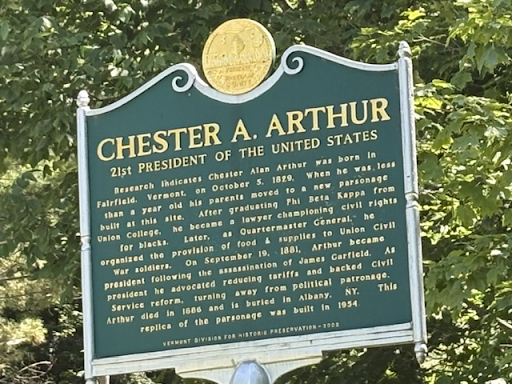
Arthur’s path to the presidency was anything but expected. Trained as a lawyer, he became active in New York politics and served as Quartermaster General of New York during the Civil War, overseeing the distribution of food, clothing, and supplies to Union troops. In 1880, he was elected vice president alongside James A. Garfield.
When President Garfield was assassinated in 1881, Arthur unexpectedly assumed the presidency. Many questioned whether a product of New York’s political machine could rise above partisan politics. Instead, he surprised both supporters and critics by championing civil service reform. He signed the Pendleton Civil Service Reform Act in 1883, helping shift the federal government away from the patronage system and toward hiring based on merit. That legislation remains one of the most important reforms in American government.
Standing in this peaceful Vermont setting, it was difficult to imagine that a child born here would one day shape the future of the federal civil service. Like many of the presidential birthplaces I have visited, this site reminds me that history often begins in the most ordinary places. A modest home in a small rural town became the starting point for a life that would eventually influence the course of the nation.
Every presidential birthplace tells a different story. Visiting these places has taught me that while the homes themselves may be simple, the lives that began there often left an extraordinary mark on American history.