Robert Frost Stone House
There are so many places in New England connected to Robert Frost. Both New Hampshire and Vermont claim him through the homes where he lived and wrote. During a camping trip to the Berkshires, we crossed into Vermont to visit the Robert Frost Stone House Museum in Shaftsbury, one of the places most closely associated with the poet’s life and work.
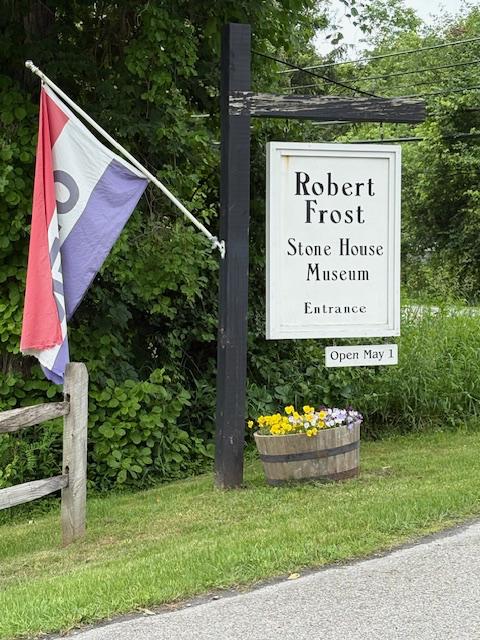
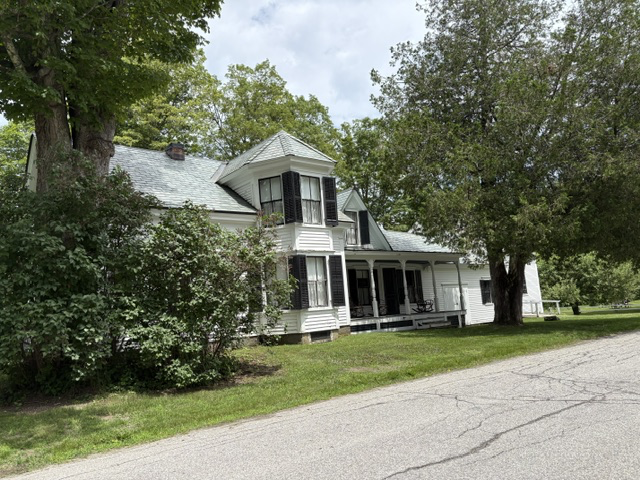
Built around 1769, the old farmhouse became home to Robert Frost, his wife Elinor, and their family from 1920 to 1929. Although Frost had already published several books, these years proved to be among the most productive of his life. Surrounded by the fields, woods, and stone walls of rural Vermont, he wrote many of the poems that would bring him national recognition and establish him as one of America’s greatest poets.
One of the most interesting stories associated with the house concerns Stopping by Woods on a Snowy Evening, perhaps Frost’s best-known poem. In 1922, after spending the entire night working on a long poem, Frost stepped outside at dawn and was inspired by the beauty of the winter landscape surrounding the farm. Returning to his desk, he composed Stopping by Woods on a Snowy Evening in just a few minutes, later describing it as if the poem had arrived “with scarcely a strain.”
The Stone House itself reflects the simplicity that Frost valued. Although he would eventually become the only person to receive four Pulitzer Prizes for Poetry and later read at the inauguration of President John F. Kennedy, Frost preferred the life of a farmer and writer, finding inspiration in the ordinary experiences and landscapes of New England.
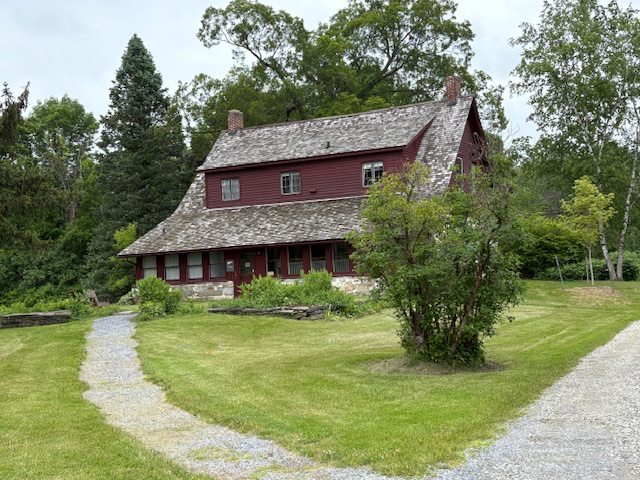
Walking around the grounds, it was easy to understand why Frost loved this place. The quiet fields and rolling hills seem little changed from the years when he lived and wrote here. More than a century later, the Stone House remains a reminder that some of America’s greatest literature was born not in cities or universities, but in the peaceful countryside of New England.