Theobald Mathew Monument
History often reveals itself in unexpected ways. Walking through Salem, I noticed only the base of this monument. The inscription immediately caught my attention: “Erected by the followers of the Very Reverend Theobald Mathew, Apostle of Temperance.“
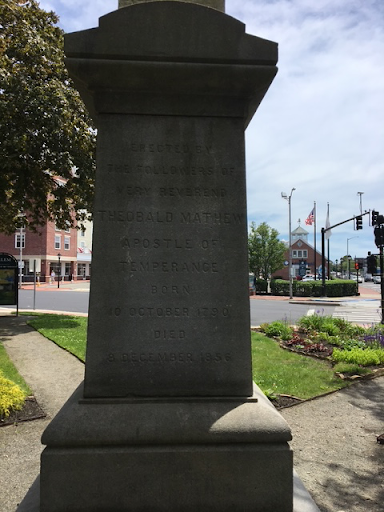
Until that moment, I knew very little about Father Theobald Mathew or why the people of Salem believed he deserved such a prominent memorial.
Father Mathew was an Irish Capuchin priest born in 1790 who became known throughout Ireland and beyond as the “Apostle of Temperance.” At a time when alcohol addiction was devastating many families, particularly among the poor, he encouraged people to take a simple pledge to abstain from alcohol. Millions accepted that pledge, believing it offered hope for healthier homes and stronger communities.
During the nineteenth century, Salem became home to a growing Irish immigrant community, many of whom had arrived in the years following the Great Famine. Father Mathew toured the United States between 1849 and 1851, speaking to large gatherings of Irish immigrants and encouraging them to embrace temperance as they built new lives in America. Although he did not establish the monument himself, his message deeply resonated with Salem’s Irish community. In 1887, they erected this memorial as a tribute to a man they believed had strengthened their families and their future.
During the nineteenth century, Salem became home to a growing Irish immigrant community, many of whom had arrived in the years following the Great Famine. Father Mathew toured the United States between 1849 and 1851, speaking to large gatherings of Irish immigrants and encouraging them to embrace temperance as they built new lives in America. Although he did not establish the monument himself, his message deeply resonated with Salem’s Irish community. In 1887, they erected this memorial as a tribute to a man they believed had strengthened their families and their future.
The monument was erected not by government officials or wealthy benefactors, but by “the followers” of Father Mathew. many of them Irish immigrants who had made Salem their home. They wanted future generations to remember someone whose message had brought hope and stability during a difficult period in their lives.
Sometimes all it takes is stopping to read the inscription on the base of a monument to uncover a story that has quietly waited more than a century to be told.
Read More From Nancy
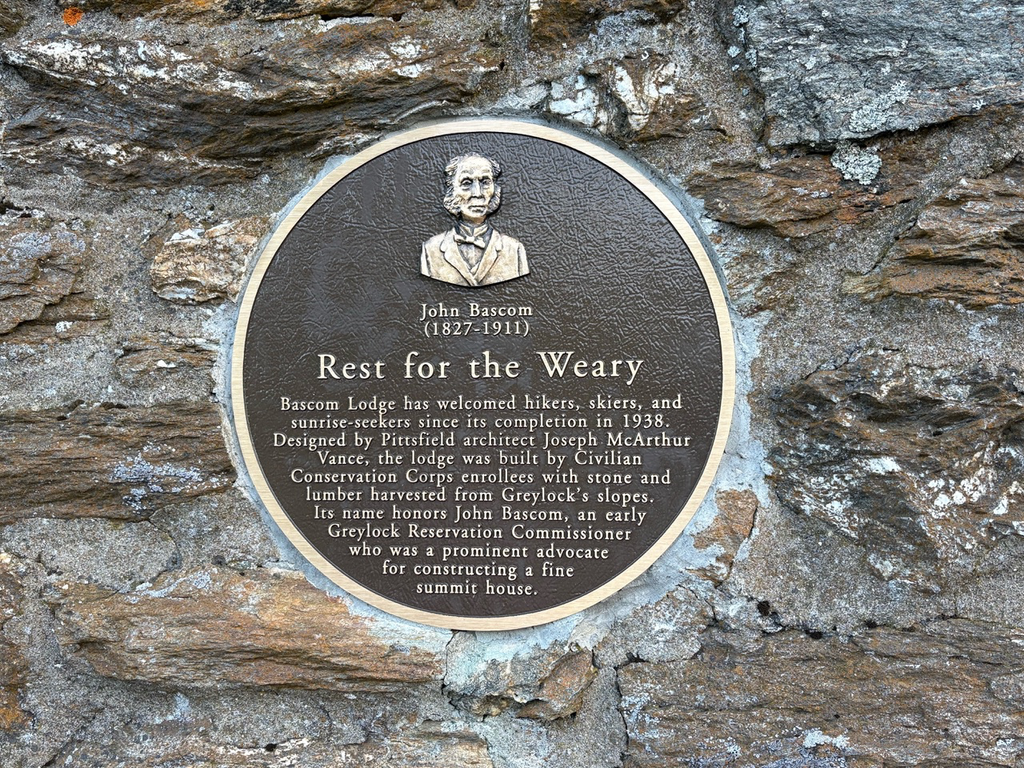
John Bascom Plaque
While exploring Mount Greylock, we stopped at Bascom Lodge, the rustic stone lodge near the summit that has welcomed hikers and travelers since 1938. Sitting directly along the Appalachian Trail, it remains an important stopping place for hikers making their way across Massachusetts, as well as for those of us simply exploring the mountain. While […]
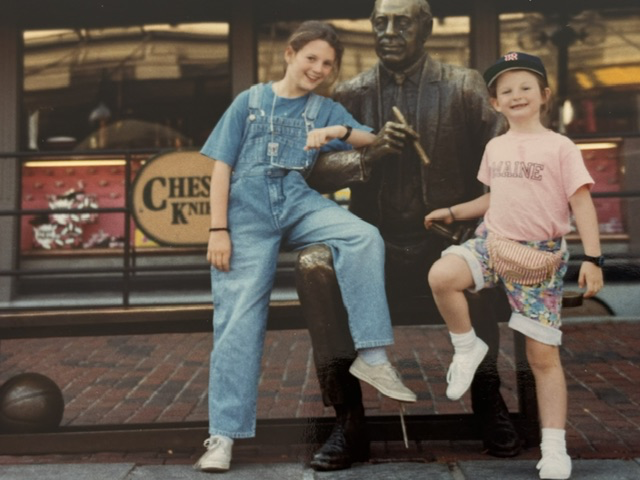
Red Auerbach
This bronze statue honors Arnold “Red” Auerbach, the coach and executive who helped establish the Boston Celtics as one of the most successful franchises in professional sports. Auerbach coached the Celtics from 1950 through 1966, leading the team to nine NBA championships, including an unprecedented eight consecutive titles from 1959 through 1966. Auerbach’s influence extended […]
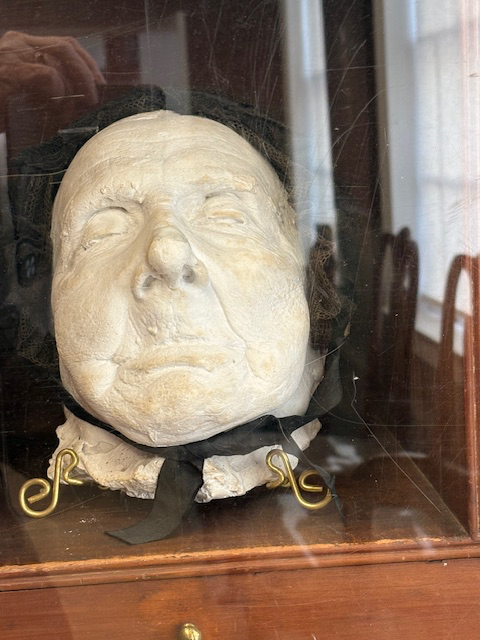
Death Mask
In the Dedham History Museum, is this death mask. An intimate impression of a person’s face taken shortly after death. The practice of creating death masks has a long history. In ancient Egypt, masks were place with the dead, though they were often idealized. In ancient Rome, families preserved wax masks of ancestors as a way to honor lineage […]

