Remembering Lieutenant Chester Ambrose
World War IIDearest Reader,
As I continue sorting through the papers my parents saved, I occasionally come across newspaper clippings that offer a glimpse into the community where my father grew up. This article tells the story of Lieutenant Chester Ambrose, a teacher and athletic coach at Martinsburg High School who served with the 80th Infantry Division under General George S. Patton’s Third Army during World War II.
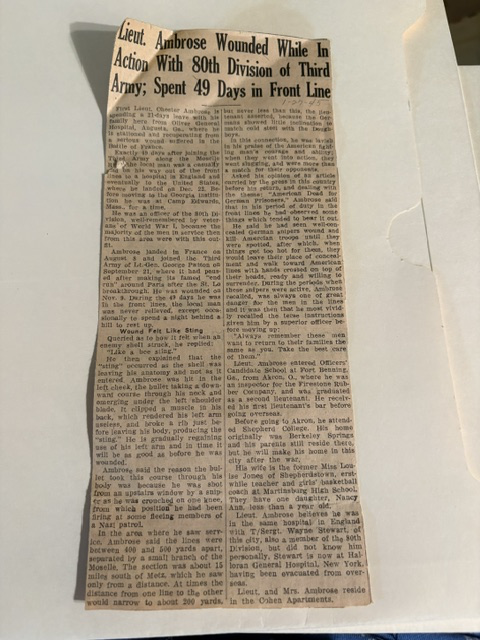
The article describes Lieutenant Ambrose spending forty-nine days on the front lines before being wounded during combat in Europe. It recounts his courage under fire, his recovery, and his return from the battlefield. Like so many hometown newspapers during the war, this story followed one of Martinsburg own as he served overseas.
I don’t know whether my parents knew Lieutenant Ambrose personally, but I suspect they did or at least knew of him. My father also grew up in Martinsburg, and in a community of that size, a local teacher, coach, and Army officer would have been well known. During World War II, the accomplishments and sacrifices of local servicemen were a source of pride for the entire community.
As I continue uncovering pieces of my family’s history, I realize these clippings tell more than individual stories. They reveal what mattered to my parents and to the town they called home. Before the internet or television news, local newspapers connected communities to their sons and daughters serving around the world. Families clipped these articles, shared them with neighbors, and tucked them away in drawers, preserving stories that might otherwise have been forgotten.
Although Lieutenant Ambrose was not a member of my family, his story became part of the history my parents chose to preserve. Reading it today reminds me that the sacrifices of the “Greatest Generation” were shared not only by individual families but by entire communities like Martinsburg, where everyone followed the journeys of those who had left home to serve
Dr. Nancy Watson
Washington
Read More From Nancy
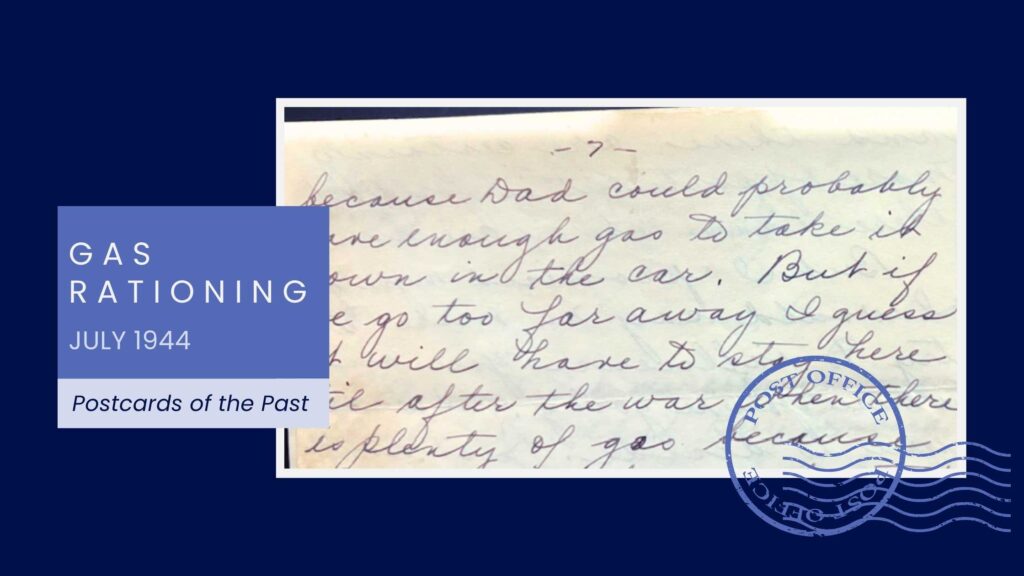
Gas Rationing
In 1944, gasoline rationing had become an accepted part of American life. Every driver carried a small ration book, and a lettered windshield sticker determined how much fuel they were permitted each week. For most families, like my mother’s, the driver had an A-ration card, the most common classification in the country. It allowed only […]
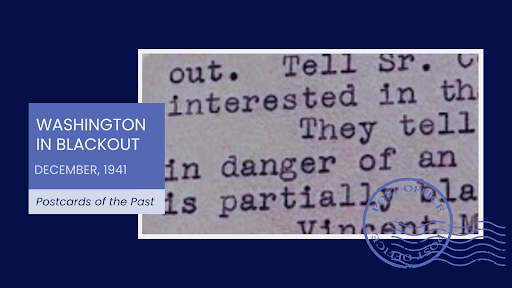
Washington in Blackout
In the December 13, 1941, letter, my grandmother described another unsettling reality of those first days after Pearl Harbor, the fear that the war might reach the American mainland. Information was fragmentary, rumors circulated freely, and no one yet knew what form the conflict would take. She wrote simply and without drama: “They tell us […]
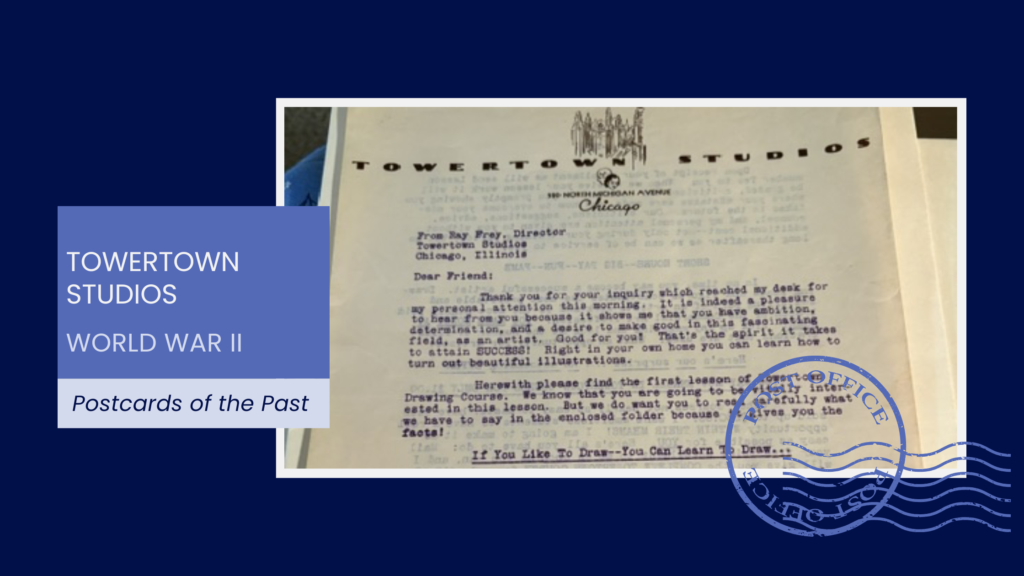
Towertown Studios
Among my father’s papers is this letter from Towertown Studios in Chicago promoting a correspondence course in drawing. By itself, it might seem like nothing more than an old piece of advertising mail. But knowing when my father received it gives it a much more personal meaning. This was part of the mail arriving while […]

