Victorian Drinking Fountain
I enjoyed exploring Saint-Hyacinthe with Erin after teaching in Québec. One of the things we always seem to notice in older towns is their historic drinking fountains. Many are no longer in use, but they tell the story of a time when access to clean drinking water was considered an important public service and a vital part of protecting public health.
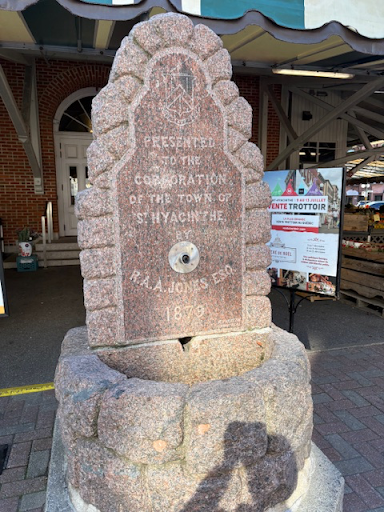
This beautiful granite fountain was presented to the Town of Saint-Hyacinthe in 1879 by R. A. Johnson, a local benefactor whose gift reflected the civic pride of the era. During the late nineteenth century, communities across North America were installing public drinking fountains as safe municipal water supplies became more common. Before indoor plumbing was widespread, these fountains provided clean drinking water for residents, travelers, shoppers, and workers passing through the town. They were both practical necessities and symbols of a community’s commitment to the health and well-being of its citizens.
Looking closely at the fountain today, the original drinking spout is still visible, although water no longer flows from it. It is easy to imagine the countless people who would have paused here over the years while visiting the nearby market or conducting business in the town. What was once an ordinary part of daily life has now become a tangible reminder of another era.
I enjoy finding monuments like this because they celebrate everyday history rather than extraordinary events. Unlike statues honoring famous people or memorials commemorating great battles, this fountain tells the story of ordinary citizens and the simple act of providing clean water to a community. It reminds us that history is often found in the small details of daily life—those quiet improvements that made towns healthier, stronger, and better places to live.
Today the fountain stands as more than a historic artifact. It represents a time when communities invested in public health through thoughtful civic improvements, leaving behind a legacy that we can still appreciate nearly a century and a half later.

Read More From Nancy

Cathedral in Saint Hyacinthe
While teaching outside Montreal, we visited the town of Saint-Hyacinthe. I love exploring small towns, and I was not disappointed as we drove into the tree-lined streets, modest homes and then the skyline changed with the cathedral. The Cathedrale de Saint-Hyacinthe dominates its neighborhood. A cathedral of this scale and design speaks to the depth of […]
Chateau Frontenac
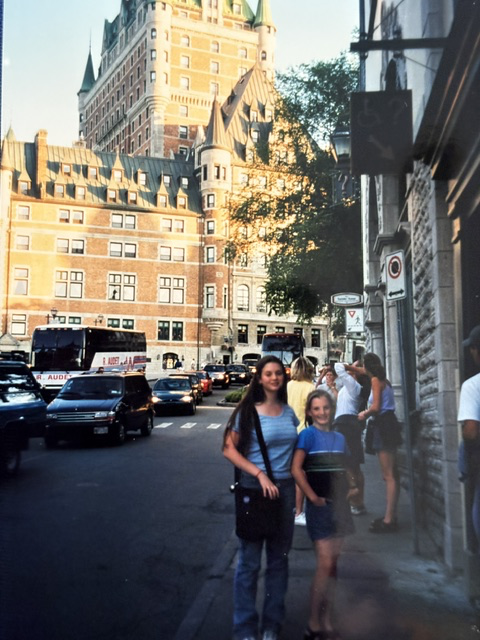
This photograph of Emmy and Erin was taken during one of our family trips to Québec City. Rising behind them is the iconic Château Frontenac, a hotel that has become the symbol of the city itself. During our visit, we took a tour of the hotel and discovered that its story is every bit as […]

