506 West John Street
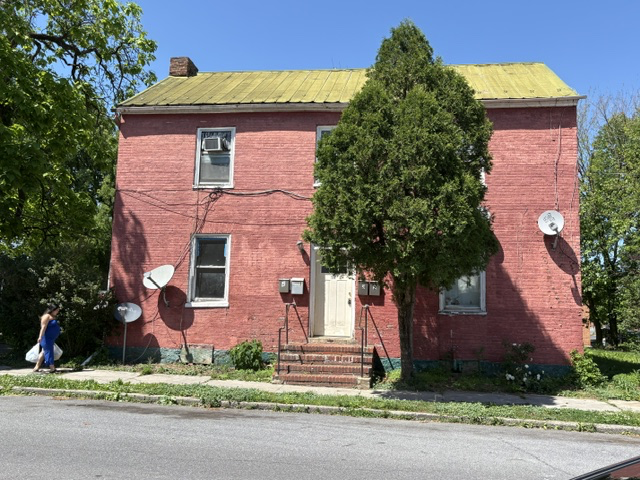
This address appears on so many envelopes preserved in my parents’ papers that I felt compelled to include it in my exploration of Martinsburg. During my visit, I made a point of finding 506 West John Street and taking a photograph of the house. From the outside, I saw no obvious connection to my father, which leaves me only to speculate about why so much of his mail was sent here.
Most of the correspondence dates from the years when my father was finishing high school. The envelopes contain information from mail-order schools offering courses in cartooning, decorative painting, and other subjects. Perhaps these represented his own interests and dreams, or perhaps they reflected expectations his parents had for his future. One possibility that crossed my mind was that he may have preferred to have these materials sent to another address rather than his own home. I simply do not know.
What I do know is that this address appeared again and again among the papers my parents carefully saved. Because of that, 506 West John Street became more than just another house on a street. It became one of those small mysteries that emerge during family research, a place connected to my father’s young adulthood, ambitions, and unanswered questions. Although I may never know exactly why this address was important to him, its repeated appearance in the family papers made it worthy of a stop during my journey through Martinsburg.
Sometimes the significance of a place lies not in what we know with certainty, but in the stories that remain unfinished.
This address appears on so many envelopes preserved in my parents’ papers that I felt compelled to include it in my exploration of Martinsburg. During my visit, I made a point of finding 506 West John Street and taking a photograph of the house. From the outside, I saw no obvious connection to my father, which leaves me only to speculate about why so much of his mail was sent here.
Most of the correspondence dates from the years when my father was finishing high school. The envelopes contain information from mail-order schools offering courses in cartooning, decorative painting, and other subjects. Perhaps these represented his own interests and dreams, or perhaps they reflected expectations his parents had for his future. One possibility that crossed my mind was that he may have preferred to have these materials sent to another address rather than his own home. I simply do not know.
What I do know is that this address appeared again and again among the papers my parents carefully saved. Because of that, 506 West John Street became more than just another house on a street. It became one of those small mysteries that emerge during family research, a place connected to my father’s young adulthood, ambitions, and unanswered questions. Although I may never know exactly why this address was important to him, its repeated appearance in the family papers made it worthy of a stop during my journey through Martinsburg.
Sometimes the significance of a place lies not in what we know with certainty, but in the stories that remain unfinished.
Read More From Nancy
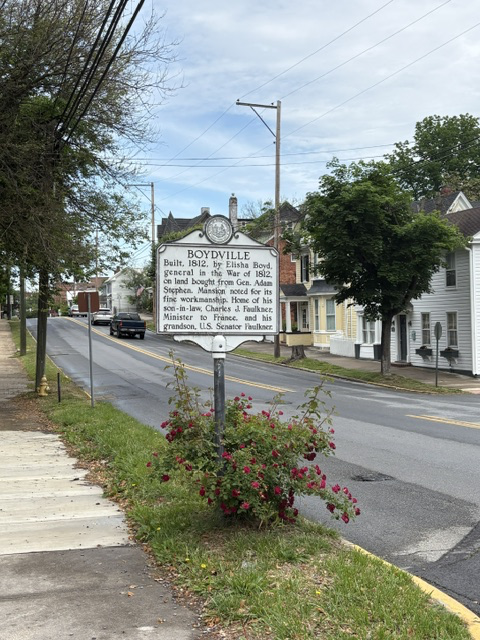
Boydville
One of the most impressive landmarks in Martinsburg I encountered was Boydville, a grand white mansion whose towering columns and sweeping lawn caught my attention. Standing before it, I could easily imagine generations of Martinsburg residents passing this home and recognizing it as one of the city’s distinguished addresses. Boydville was built in 1812 by General Elisha Boyd, a […]
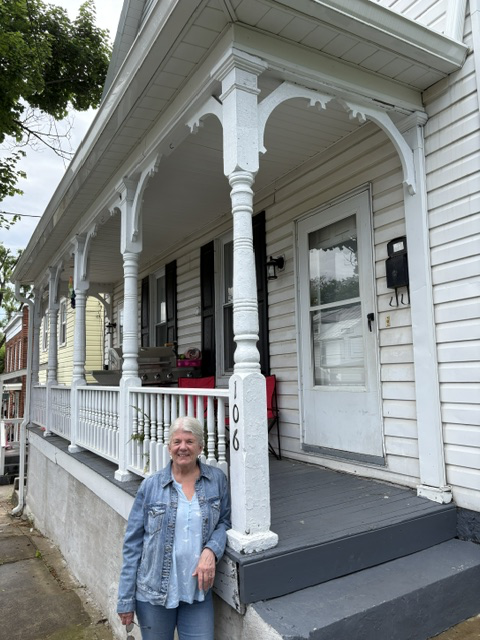
106 South St.
This house at 106 South Street in Martinsburg, West Virginia, was the first place I wanted to visit. 106 South was the address of so many of the letters I have read between my father and his mother. Long before I ever visited the town. This address was familiar. This represented my father’s beginnings and the home […]
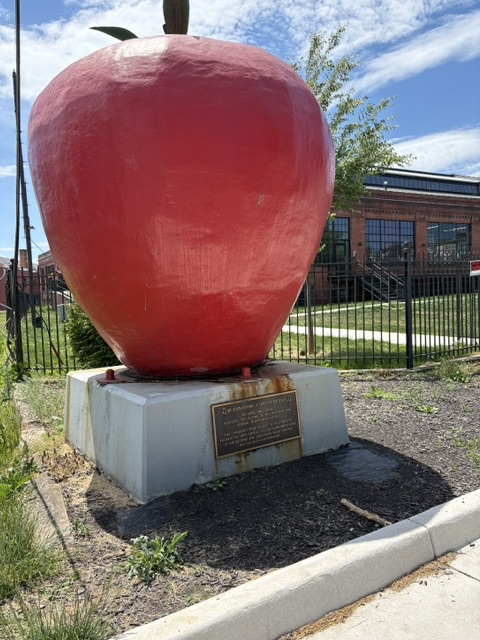
Big Apple Time Capsule
One of the more unusual landmarks I discovered during my visit to Martinsburg was the Big Apple Time Capsule. The giant red apple dedicated on October 19, 1990, was sponsored by the Martinsburg Jaycees. I knew this landmark had not been there when my father was growing up in Martinsburg, but I could not resist stopping for […]

