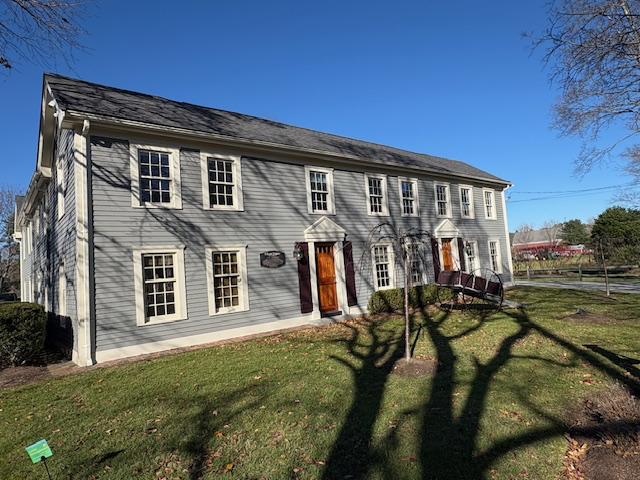
The Harwood Baseball Factory
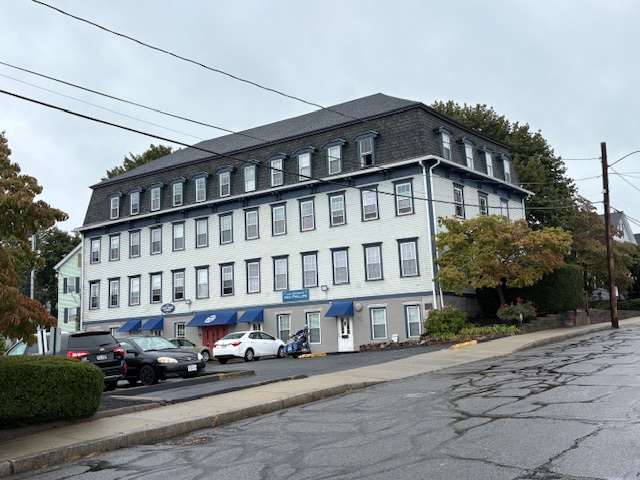
In 1858, Harrison Harwood, a Natick resident and local businessman, built what would become one of the most historically significant small factories in American sports: The Harwood Baseball Factory. This factory was more than a local industry, but the birthplace of professional baseball.
Harwood’s factory was the first in the US devoted entirely to the manufacture of baseballs. Until this time, balls were handmade by players, cobblers or small workshops, each one slightly different in size, weight and bounce. Harwood saw the growing popularity of the game and recognized the need for a standardized, reliable ball for professional play.
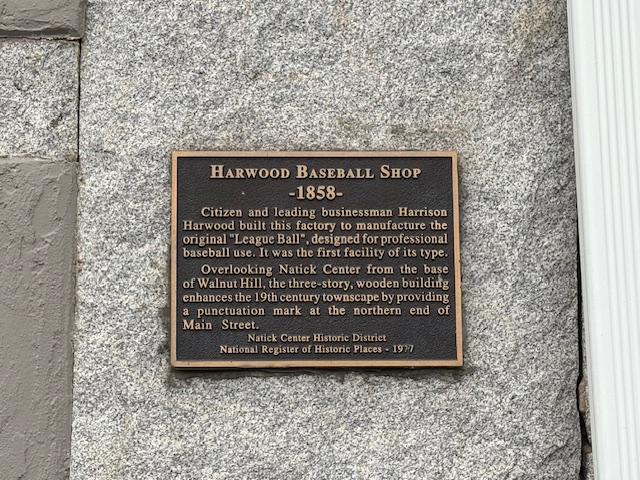
His factory produced what became known as the “League Ball”, the first baseball designed and manufactured for consistent use in organized competition. These balls were meticulously hand-stitched and wound according to precise specifications. This was a revolutionary step that helped transform baseball from a local pastime into a structured national sport.
The Harwood Baseball Factory gave the young game of baseball both uniformity and legitimacy.
The company continued to manufacture baseballs well into the early 20th century. For more than sixty years, its balls were used for amateur clubs, professional leagues and school teams across the country. By the 1920s, as large sporting goods manufacturers expanded nationally, Harwood’s small family business could no longer compete, and operations came to an end.
Read More From Nancy
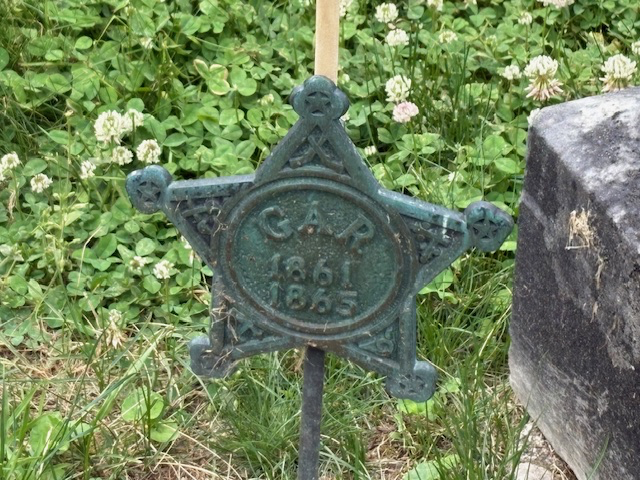
Glenwood Cemetery
Walking through the Glenwood Cemetery in Natick, there are many of these medallions and flags on the graves of veterans. All of these medallions are a bit different, but I had to look up what GAR stood for. It turns out GAR means the Grand Army of the Republic. This was a national fraternal organization […]
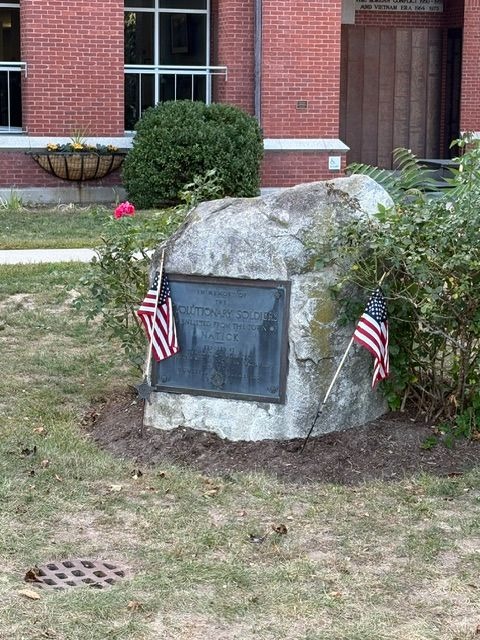
Revolutionary War Memorial
Though I have walked past this monument outside the Morse Institute Library more times than I can remember, I had never stopped to document it. The boulder and its bronze plaque had become part of the familiar surroundings. Taking this photograph gave me a reason to pause and learn how the memorial came to stand […]
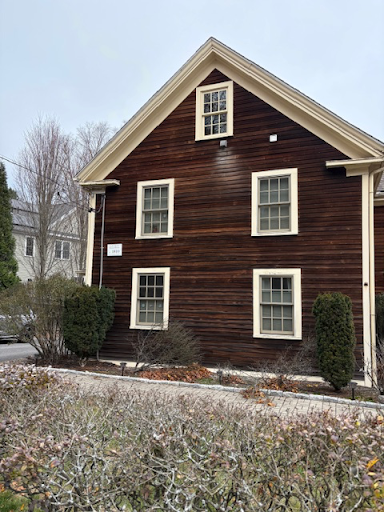
Little Brown Schoolhouse
Tucked along Pleasant Street in Natick is this unassuming building marked with the plaque reading 1810 and the Little Brown Schoolhouse. This is an example of Natick’s district schoolhouses, and a window into the town’s educational past. In 1810, Natick had not yet developed a centralized school system. Education was organized within small neighborhood districts with […]

