The London Eye
Standing along the River Thames with the London Eye rising behind us brings back memories of one of the modern landmarks in London. Unlike the ancient castles, churches and palaces that dominate much of London’s history, the London Eye represents a newer chapter of the city, but now completely woven into London’s identity.
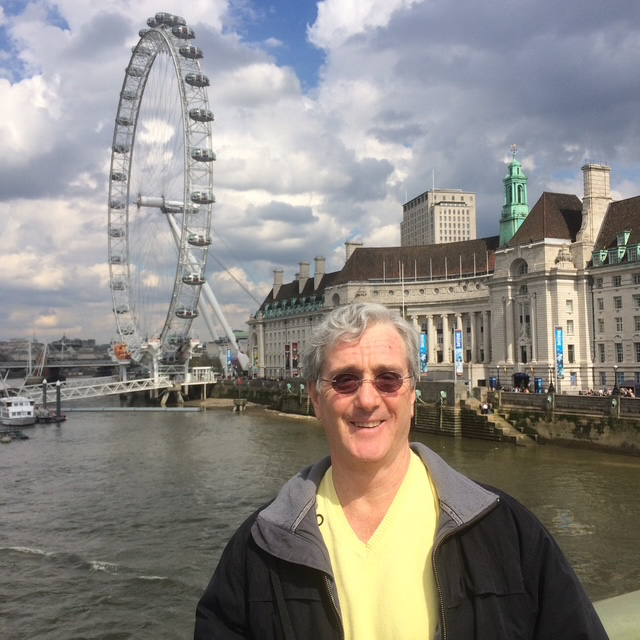
The London Eye was designed by a husband-and-wife architectural team of David Marks and Julia Barfield. Their vision was to create a modern public landmark that would celebrate the arrival of the new millennium and give people a new perspective on London itself. Originally conceived as part of a competition to design a structure for the year 2000, the project was intended to symbolize innovation and the future of the city entering a new century.
Construction began in the late 1990s, and the London Eye officially opened in 2000 as part of London’s millennium celebration. At the time, it was the tallest observation wheel in the world. Many believed it would only remain temporarily for a few years, but it quickly became one of the most beloved and recognizable attractions in the United Kingdom.
Rising 443 feet above the Thames, the giant observation wheel gives breathtaking views across London, allowing visitors to see landmarks stretching in every direction: Big Ben, The Houses of Parliament, St. Paul’s Cathedral, Buckingham Palace and beyond.
London is a massive place and seeing it from above helps connect the history, architecture, and river that shaped the city over centuries. From the Eye, the city feels organized around the winding path of the Thames.
The London Eye now fits into London despite being modern. Surrounded by centuries old buildings and historic monuments, it complements the older city. Today, it remains one of the most visited attractions in the United Kingdom.
Read More From Nancy
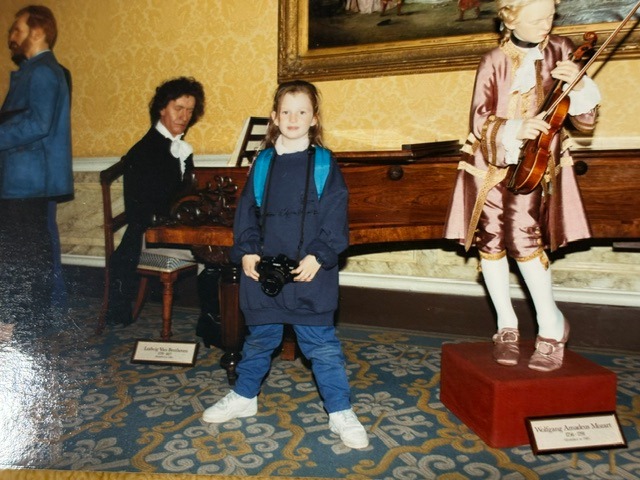
Madame Tussauds
Coming face to face with people from another century was part of the appeal of Madame Tussauds. We had to include this wax museum in our family vacation in the United Kingdom. Figures such as Beethoven and Mozart gave familiar names a physical presence, offering a playful way to encounter people whose music and stories […]

Rosetta Stone
When I arrive in a city like London for the first time, there are always choices to make, so many places, so many stories, so many directions to go. The British Museum was one of those places that was top on the list for a first visit. The British Museum is not just a collection […]
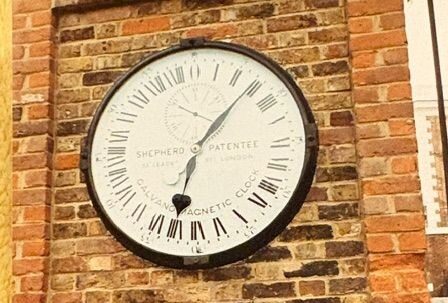
The Shepherd Gate Clock
At first glance, the Shepherd Gate Clock looks familiar: a round face, Roman numerals, and hands marking the time. Look more closely, however, and the dial reveals twenty-four hours instead of twelve. The hour hand makes just one complete circuit each day, pointing downward at noon and upward at midnight. Installed outside the Royal Observatory […]

