Home of Calvin Ellis Stowe
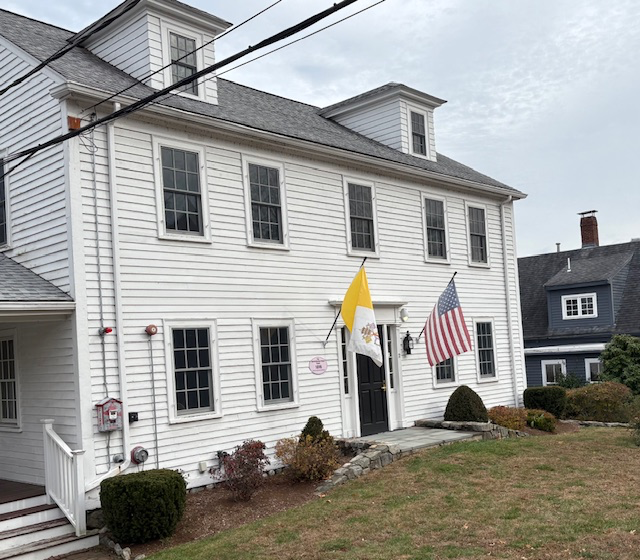
This 1816 Federal-style home in South Natick was the childhood home of Calvin Ellis Stowe a biblical scholar and later the husband of Harriet Beecher Stowe, author of Uncle Tom’s Cabin.
Calvin Stowe became a scholar of Hebrew and biblical literature and met Harriet Beecher at the Lane Seminary in Cincinnati. They married in 1836, and he was instrumental in supporting her when she wrote Uncle Tom’s Cabin – the novel that changed the course of American history.
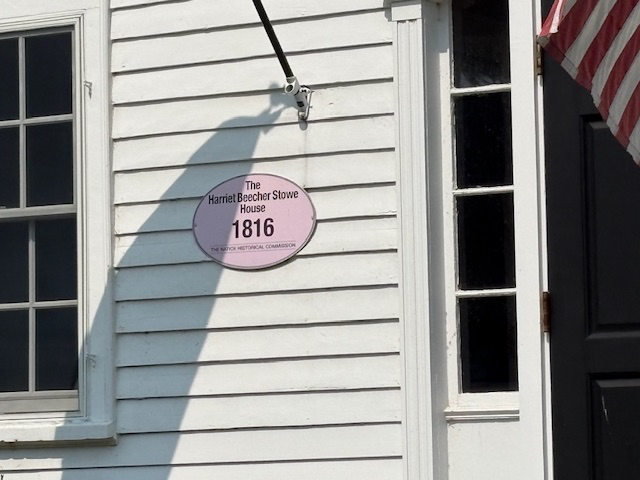
Although Harriet never lived in South Natick, she visited the Stowe family home with her husband. In her 1869 novel, “Oldtown Folks”, she transformed South Natick into the fictional “Oldtown”, a New England village rooted in memory. She wrote:
“Oldtown was one of those quiet New England villages where everything has a settled, orderly air; where houses seem to have grown up like the elms, with a certain venerable grace, where the generations have followed one another like the leaves upon the trees” Harriet may not have lived in South Natick, but she absorbed the rhythms of a small town in Massachusetts.
Read More From Nancy
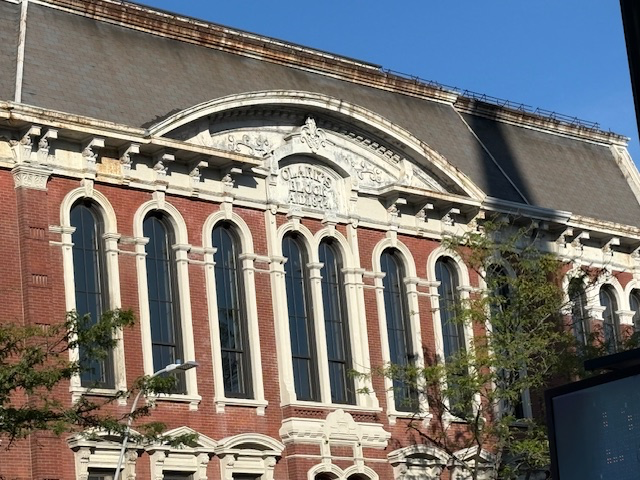
The Clark Block
In the center of Natick is this prominent commercial building labeled the Clark Block, 1874. Like many buildings constructed during that period, it reflects the growth of Natick as a busy manufacturing and commercial town in the later nineteenth century. During this time Natick was becoming well known for its boot and shoe industry, which helped transform what had once […]
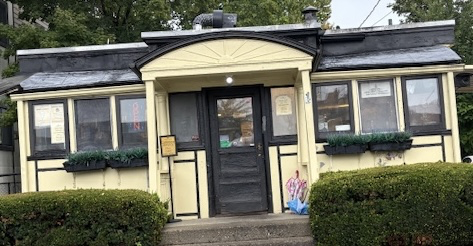
Casey’s Diner
Hometown stories would not be complete without sharing Casey’s Diner. Casey’s Diner is tucked along South Avenue in Natick and has been feeding generations for over a century and remains one of the town’s most enduring landmarks. The story of Casey’s begins in 1890, when Fred Casey purchased a horse-drawn lunch wagon and began serving […]
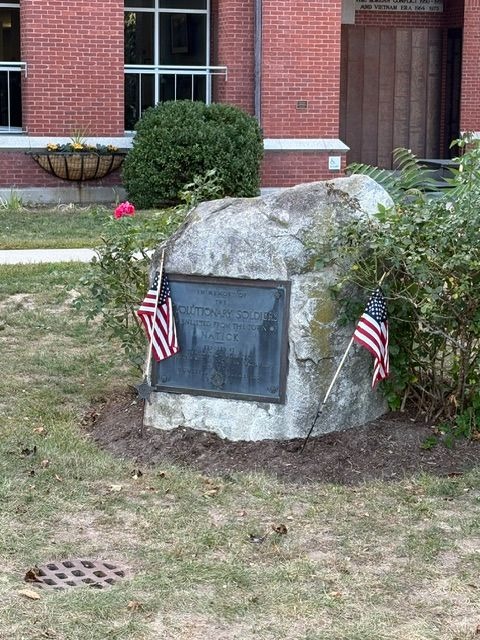
Revolutionary War Memorial
Though I have walked past this monument outside the Morse Institute Library more times than I can remember, I had never stopped to document it. The boulder and its bronze plaque had become part of the familiar surroundings. Taking this photograph gave me a reason to pause and learn how the memorial came to stand […]

