Suffolk Resolves
Standing along the roadside in Milton is a marker that points to one of the lesser known but deeply important chapters in America’s journey toward independence: the story of the Suffolk Resolves House. This large colonial home appears quiet and elegant. Yet this site is connected to events that helped shape the spirit of resistance leading directly to the American Revolution,
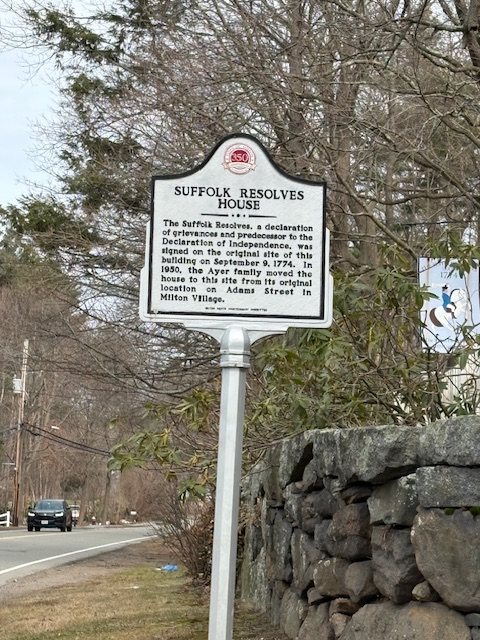
The original Suffolk Resolves were adopted in 1774 as tensions between the American colonies and Great Britain were rapidly escalating. The Resolves were a bold declaration opposing the Intolerable Acts imposed by the British government after the Boston Tea Party. These measures called for resistance to British authority, encouraged the boycott of British goods, rejected taxation without representation, and urged the colonies to organize militias for self-defense. In many ways, the Suffolk Resolved became an early and powerful step toward the Declaration of Independence that would follow two years later.
What makes this site especially significant is that Paul Revere carried the Suffolk Resolves to the Continental Congress in Philadelphia, where the delegates endorsed them. Their approval gave legitimacy to Massachusetts resistance and helped unite the colonies around the growing cause of independence. The Resolves demonstrated that open opposition to British rule was no longer limited to isolated protests but had become an organized political movement.
There is something fitting about how quietly this history now rests beside a busy modern roadway. Cars pass by, often unaware that this area was once connected to some of the earliest organized calls for colonial resistance. The home and marker serve as reminders that the Revolution was shaped not only in famous battlefields and grand halls, but also in local communities where ordinary citizens debated liberty, government and their future.
The Suffolk Resolves House represents the moment when protest began transforming into a unified movement for independence.