Hancock-Clarke Parsonage
Standing along the roadside in Lexington, the Hancock-Clarke Parsonage preserves one of the most important gathering places connected to the opening of the American Revolution. Built in 1737, the parsonage became forever tied to the dramatic events of April 18-19, 1775, when Paul Revere and William Dawes arrived here warning that British troops were marching toward Lexington and Concord.
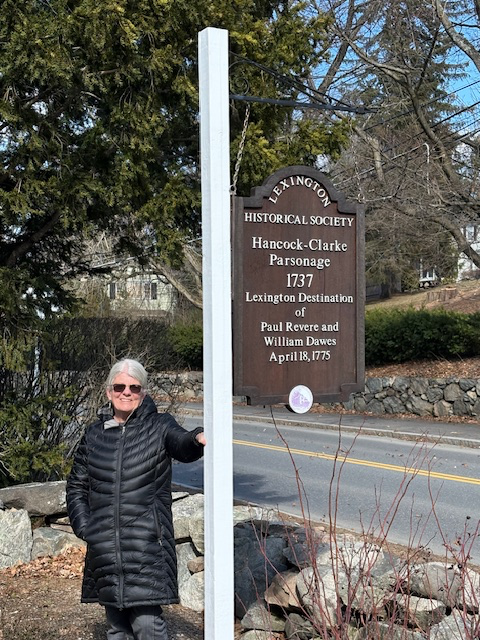
This house was the destination of Revere’s famous midnight ride. At the time, patriot leaders John Hancock and Samuel Adams were staying at the parsonage as guests of Reverend Jonas Clarke, whose home had become an important center of patriot activity and political discussion. Revere and Dawes rode through the night specifically to warn Hancock and Adams that British troops were on the move and that they were likely targets for arrest.
The house itself belonged to Reverend Jonas Clarke, a strong supporter of the patriot cause whose sermons and influence helped shape revolutionary sentiment in Lexington. His home became part of the network of communication and resistance that helped launch the Revolution.
The house sits quietly along the road surrounded by stone walls and trees, yet one of the most famous rides in American history ended here. The parsonage has been carefully preserved by the Lexington Historical Society and remains one of the most important surviving Revolutionary era homes in New England.
Read More From Nancy
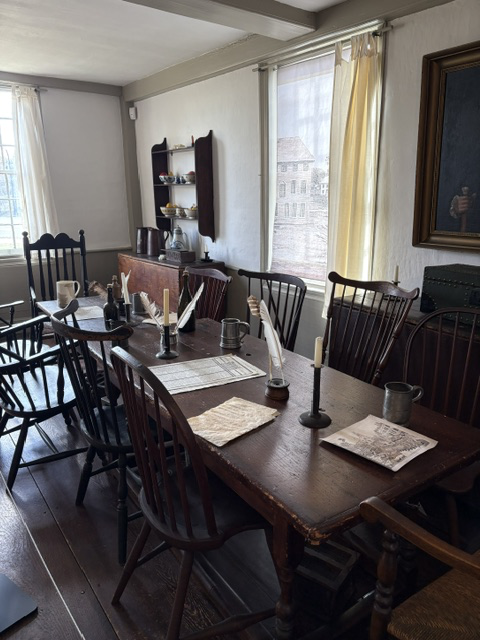
The West Room at Buckman Tavern
Of all the rooms in Buckman Tavern, none captures the atmosphere of April 19, 1775, more vividly than the West Room. Today it is furnished much as it would have appeared in the eighteenth century, with a long wooden table surrounded by Windsor chairs, pewter mugs, candleholders, and writing materials. It is easy to imagine […]
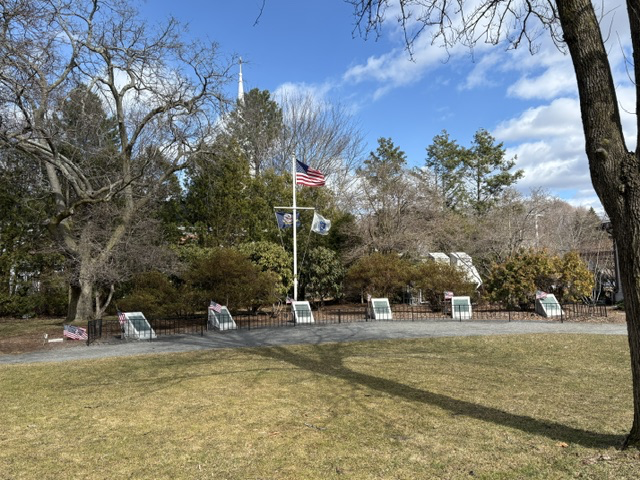
USS Lexington Memorial
Most visitors come to Lexington to remember the events of April 19, 1775, when the American Revolution began on the town’s Green. Tucked quietly nearby is another memorial that tells a different story, one that extends far beyond Massachusetts and across the world’s oceans. This memorial honors the United States Navy ships that have carried […]
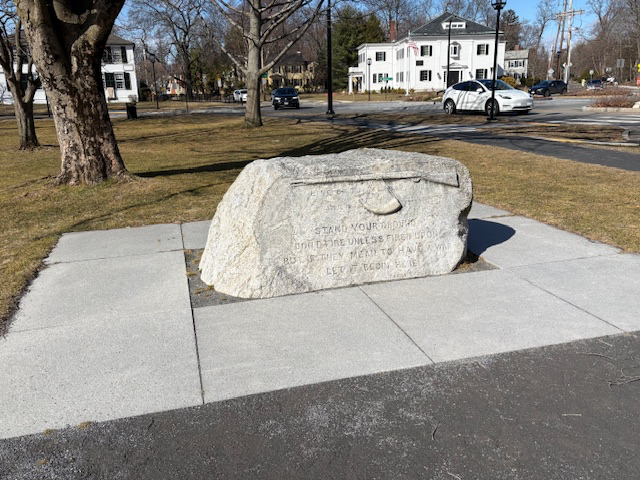
“Stand Your Ground” Monument
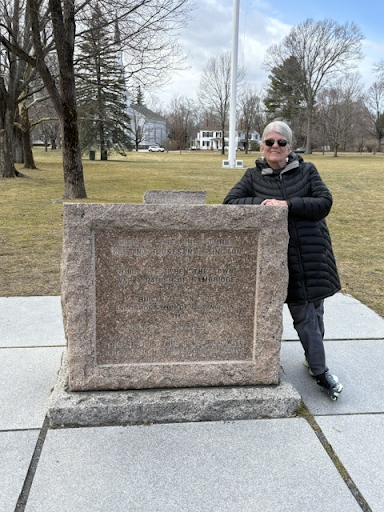
On the Green in Lexington, there is this stone monument, low to the ground, a rough granite boulder. Carved into ts surface are words that carry the weight of a nation’s beginning: “Stand your ground. Don’t fire unless fired upon. But if they mean to have a war, let it begin here.” These words are […]

