Make Way for the Ducklings
Walking through the Boston Public Gardens, there is a familiar and beloved sight: a line of small bronze ducks following closely behind their mother. Most locals recognize them as characters from the classic children’s book “Make Way for Ducklings” by Robert McCloskey.

These statues were created by sculptor Nancy Schon and installed in 1987 as a tribute to McCloskey’s book, which was published in 1941 and set right here in Boston. The story follows Mrs. Mallary and her ducklings as they navigate the city, crossing busy streets with the help of Boston police, on their way to the Public Garden.
The sculpture captures that moment: Mrs. Mallard leading her eight ducklings, Jack, Kack, Lack, Mack, Nack, Quack, Pack and Quack, in a gentle procession through the park. It was placed here intentionally, allowing visitors to step into the story and walk alongside the characters.
Over the years, these statues have taken on a life of their own. Depending on the season, you might find them dressed in scarves or hats.
As I walked by with friends visiting from outside the area, I was reminded that not everyone has the same point of reference. To them, it was a row of ducks, with no other story attached.
So many things we pass each day are filled with meaning, stories we have learned, places we recognize, symbols that connect us to something larger. But without that context, they can appear as something entirely different.
What is it that draws us in? Is it familiarity, or curiosity?
Do we pause when something feels out of the ordinary, even if we don’t yet understand it?
This is the part of what makes travel and exploration so meaningful. To be constantly moving between what we know and what we are just beginning to see.
Read More From Nancy
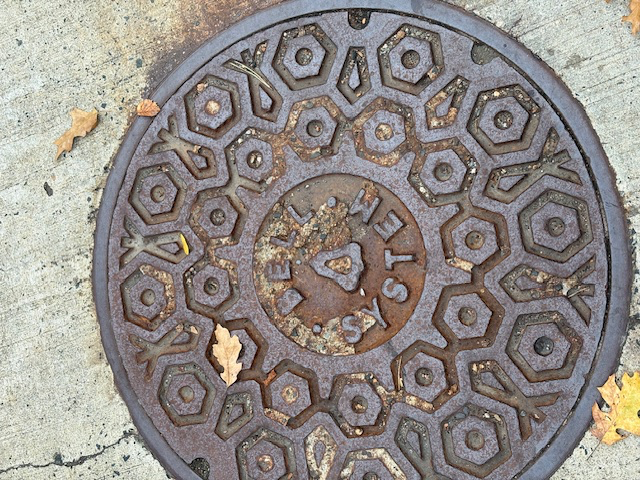
Bell System Icon
Walking through Wellesley, with my eyes turned to the ground, I took a moment to notice the iron cover in the sidewalk labeled: “Bell System”, this little iron circle tells a story of a different kind of infrastructure, one that once revolutionized the world. The Bell System was more than just a telephone company it was a […]
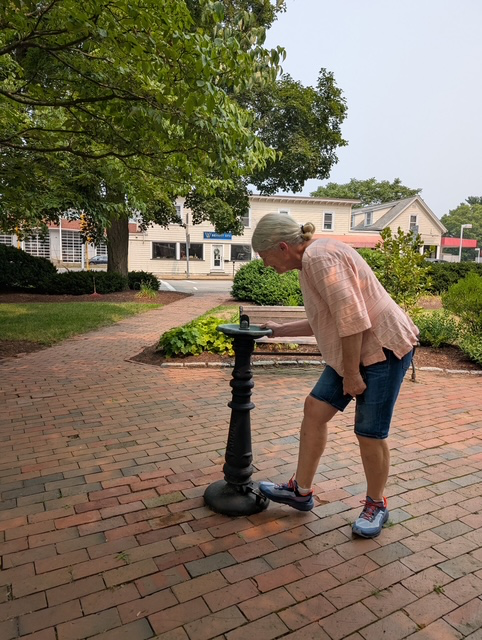
Water Fountain in Wellesley
Though I have walked the parks and paths of Wellesley, Massachusetts for years, I had not paused at this water fountain before. Growing up, I often drank from fountains because they were everywhere. The label on the base read: Murdock Manufacturing, Cincinnati, OH, a company founded in 1853. I learned that Murdock became one of […]
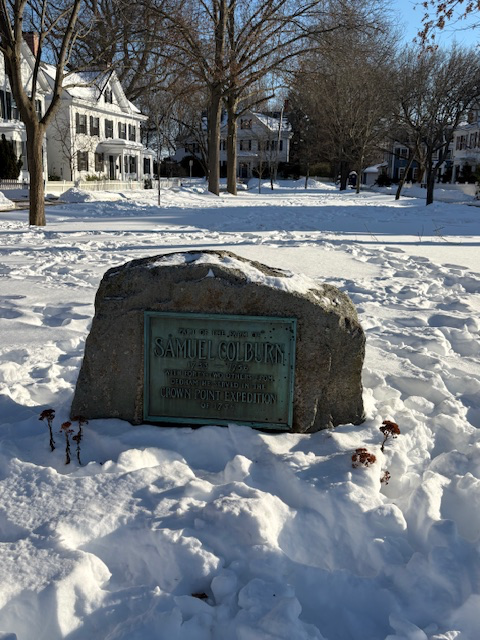
Samuel Colburn
As I was walking through downtown Dedham, I came across a simple rock monument honoring Samuel Colburn. I must admit I was not aware of the Crown Point Expedition. That unfamiliar name immediately caught my attention. I was excited to take a photo and look up more information later. There is something satisfying about discovering a small marker and realizing it opens […]

