Folies Bergere at Dutch Harbor
November 11, 1943Dearest Reader,
In November 1943, my father was stationed in the Aleutian Islands, at Dutch Harbor, one of the most remote and strategically important American outposts of World War II. From there, he mailed home small pieces of memorabilia so my mother could glimpse the life he was living at the far edge of the continent. Among those keepsakes was a program titled: Folies Bergere de Dutch Harbor, dated November 11, 1943.
Dutch Harbor had become a major military installation after the Japanese attack on the Aleutians in 1942. Though the U.S. regained control of the islands earlier in 1943, the environment remained harsh: relentless wind, cold rain, fog and isolation. Thousands of servicemen were stationed there. The Aleutian campaign was sometimes called the “forgotten battle”.
November 11 marked Armistice Day, the anniversary of the end of World War I. The armistice had taken effect at 11:00 AM on November 11, 1918, ending what was then called “the war to end all wars”. By 1943, that hope had long vanished. American servicemen fighting in World War II still paused to commemorate the earlier conflict.
Inside the program, the words read: “Welfare and Recreation Department presents Folies Bergere de Dutch Harbor – Introducing Dutch Harbor’s First Armistice Day Program”.
The Welfare and Recreation Department was the military’s organized effort to sustain morale. In isolated postings like Dutch Harbor, this work was essential. The department sponsored athletic competitions, movie nights, musical performances and variety shows. It provided diversion and connection in places where men were far from home.
The title “Folies Bergere” was a playful borrowing from the famous Parisian cabaret Folies Bergere, known for its elaborate costumes and chorus lines including stylized nude and semi-nude female figures. Soldiers across the world adopted glamorous European names for their base productions. The cover image of a nude woman posed on a boat fits this escapist fantasy.
For my father, sending this program home was a way of saying: This is where I am. This is what life looks like here. It carried the date, the place, the humor, and the spirit of camaraderie that sustained him.
This program is a snapshot of November 11, 1943: a group of young men stationed at the edge of the Pacific, commemorating the end of one war while fighting another, finding music and laughter in a remote outpost, and sending pieces of that life home to the people they loved.
Dr. Nancy Watson
Washington
Read More From Nancy
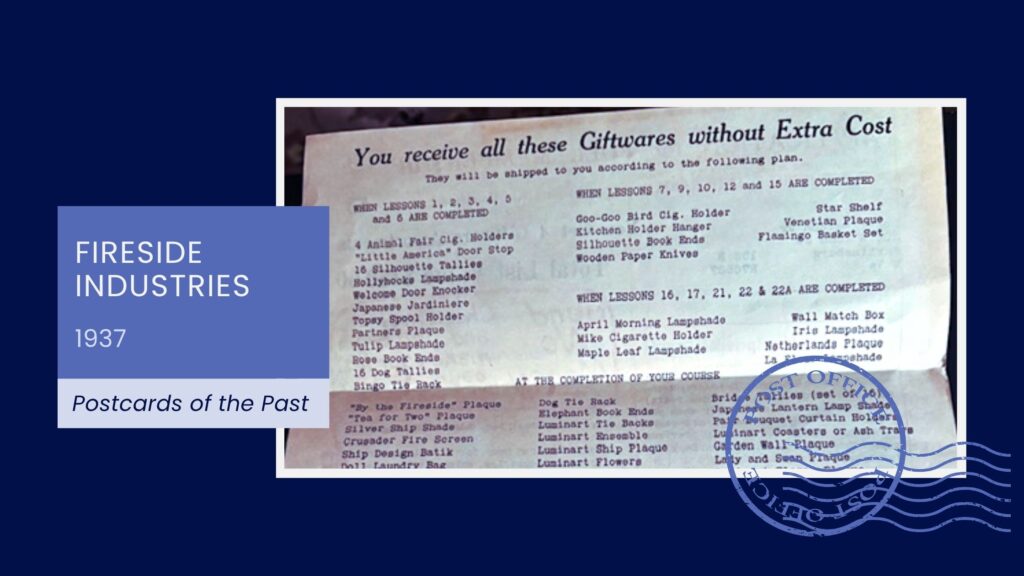
Fireside Industries
Another company that reached out to my father was Fireside Industries of Adrian, Michigan. They offered him a free rug hooking course, an invitation to learn a craft that could be done at home and perhaps turn into a source of income. But the offer did not stand alone. With membership, he would also receive […]
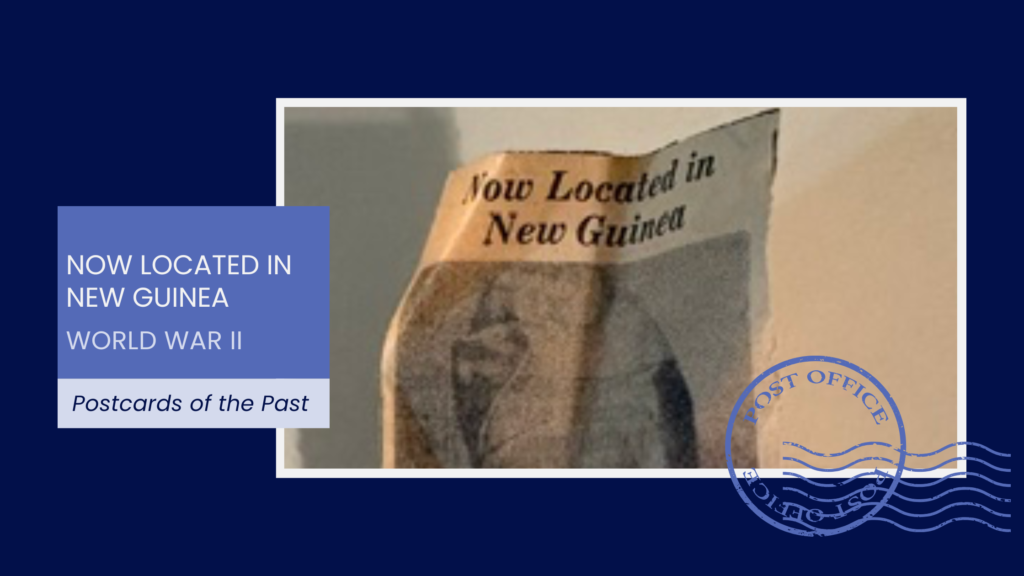
Now Located in New Guinea
Among my family’s papers is this small newspaper clipping from World War II. At first glance, it is easy to overlook. It is only a few inches long and contains just a brief paragraph about Private Harold V. Thompson. Yet documents like this remind us how closely communities followed the lives of the young men […]
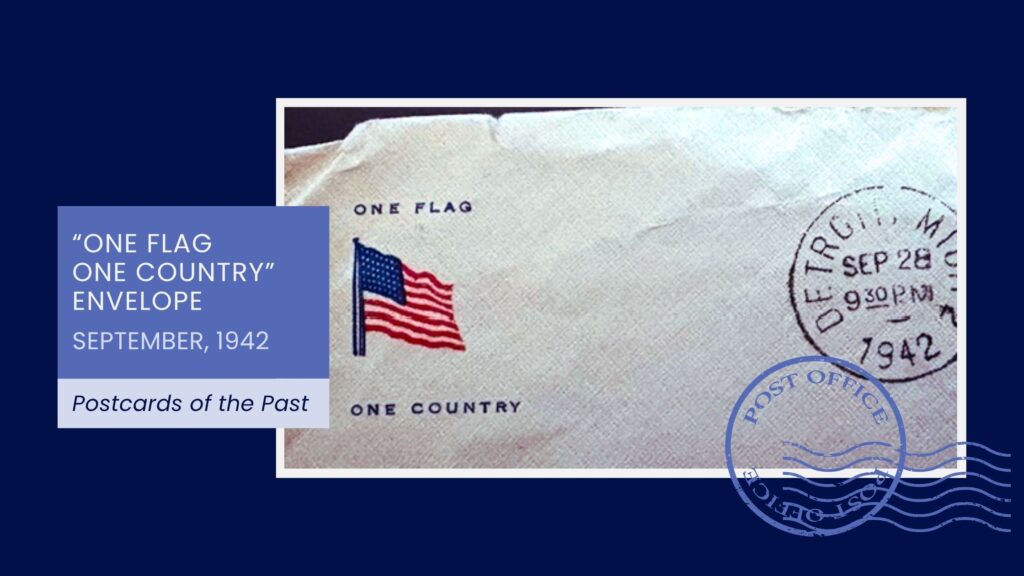
“One Flag One Country” 1942 Envelope
As I continue to explore the letters that were written to my father while he was stationed in the Army during World War II, it is often the small details that catch my attention. One envelope stood out. The letter had been mailed from Michigan, and the postmark reads: September 18, 1942. But what caught my eye […]

