First Drawing Lesson by Mail
World War IIDearest Reader,
Among the papers my father, Roger Watson, saved is a letter from Towertown Studios in Chicago. Ray Frey, the studio’s director, thanked him for his inquiry and said he had enclosed the first lesson of the Towertown Drawing Course. This was before my father was drafted into military service during World War II, when he was still exploring what he might do for a living. At some point, a course in drawing interested him enough to write away for it.
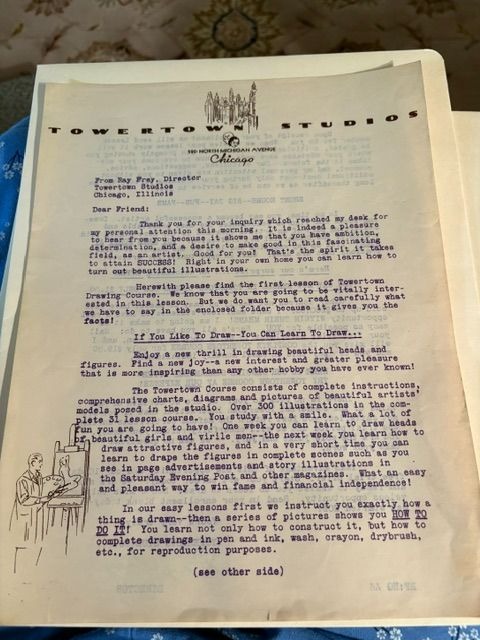
Towertown Studios operated from North Michigan Avenue and advertised its lessons in magazines in the 1930s. One ad invited readers to send their name and address with ten cents to cover mailing and try the first lesson for free. Students could work at home from photographs of models posed as they would be in a drawing class. For someone trying to decide whether commercial illustration was worth pursuing, a first lesson was a small way to find out what the work involved.
The letter laid out what my father could expect from the full course. There were 51 lessons and more than 300 illustrations. Students would begin with heads and figures, then learn to draw the folds of clothing and place people in complete scenes. They would also learn to finish their work in pen and ink, wash, crayon, and drybrush so it could be reproduced. Frey pointed to the advertisements and story illustrations in the Saturday Evening Post as examples of the kind of work students could learn to do.
The studio went further, holding out the prospect of “fame and financial independence.” I found a 1937 record showing that Towertown agreed to stop making some of its sales claims, including the suggestion that students could start selling their drawings as soon as they could produce them. That detail helps me understand how the school presented the course. It offered a first lesson in drawing and asked readers to imagine where that skill might take them.
I don’t know whether my father enrolled or how seriously he considered becoming an illustrator. I’m interested in the step he did take. Before the Army determined where he would go next, he wrote to a drawing school in Chicago to find out what it could teach him. The school sent him a first lesson, and he saved the letter that came with it.
Dr. Nancy Watson
Washington
Read More From Nancy
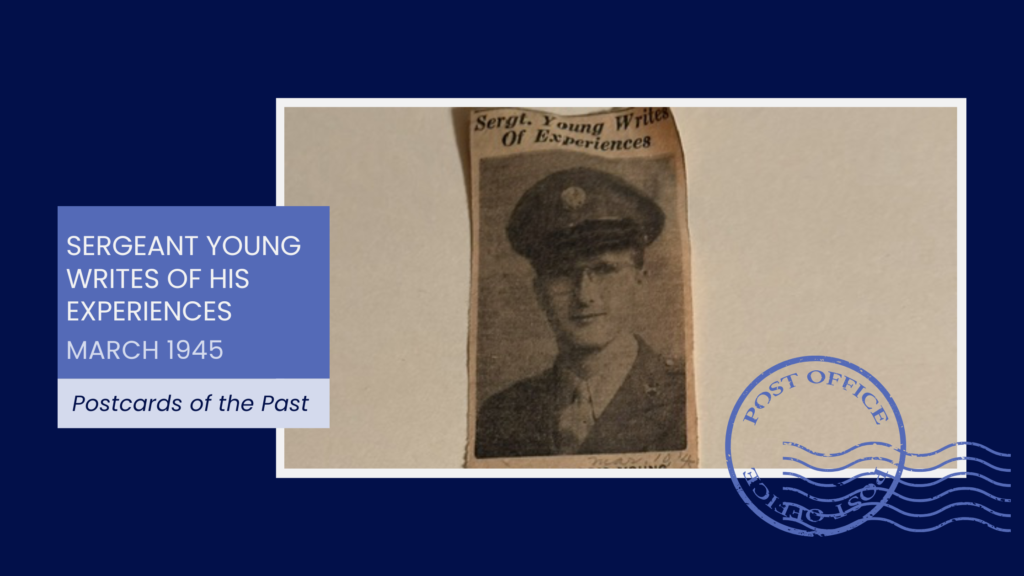
Sergeant Young Writes of His Experiences
Among my mother’s papers, I found this small newspaper clipping about Sergeant Morris Young. In her handwriting, she noted the date, “March 10, 1945” I don’t know why she chose to save it, but it was clearly important enough that she kept it for many years. During World War II, local newspapers regularly published letters […]
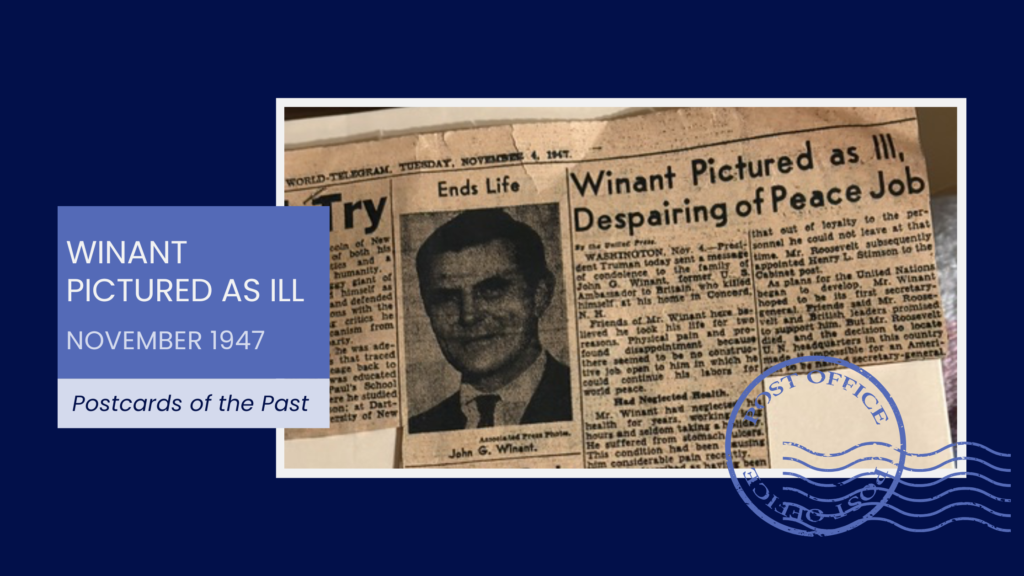
Winant Pictured as Ill
Among my mother’s papers, I found this newspaper clipping from the New York World-Telegram, dated November 4, 1947. At first glance, it appears to be an ordinary newspaper article, but it captures one of the final chapters in the life of one of New Hampshire’s most respected public servants. Just fifteen days after this story was […]
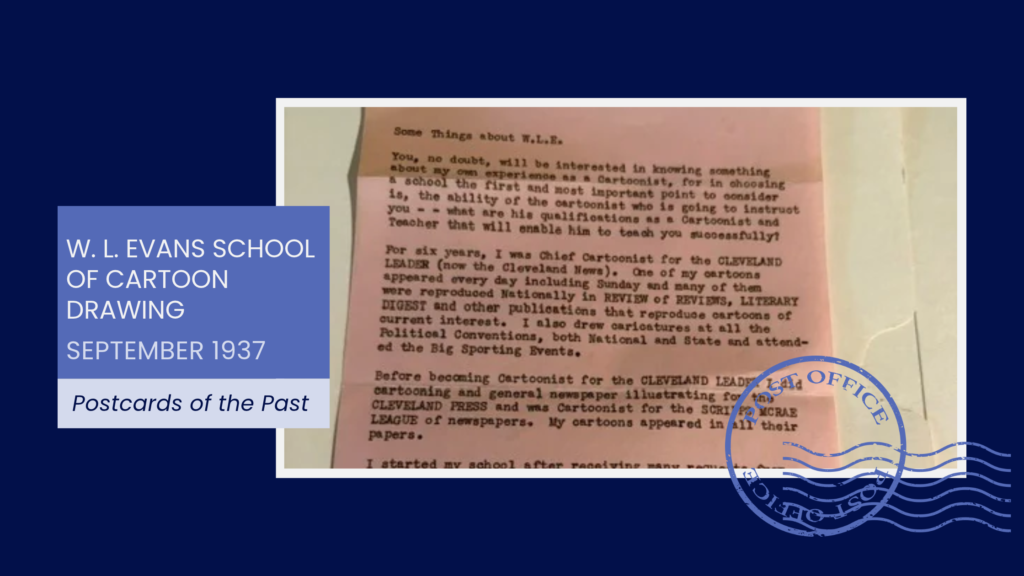
W. L. Evans School of Cartoon Drawing
Among the papers my father saved from his teenage years is a pink sheet headed “Some Things about W.L.E.” It came from the W. L. Evans School of Cartooning in Cleveland, Ohio, and was part of the material my father received in September 1937. Evans used the page to introduce himself to prospective students. Before […]

