Franklin Roosevelt’s Wheelchair
At Franklin D. Roosevelt’s home in Hyde Park, a wooden wheelchair preserves a practical part of the president’s daily life. Its upright back and plain seat resemble household furniture, while its wheels and footrest reveal how that familiar form was adapted to provide mobility.
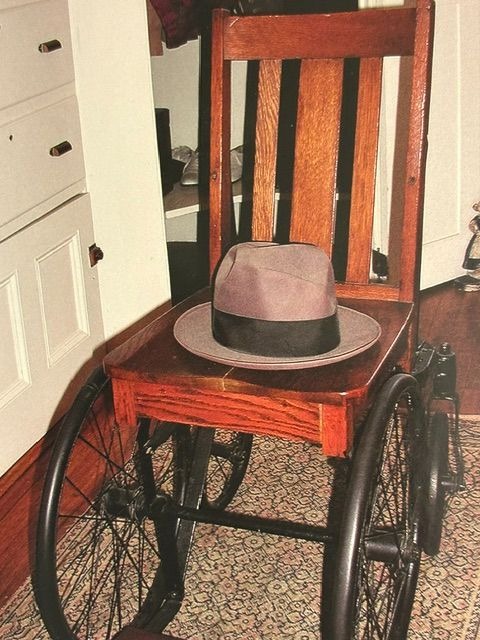
Roosevelt contracted polio in 1921, at the age of thirty-nine. The illness left him unable to walk independently. During the years that followed, wheelchairs became essential tools for moving through his home and carrying out his work.
Standard wheelchairs could be cumbersome inside buildings that had not been designed for them. Roosevelt helped develop compact alternatives using wooden chairs mounted on wheeled frames. Their narrow proportions allowed passage through doorways and corridors, including confined spaces aboard trains.
The chair’s simplicity served a purpose. An armless seat made transferring to other furniture easier, while its small size suited the rooms in which Roosevelt dressed, read, and worked. These details addressed ordinary needs that could otherwise become substantial obstacles.
Roosevelt’s public appearances presented a different view of his mobility. He sometimes stood with leg braces and physical support, and photographs showing him using a wheelchair were uncommon. At home, the chair was part of the equipment that made daily activity possible.
Preserved in his dressing room, this object brings the history of a presidency into the scale of domestic life. It directs attention to the design choices, assistance, and adaptations behind familiar public images of Roosevelt. The chair records how a household object could be reworked to give its user greater freedom of movement.
Read More From Nancy
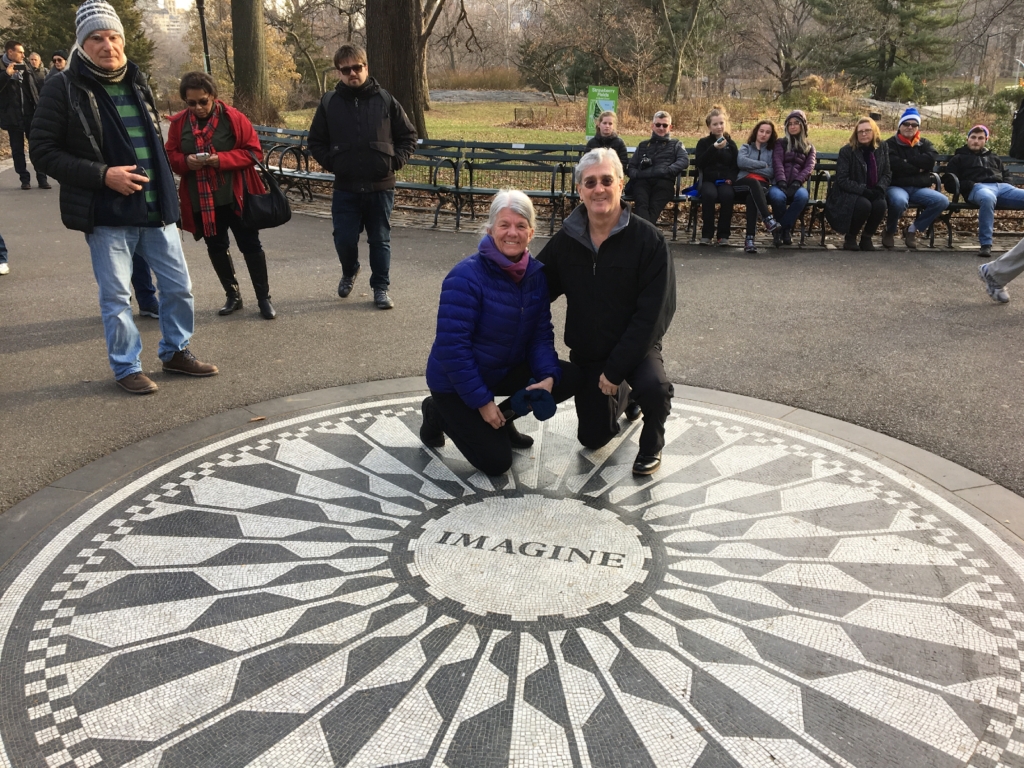
“Imagine” Memorial
In the quiet northwest corner of Central Park, there is a place where visitors from all over the world stop. Set within a grove of elm trees lies Strawberry Fields, created to honor John Lennon. At the center of this memorial is a simple circular black and white stone mosaic. In the middle of the […]
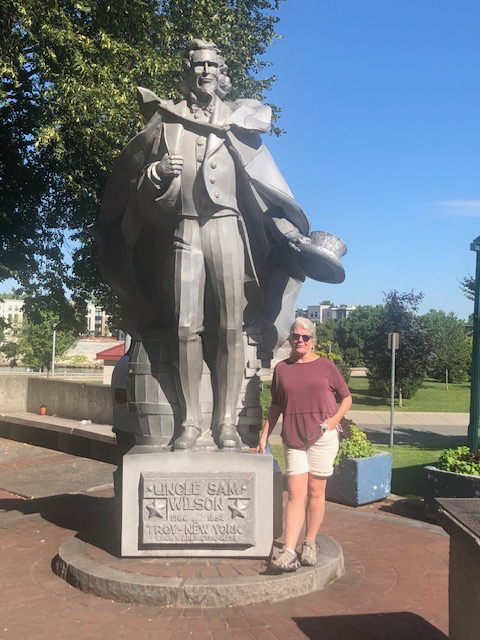
Sam Wilson Statue
Stopping for breakfast in Troy, N.Y. and wandering its historic streets is exactly the kind of detour that leads to unexpected discoveries. Here we found this intriguing statue of Sam Wilson, the man widely believed to be the real-life inspiration of “Uncle Sam” The monument stands in Riverfront Park overlooking the Hudson, portraying Wilson as a working […]
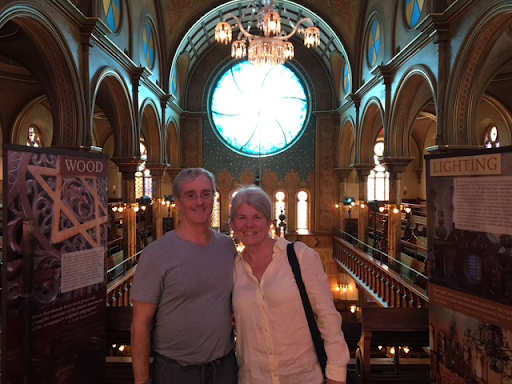
Museum at Eldridge Street
One of the joys of visiting New York City is discovering places we never knew existed. On one of our trips, we decided to visit the Museum at Eldridge Street, and it became a most memorable stop of our visit. Completed in 1887, the Eldridge Street Synagogue was the first great synagogue built in the […]

