The Hamilton–Burr Duel
At the New-York Historical Society, two life-size bronze figures recreate one of the most famous confrontations in American history. Created by sculptor Kim Crowley, the statues place Alexander Hamilton and Aaron Burr opposite one another with pistols raised, freezing the final seconds of a political rivalry that ended in tragedy.
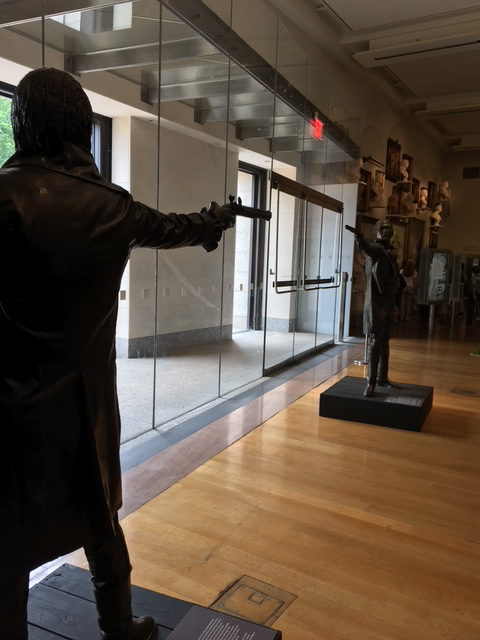
Hamilton and Burr had disagreed for years over politics, ambition, and each other’s character. Their conflict intensified during the 1804 New York gubernatorial campaign, when Burr learned that Hamilton had reportedly expressed a “despicable opinion” of him. Burr demanded an explanation or apology. When their exchange of letters failed to resolve the dispute, he challenged Hamilton to a duel.
On the morning of July 11, 1804, the two men crossed the Hudson River separately and met on the heights of Weehawken, New Jersey. Dueling was illegal, so the participants arranged the encounter carefully to protect their witnesses from prosecution. Hamilton was struck by Burr’s shot and carried back across the river to Manhattan, where he died the following day. Whether Hamilton deliberately fired away from Burr or simply missed remains debated.
Hamilton’s death deprived the nation of one of its most influential founders and permanently damaged Burr’s reputation and political future. By placing the two men directly across from one another, the sculptures transform a familiar historical account into a tense human encounter. The distance between them becomes part of the story, as it was just a few feet separating two competing ideas of honor, two political careers, and a single decision that neither man could reverse.
Read More From Nancy
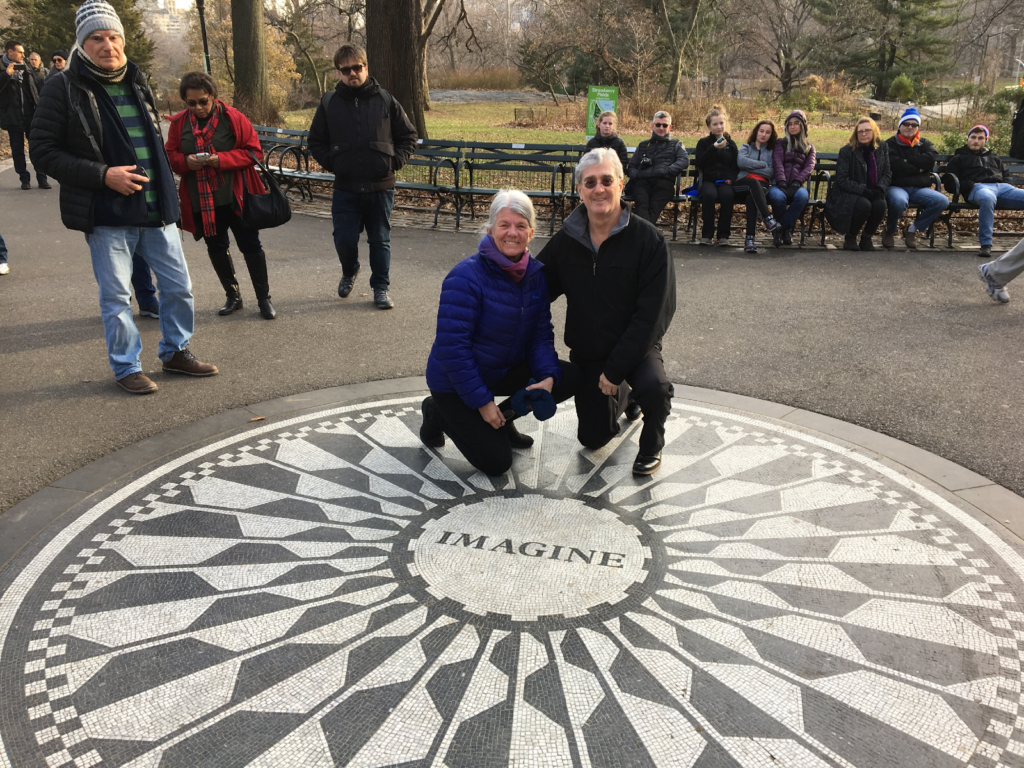
“Imagine” Memorial
In the quiet northwest corner of Central Park, there is a place where visitors from all over the world stop. Set within a grove of elm trees lies Strawberry Fields, created to honor John Lennon. At the center of this memorial is a simple circular black and white stone mosaic. In the middle of the […]
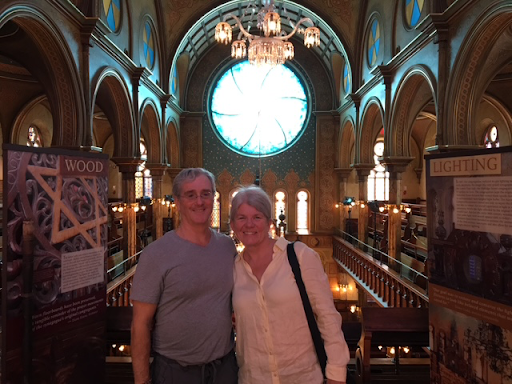
Museum at Eldridge Street
One of the joys of visiting New York City is discovering places we never knew existed. On one of our trips, we decided to visit the Museum at Eldridge Street, and it became a most memorable stop of our visit. Completed in 1887, the Eldridge Street Synagogue was the first great synagogue built in the […]
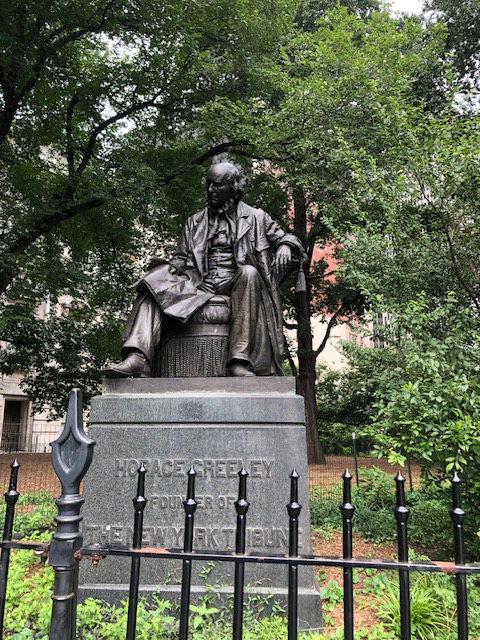
Horace Greeley Stature
Some of the most powerful stories of history are expressed not just in words, but in bronze and stone in the sculptures and monuments that mark the lives of those who have shaped the nation. One such figure commemorated in New York City is Horace Greeley, whose statue stands today in City Hall Park. This is […]

