New Hampshire’s Centennial Shield
A shield decorated with stars, stripes, and a maritime scene preserves New Hampshire’s participation in the nation’s hundredth anniversary. Painted in 1876, it hung inside the New Hampshire Building at the Centennial Exhibition in Philadelphia. Now in the New Hampshire Historical Society’s collection, it survives as an artifact of how the state presented itself during a national celebration.
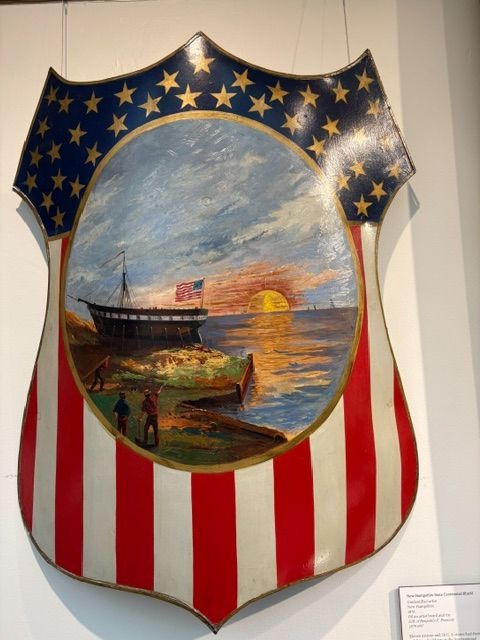
Held in Philadelphia’s Fairmount Park from May through November 1876, the Centennial Exhibition commemorated one hundred years since the Declaration of Independence. It was the first official world’s fair held in the United States, bringing together displays of art, manufacturing, agriculture, and technology from America and abroad.
New Hampshire was among the states with a separate exhibition building. The shield’s central painting drew upon the state seal, showing a ship beside the shore beneath a rising sun. Around it, red and white stripes and a blue field of gold stars placed New Hampshire’s maritime identity within the imagery of the United States.
The object combines official symbolism with the character of a handmade decoration. An unidentified artist painted it in oil on artist board and tin. Its shaped outline and bright colors were suited to a public exhibition, where states sought to distinguish their contributions while participating in a shared national occasion.
Benjamin F. Prescott later gave the shield to the New Hampshire Historical Society. Preserving it carried an object made for a temporary fair into a permanent historical collection. It remains a tangible connection between New Hampshire and the celebration in Philadelphia, when Americans looked back toward the nation’s founding while displaying the products and achievements of their own time.
Read More From Nancy
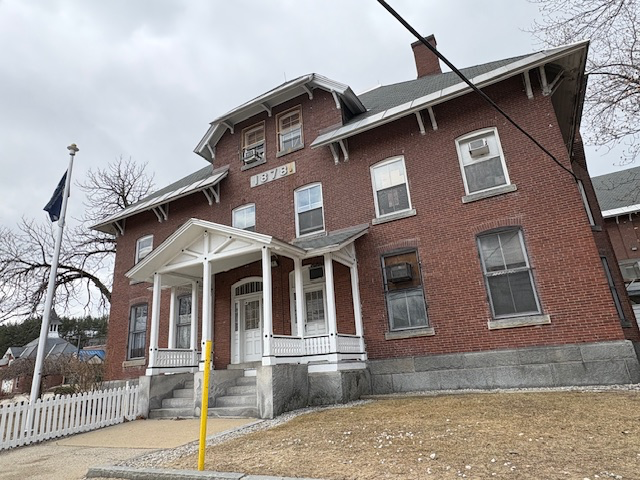
1878 State Prison
In Concord, stands a structure that has carried out its purpose for over a century. Built in 1878, the New Hampshire State Prison was constructed to replace an earlier facility from 1812, reflecting a shift toward a more organized and permanent system of incarceration. The prison is built primarily of brick, with its long walls and […]
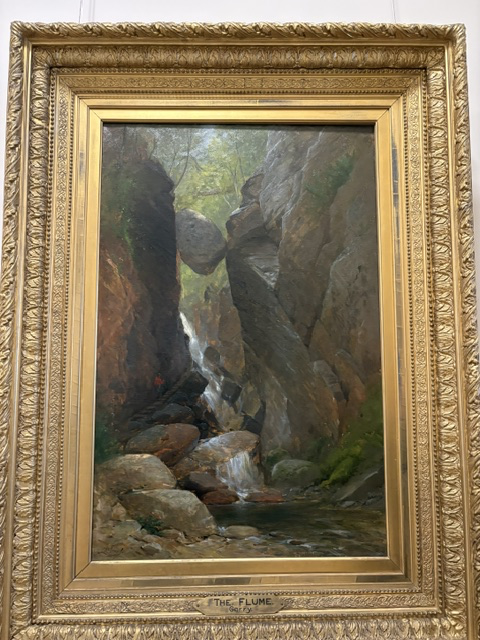
The Flume by Samuel Gerry
Samuel L. Gerry’s The Flume draws the viewer into one of New Hampshire’s most dramatic natural passages. The tall, narrow canvas follows the shape of the gorge itself, with steep walls of granite rising on both sides and leaving only a small opening to the forest and sky above. Water descends through the center, winding […]
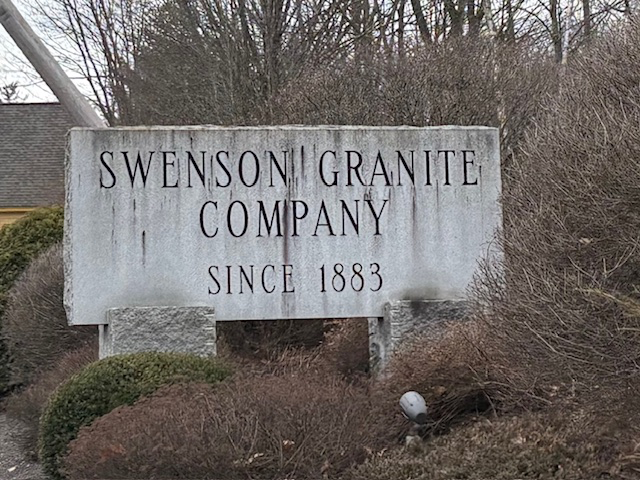
Swenson Granite Company
Founded in 1883, the Swenson Granite Company is one of the enduring industrial stories of Concord. This company helped shape not only the local landscape, but the very monuments and memorials that defined so many towns across New England. The company’s roots are tied to the rich granite deposits of Rattlesnake Hill, just outside Concord. From these […]

