Shaw Park
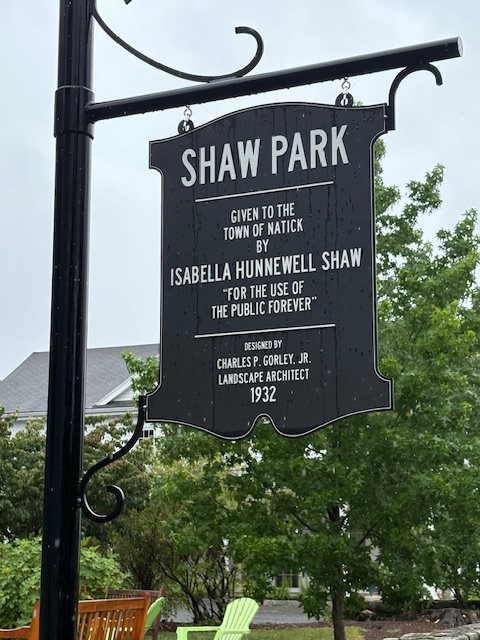
Shaw Park, located in South Natick, is not a grand park in the monumental sense. Yet, it is a space with a profound sense of intention as captured in the words that accompanied its gift to the town of Natick:
“For the use of the Public Forever”
These words were written by Isabella Hunnewell Shaw. Isabella was a member of the prominent Hunnewell family, long associated with South Natick and the stewardship of land along the Charles River. The Hunnewells were known not only for their resources, but for a deep sense of civic responsibility. In a time when land along rivers were often fenced or developed, she chose a different path, one rooted in access and beauty.
In the late 19th century, the Hunnewell property in South Natick included a hotel and resort complex, known as the Hunnewell Hotel. The hotel sat on what is now Shaw Park and was part of a broader pattern of river-side retreats popular at the time.
In 1906, the Hunnewell Hotel was destroyed by fire. At a time when many families would have rebuilt, the Hunnewells made a deliberate decision. The land was to be allowed to return to open space and towards permanent public benefit. Isabella Hunnewell Shaw’s legacy aligns with a 19th and early 20th century tradition of New England philanthropy that emphasized public good over personal recognition.
Today, Shaw Park remains a living expression of the Hunnewell values. The park continues to serve exactly as she wrote: “for the use of the public forever”.
Read More From Nancy
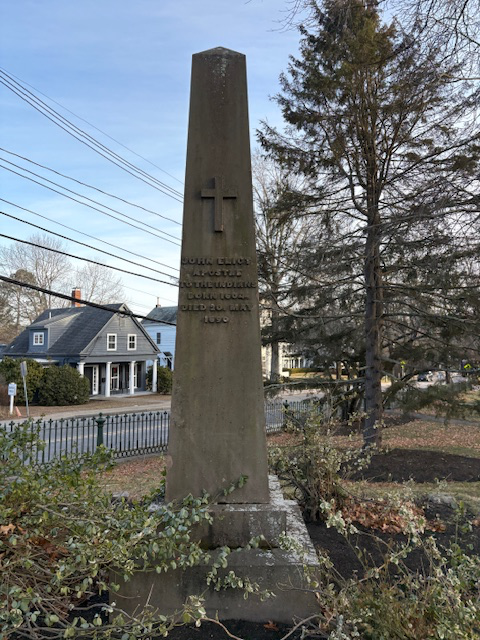
The John Eliot Monument
Standing quietly on a hill overlooking South Natick is this monument honoring John Eliot, the Puritan missionary often known as the “Apostle to the Indians.” Eliot devoted much of his life to working with the Native peoples of Massachusetts and is remembered for his efforts to share Christianity and establish communities known as “Praying Indian” towns. Arriving in […]
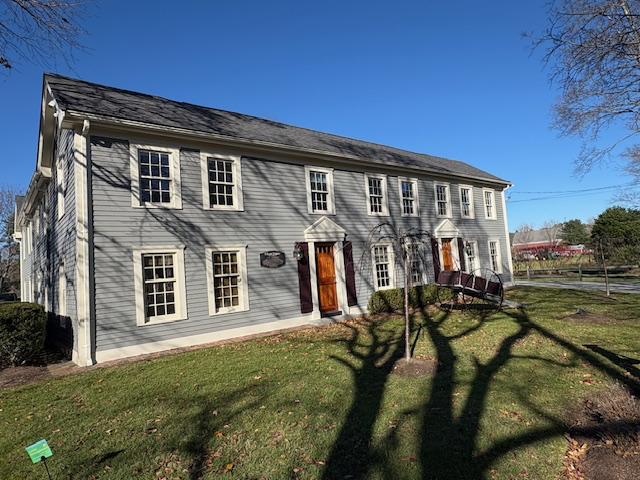
Georgia Colonial 1700’s
I love the connection to Colonial America that is still evident on my daily walks around Natick. Here is another example of a Georgian Colonial that dates back to the 1700s. The land was originally purchased from the Praying Indian community of Natick in 1730. South Natick itself was one of the earliest Praying Towns, founded by […]
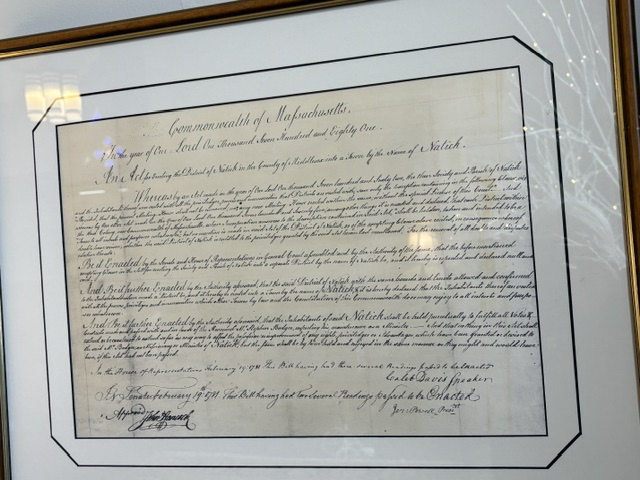
Natick’s Act of Incorporation
Natick’s history began long before it became an incorporated Massachusetts town. In 1651, the missionary John Eliot and a group of Indigenous Christian converts established Natick as one of New England’s first “Praying Towns.” The community developed its own systems of worship, government and agriculture while also enduring increasing colonial control, the loss of land […]

