Written in Granite
The exposed granite along Peggy’s Cove’s coast holds evidence of events separated by hundreds of millions of years. Its broad, rounded surfaces, deep fractures, and scattered boulders record the formation of rock beneath an ancient mountain range and the much later passage of glaciers. Understanding these features turns the shoreline into a visible record of geological change.
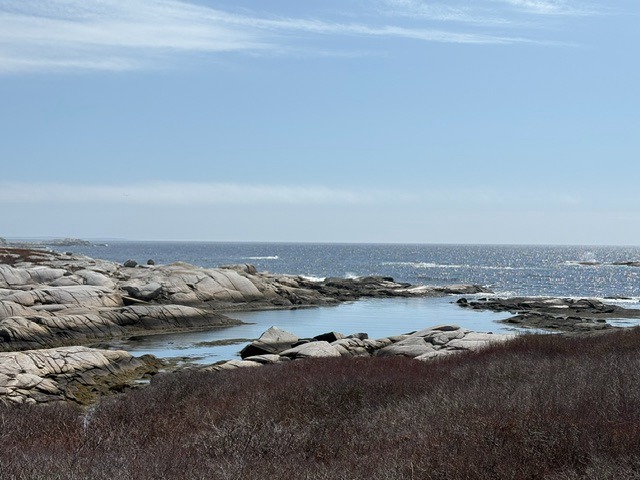
Glaciers subsequently reshaped the exposed bedrock. As ice moved across it, sand and stones trapped beneath the glacier acted as abrasives, scraping and polishing the granite. Larger fragments cut grooves into its surface. These marks can preserve the direction of ice movement, while the rounded contours show the cumulative effects of glacial erosion.
The glaciers also transported rock. Fragments loosened from the bedrock became incorporated into the ice and were carried away from their original positions. When the ice melted, it left boulders resting on the landscape. Known as glacial erratics, these displaced stones are another record of the glacier’s movement and carrying power.
Different features reveal different parts of this history. The granite itself records cooling deep underground. Its polished surfaces and scratches record abrasion beneath moving ice. The scattered boulders mark material carried and deposited by glaciers. Across the rocky shoreline, these traces make processes that unfolded over immense spans of time visible at the surface.

Read More From Nancy
Historic Properties
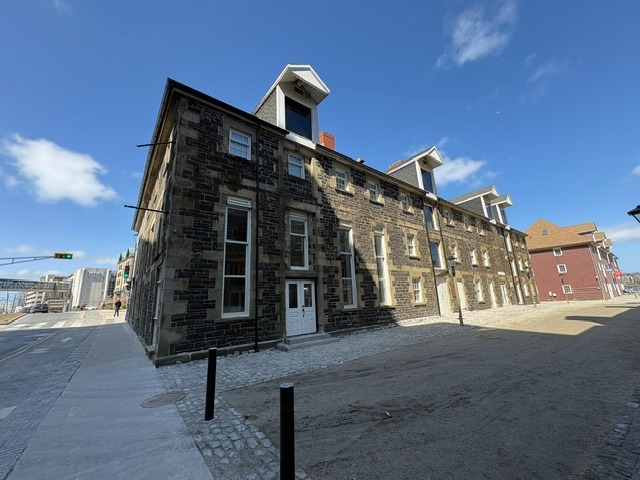
Along Halifax’s harbour, a closely grouped collection of stone and wooden buildings preserves the character of the city’s nineteenth-century working waterfront. Known as Historic Properties, these former warehouses and commercial premises stood where merchants conducted business and stored goods moving through the port. In 1963, the Halifax Waterfront Buildings were designated a National Historic Site, […]
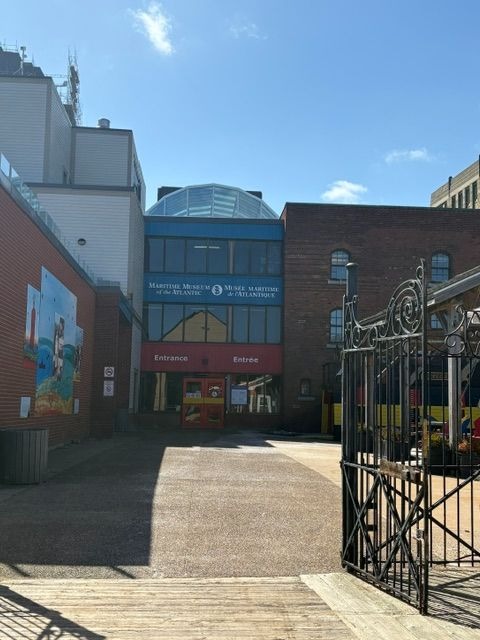
Maritime Museum of the Atlantic
On Lower Water Street beside Halifax Harbour, the Maritime Museum of the Atlantic preserves the history of a province whose communities and livelihoods have long been connected to the sea. Its collections explore shipbuilding, fishing, coastal travel, ocean commerce and naval service, bringing together the vessels, tools and personal belongings through which that history can […]
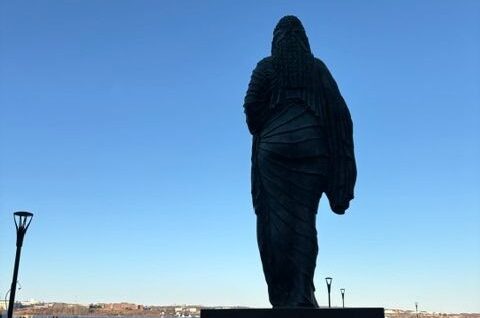
The Sirens’ Calling
At Queen’s Marque on Halifax’s waterfront, four sculpted figures stand on black granite bases, each oriented toward a different point of the compass. Created by Nova Scotia artist John Greer and installed in 2020, The Sirens’ Calling draws on ancient Greek sculpture and mythology to explore departure, return and the harbour’s role as a place […]

