The War Memorial Building
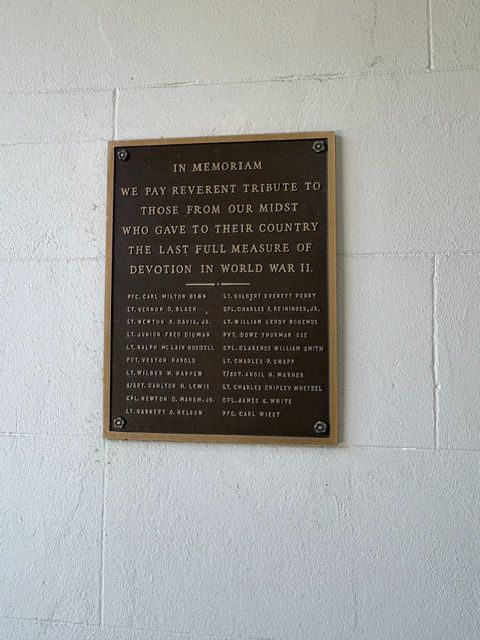
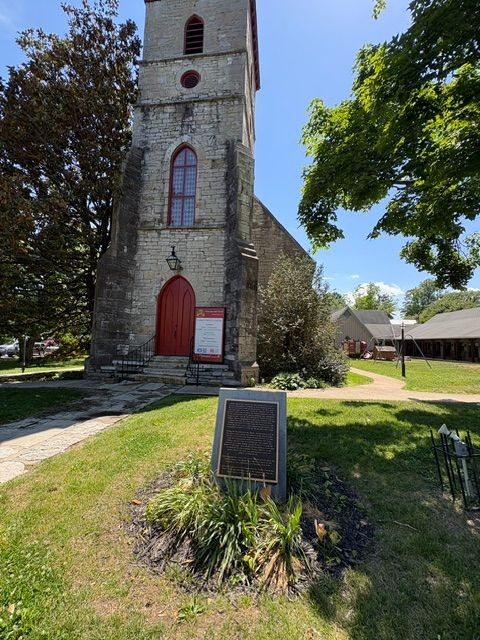
At the corner of German and King Streets, Shepherdstown’s War Memorial Building has welcomed people through its doors for more than a century and a half. Its tall windows, red brick walls, and prominent entrance reflect its original purpose as a church. The plaques beside the doorway tell another chapter: after World War II, it became a place where remembrance and community life came together.
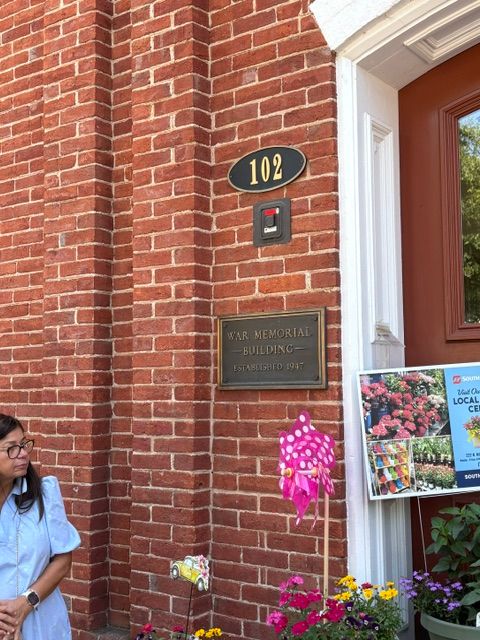
The building was constructed in 1868 for the Methodist Episcopal Church, South. Before its construction, a large tannery occupied this part of the block. The new church gave the corner a substantial brick landmark during the years immediately following the Civil War. For decades, its congregation worshipped here, while another Methodist congregation maintained a separate church elsewhere in town. In 1940, the congregations reunited at the New Street Methodist Church, bringing this building’s years as a Methodist place of worship to an end.
Its next purpose emerged from the civic spirit of the World War II years. The Shepherdstown Men’s Club was organized in 1945 as a local service organization, succeeding the town’s short-lived Lions Club. Its founding goals included serving the community, encouraging fellowship, and cooperating with other organizations working for the public good. Purchasing the former church provided a permanent place to carry out those ambitions.
The club acquired the property in 1947 and named it the War Memorial Building. The dedication honored those who had lost their lives in World War II and expressed gratitude to the men and women who had served. Giving the memorial a useful community purpose meant that remembrance would accompany the gatherings and activities held within its walls.
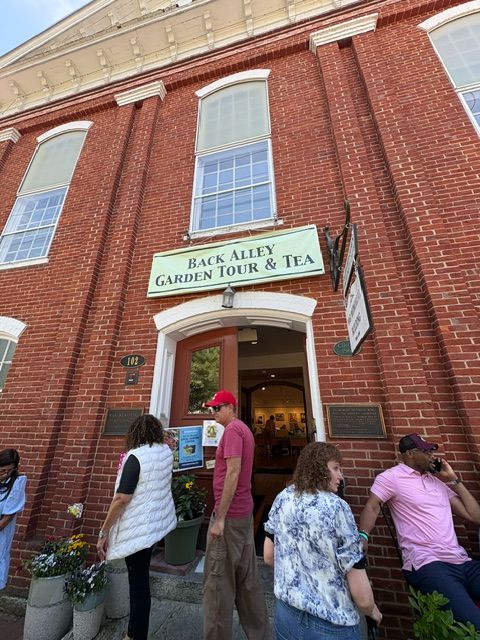
The organization later became the Shepherdstown Community Club. Its building continued to accommodate meetings, dinners, celebrations, and public events. The Back Alley Garden Tour & Tea, advertised above the entrance during my visit, belongs to that continuing tradition. Along with book sales, cultural gatherings, and seasonal celebrations, it brings people into a historic building that remains part of the town’s daily life.
What interested me here was the way the building’s history remained active. A church built after one war became a memorial after another, then continued serving generations of neighbors. Its doorway carries both an invitation to gather and a reminder of the people whose service gave the building its name.
Read More From Nancy
McMurran Hall
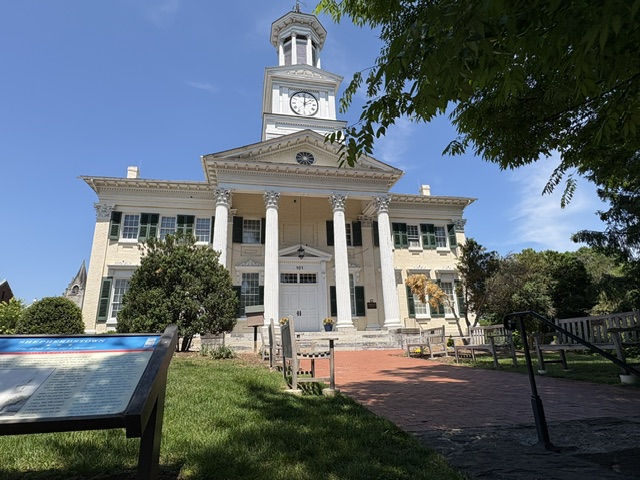
At the corner of German and King streets, McMurran Hall stands with tall columns, a triangular pediment and a clock tower rising above its entrance. Its formal appearance reflects its original purpose as a public building, although its history would carry it from town government into education. Rezin Davis Shepherd, a local benefactor who made […]
The Old Market House
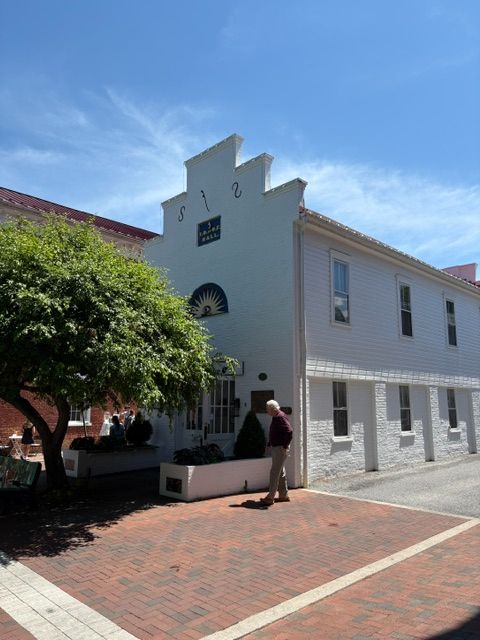
Standing in the middle of King Street near its intersection with German Street, Shepherdstown’s Old Market House occupies a place that has brought townspeople together for more than two centuries. Its white walls, stepped front, and unusual eye above the entrance give it a distinctive appearance. Behind those features is a history of farmers, fraternal […]
Knutti Hall
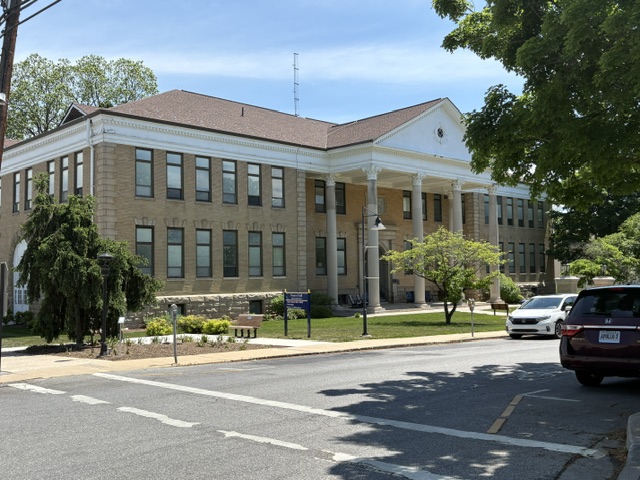
Knutti Hall’s pale brick walls, stone foundation and tall columned entrance reflect an era when college buildings were designed to give education a prominent place in the community. Completed in 1904, the building became an important home for academic life at the institution now known as Shepherd University. Its construction followed a significant loss. An […]

