Moulder Hall
At the corner of German and King Streets, a small sign on Moulder Hall identifies a chapter of history that its brick walls otherwise keep quiet: this building served as a hospital during the Maryland Campaign of 1862. Beneath it, another plaque dates the building to about 1791. Together, these markers connect an ordinary downtown storefront with the suffering that reached Shepherdstown during the Civil War.
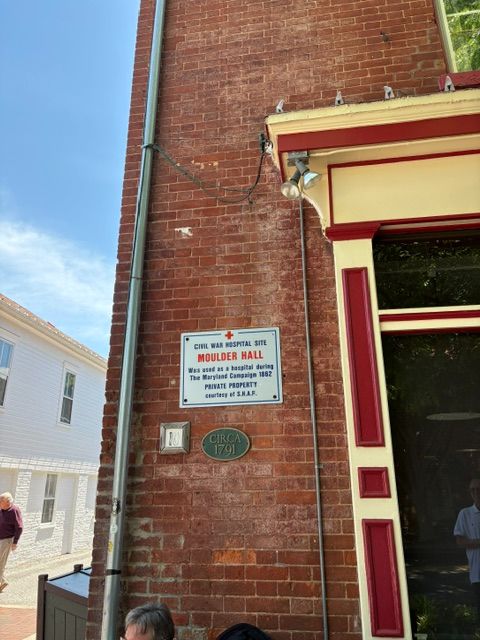
For much of its history, Moulder Hall belonged to the everyday commercial life of the town. A general store or grocery occupied the building from the early nineteenth century into the late twentieth century. Before the Civil War, local militia groups also used an attached building at the rear for meetings and drills. In September 1862, however, its rooms were pressed into a very different service.
Following the battles of South Mountain and Antietam, wounded soldiers arrived in Shepherdstown, then still part of Virginia. Homes, churches, and public buildings became makeshift hospitals. Resident Mary Bedinger Mitchell later recalled that “the whole town was a hospital.” Her account described residents raising yellow cloth over buildings to identify places receiving the wounded. The work of caring for soldiers spread throughout a community suddenly overwhelmed by the consequences of battles fought nearby.
At Moulder Hall, wounded men were carried upstairs, where the second floor became one of the town’s principal emergency surgical spaces. Historic accounts describe amputated limbs being passed or thrown from upper windows into waiting wagons, a grim indication of the severity of the injuries treated here. The rooms above the familiar storefront had become places where surgeons struggled to save lives, and where some soldiers faced the loss of a limb far from home.
After the war, the building took on another role. Joseph McMurran, who would become the first principal of Shepherd College, maintained a private schoolroom here. A place associated with emergency surgery became a place of instruction, adding education to its long history of commerce and community use.
Stopping at this marker changed how I understood the building. Its history reached beyond its age or architecture to the people who had occupied its rooms: shopkeepers and customers, wounded soldiers and those tending them, a teacher and his students. Moulder Hall preserves those overlapping chapters in the middle of an ordinary street, where a brief pause can reveal how much history remains around us.
Read More From Nancy
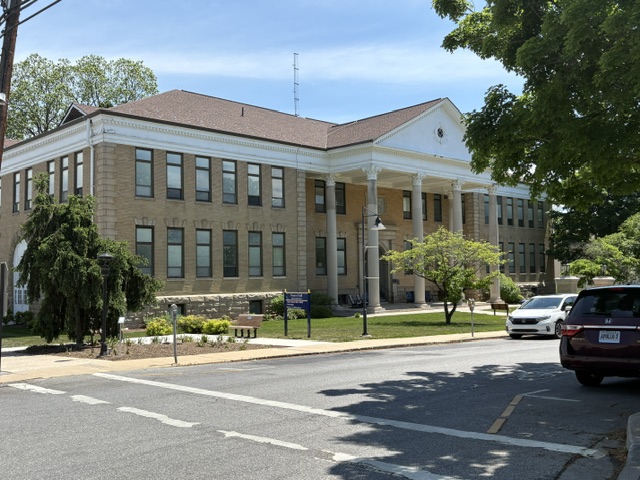
Knutti Hall
Knutti Hall’s pale brick walls, stone foundation and tall columned entrance reflect an era when college buildings were designed to give education a prominent place in the community. Completed in 1904, the building became an important home for academic life at the institution now known as Shepherd University. Its construction followed a significant loss. An […]
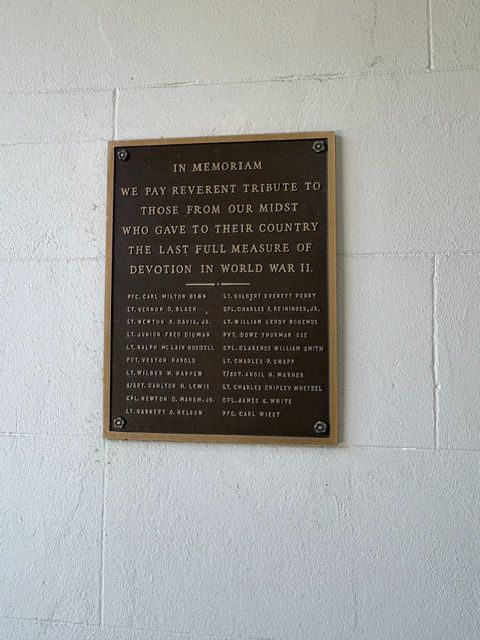
A Generation Remembered
At Shepherd State Teachers College, now Shepherd University, a bronze memorial preserves the names of men who lost their lives during World War II. Its inscription pays tribute to those “from our midst” who gave their country “the last full measure of devotion.” Beneath those words, individual names and military ranks give a personal identity […]
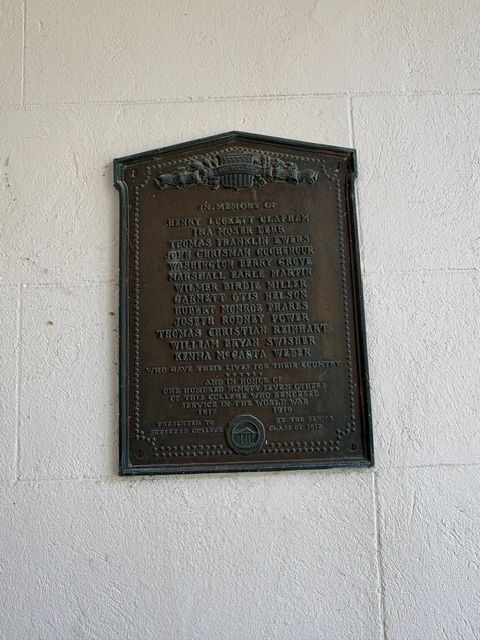
Remembering Shepherd’s World War I Generation
A bronze memorial at what is now Shepherd University preserves the names of thirteen men who gave their lives during World War I. Beneath them, the inscription also honors 197 men of the college who served between 1917 and 1919. Together, these words record both the breadth of the college community’s participation and the individual […]

