Chatham Railroad Museum
For much of the nineteenth century, Chatham’s location at the southeastern end of Cape Cod made travel and commerce difficult. Residents depended upon coastal vessels, horse-drawn transportation and long overland journeys to reach other communities. Although railroads began serving other parts of Cape Cod earlier in the century, Chatham waited decades for a direct connection.
The Chatham Railroad Company was chartered in 1886 to construct approximately seven miles of track between Chatham and the Old Colony Railroad’s main line in Harwich. The company was led by Marcellus Eldredge, a Chatham native who had become successful in the brewing industry. The track, rail yard and stations were completed in 1887, and regular service began that November.
The railroad changed the movement of people, mail and merchandise. Passenger trains connected Chatham with Harwich, Boston and destinations beyond Cape Cod. In 1891, approximately 22,000 passengers used the line’s two stations and flag stop. The service helped support the development of hotels and inns as Chatham became increasingly accessible to summer visitors.
Freight service was equally important to the town. Lumber, coal, grain, groceries, mail, stone for shoreline protection, gasoline, road-building materials and electrical supplies were carried into Chatham. Fresh and salted fish, shellfish, cranberries, mail and express shipments traveled in the opposite direction. Rail transportation gave local businesses faster access to larger markets while reducing their dependence upon coastal shipping and wagon transportation.
The Chatham Railroad Company owned the tracks and stations but did not operate its own trains. It leased the line first to the Old Colony Railroad and, beginning in 1893, to the New York, New Haven and Hartford Railroad. At its height, the line was served by four passenger trains each day, with freight trains added as needed.
The Chatham depot was constructed in a picturesque style sometimes called Railroad Gothic. Its broad roof, decorative brackets, contrasting trim and tower created a recognizable civic landmark while providing working space for passengers, baggage, freight and railroad employees. The station stood beside a rail yard that once included additional tracks, industrial activity and facilities for servicing and turning trains.
As roads improved and automobiles, trucks and buses became increasingly common, the short branch railroad became less necessary. Rail service to Chatham ended in 1937 after approximately fifty years. The tracks and much of the associated railroad infrastructure disappeared, but the original depot remained.
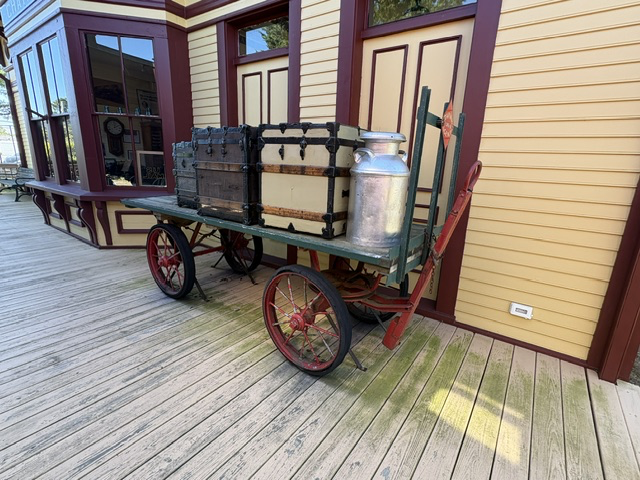
In 1960, Jacob and Gertrude Cox donated the vacant depot and its land to the Town of Chatham. Under the leadership of retired New York Central executive Frank Love, the building reopened as the Chatham Railroad Museum. Love contacted railroad companies throughout North America and requested artifacts for the new collection. The museum eventually assembled thousands of objects, including lanterns, tools, signs, badges, timetables, menus, passes, telegraph equipment, paintings and model trains.
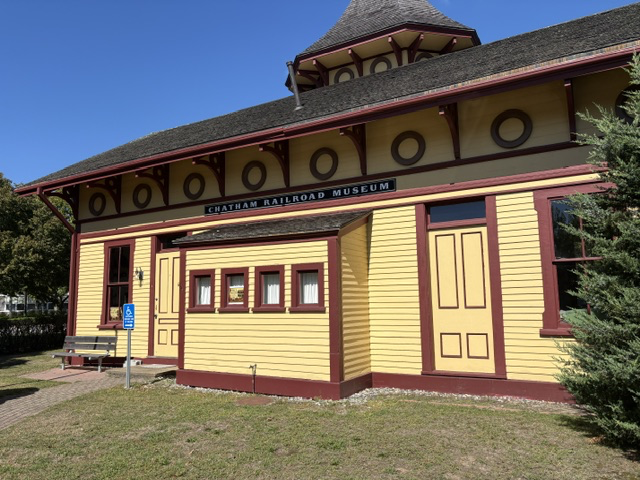
Among its notable holdings are model locomotives produced for the New York Central Railroad and displayed at the 1939 New York World’s Fair before being operated at Grand Central Terminal. The museum also contains models of Chatham’s former stations and a reconstruction of the rail yard as it appeared in 1915. Outside, a restored 1910 New York Central wooden caboose preserves another part of American railroad history.
The depot was added to the National Register of Historic Places in 1978 and later underwent an extensive exterior restoration. It now documents the fifty-year period when the railroad connected Chatham’s residents, businesses and maritime economy with Boston and the wider nation.
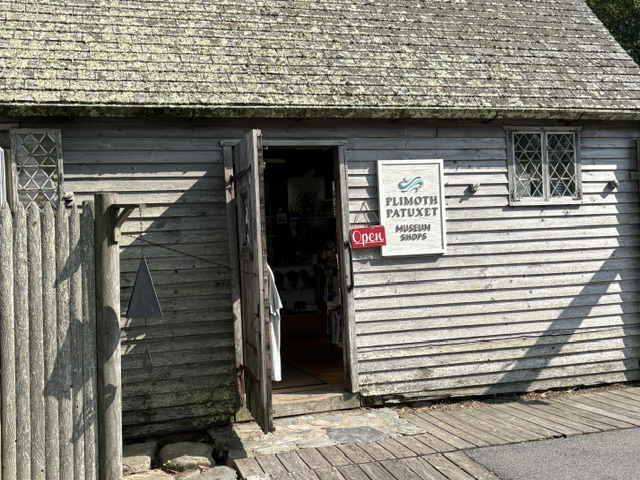
Read More From Nancy
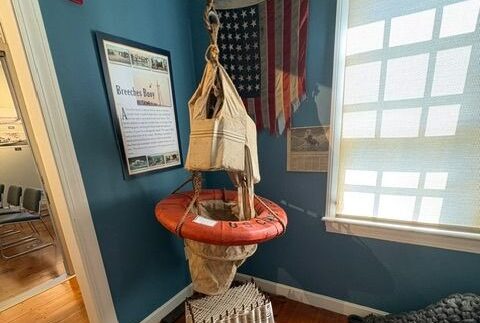
The Breeches Buoy
A life ring with a pair of canvas trousers attached may seem an unlikely means of escaping a shipwreck. Yet the breeches buoy offered a way to bring people safely ashore when a stranded vessel was within reach of land and the surf made launching a rescue boat too dangerous. The exhibit in Chatham preserves […]
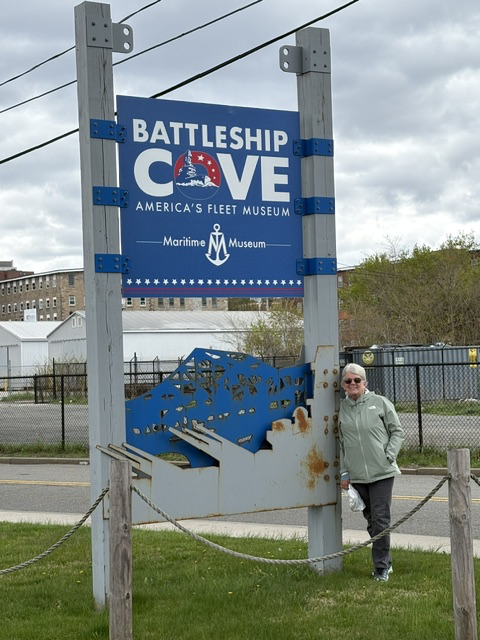
Battleship Cove
One of the highlights of our visit to Fall River was Battleship Cove, home to the largest collection of historic naval vessels in the world. Located along the waterfront of Mount Hope Bay, this remarkable museum preserves ships that served during World War II and the Cold War, allowing visitors to step aboard and experience […]
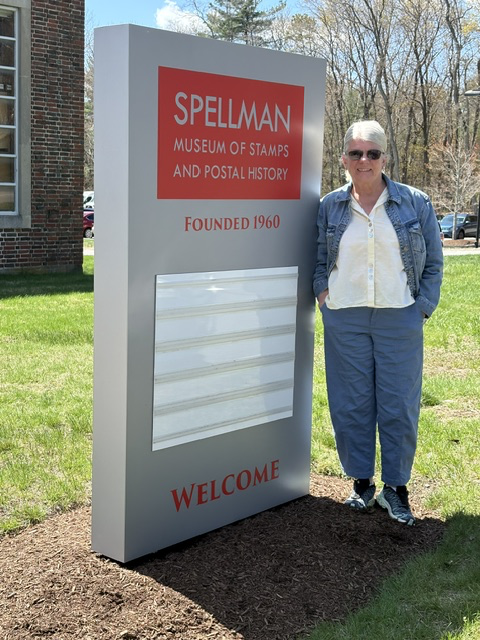
The Spellman Museum of Stamps & Postal History
Tucked onto the campus of Regis College in Weston is a museum unlike almost any other: the Spellman Museum of Stamps & Postal History. Founded in 1960, the museum is devoted to stamps, postal history, and the many stories that can be discovered through something as small as a postage stamp. My connection to the […]

