Trinità dei Monti and the Spanish Steps
The Church of Santissima Trinità dei Monti rises above the Spanish Steps on Rome’s Pincian Hill. Its twin bell towers create one of the city’s most recognizable views, forming a dramatic background to the broad stairway descending toward the Piazza di Spagna.
Construction of the church began in the early sixteenth century under the patronage of King Louis XII of France. Its history reflects the longstanding French presence in Rome, and the church and adjoining monastery remain connected to France. The façade, completed during the late sixteenth century, combines Renaissance balance with Gothic influences visible in parts of the church.
Standing between the two bell towers is the Sallustian Obelisk. Although inspired by ancient Egyptian monuments, it was created in Rome during the imperial period. It originally stood in the Gardens of Sallust and was moved to its present location by order of Pope Pius VI in 1789.
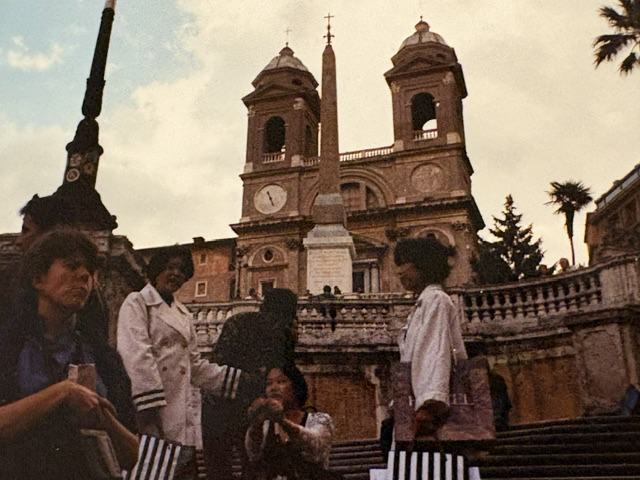
The Spanish Steps were constructed between 1723 and 1725 to connect the church and upper hill with the Piazza di Spagna below. Designed principally by Francesco de Sanctis, the 135 steps form a series of terraces, curves and landings rather than a single straight staircase. Their name comes from the Spanish Embassy to the Holy See, which was located near the square at the bottom.
During our visit, the steps were filled with people gathering, resting and moving between the square and the church. Our daughters had their hair done while sitting on the Spanish Steps, turning our visit to this famous Roman landmark into a personal family memory. One view captures the church and obelisk rising above the staircase, while the other preserves that quieter moment amid the activity of the steps.
Together, the church, obelisk and staircase unite several periods of Roman history. Ancient inspiration, Renaissance architecture and eighteenth-century urban design meet in a setting that remains both an important landmark and a place where everyday moments become part of the experience of Rome.
Read More From Nancy
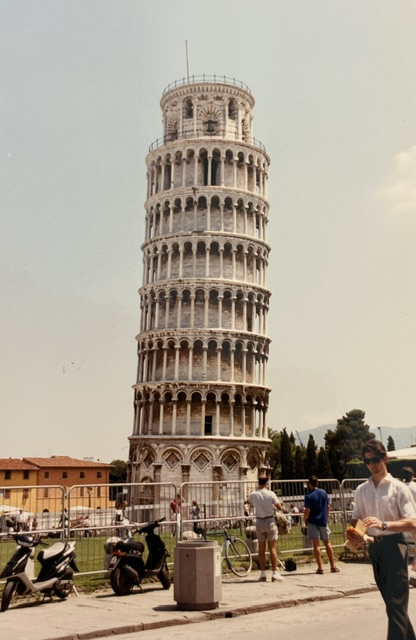
Leaning Tower
During our family vacation in Italy, we weren’t sure whether we wanted to take the time to visit Pisa. There were so many places we wanted to see, and we wondered whether making a special trip just to see the famous Leaning Tower would be worth it. In the end, we decided that we were […]
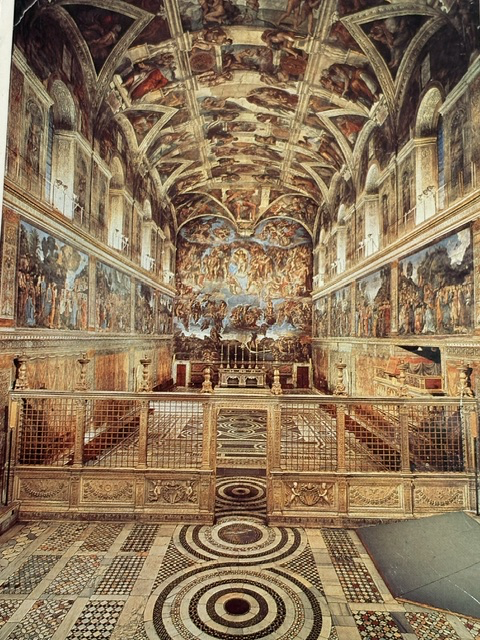
The Sistine Chapel
Our family vacation to Italy had to include the Sistine Chapel. Entering this chapel in silence, surrounded by some of the most recognized works of art in the world, was one of those experiences where it was difficult to know where to look first. The room itself is relatively simple in shape, but almost every […]
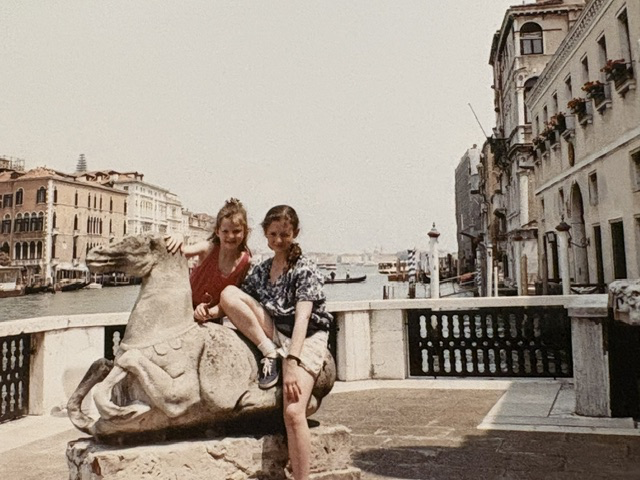
Peggy Guggenheim Collection
Palazzo Venier dei Leoni stands along Venice’s Grand Canal, but its appearance differs from the tall palaces surrounding it. Construction began during the eighteenth century for the Venier family, but only one level was completed. Its low profile and broad waterfront terrace eventually became part of the building’s distinctive character. Peggy Guggenheim purchased the unfinished […]

