Casa Pastors
Standing near Girona Cathedral, Casa Pastors could easily be overlooked among the city’s more imposing medieval landmarks. Its broad stone façade, barred windows and heavy wooden doorway give it the appearance of a restrained civic building. Yet the information panel beside the entrance revealed that this seemingly simple structure contains layers of Girona’s history reaching back to the Roman era.
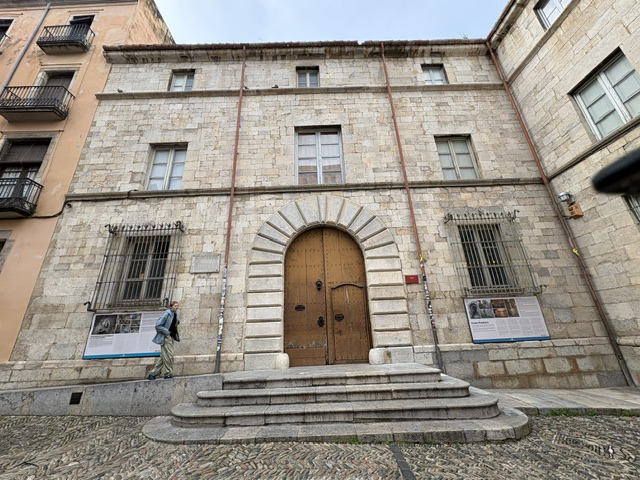
Parts of Casa Pastors incorporate remains of Girona’s Roman and medieval defensive walls, including elements associated with Montcada Castle and the Sobreportes gateway. Its position near one of the historic entrances to the old city placed it within an area that was repeatedly altered as Girona expanded and strengthened its defenses.
Over the centuries, the building served several different purposes. It was once used as a seminary and later became the residence of the aristocratic Pastors family, from whom it received its present name. During the Napoleonic Wars, when Girona endured a series of sieges, the building related to the city’s defense.
Casa Pastors was eventually acquired by the city and adapted for government use. From 1973 until 2013, it served as Girona’s provincial courthouse. Archaeological investigations have also uncovered evidence beneath and around the property, including remains connected with the medieval church of Santa Maria de les Puelles and the Roman forum.
Nothing about the façade immediately reveals the full story. Its significance lies not in elaborate decoration, but in the way one building preserves traces of Roman fortifications, medieval Girona, an aristocratic residence and the city’s more recent civic life. Stopping to read the panel transformed what first appeared to be an austere stone building into another doorway into Girona’s long and layered past.
Read More From Nancy
The Eiffel Bridge
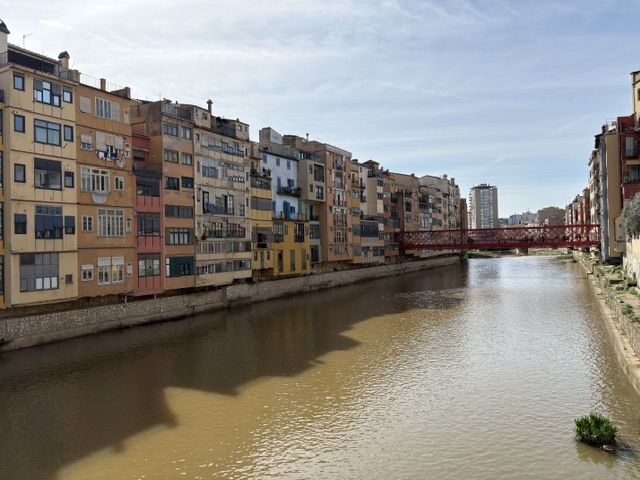
As we explored Girona, the bright red iron bridge crossing the Onyar River immediately stood out against the closely grouped buildings lining the water. Its official name is Pont de les Peixateries Velles, or the Bridge of the Old Fishmongers, although it is commonly known as the Eiffel Bridge. The bridge was constructed in 1877 […]
Casa Masó
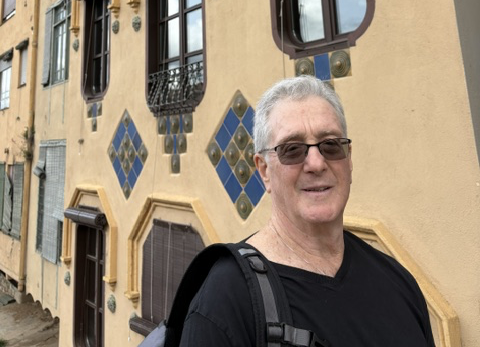
Standing along Carrer de les Ballesteries in Girona’s historic center, Casa Masó offers a fascinating contrast to the medieval buildings for which the city is best known. Its warm ochre exterior, dark wooden window frames, wrought-iron balconies and geometric arrangements of blue and green glazed tiles immediately distinguish it from the surrounding buildings. The façade […]
The Arab Baths
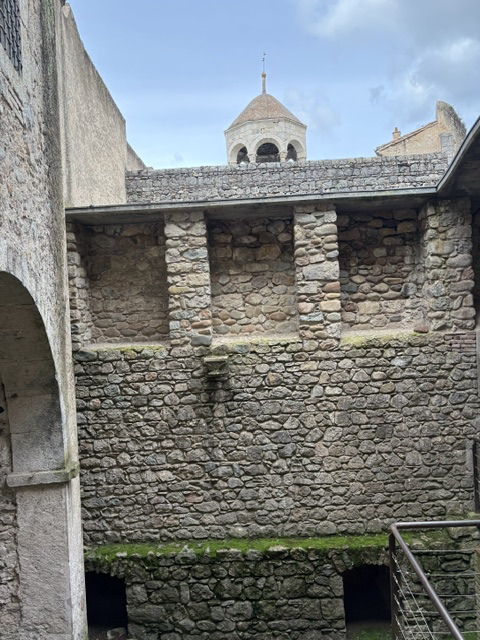
Hidden among the stone buildings of Girona’s old quarter, the Arab Baths reveal very little from the outside. Only the octagonal lantern rising above the roof suggests that something unusual lies within. The building appears ancient and austere, its weathered walls blending almost seamlessly with the medieval city surrounding it. Despite their name, the baths […]

