Anne’s East-Gable Bedroom
This small bedroom at Green Gables did not belong to Lucy Maud Montgomery, nor did a real girl named Anne Shirley ever sleep here. Instead, it has been arranged according to Montgomery’s descriptions of the east-gable room that became Anne’s first true bedroom in Anne of Green Gables. It is one of the places where a setting created in Montgomery’s imagination has been given physical form.
When Anne first arrived at Green Gables, the room was plain and unwelcoming. Its bare walls and limited furnishings reflected Marilla Cuthbert’s practical nature. Anne nevertheless responded with her characteristic imagination, picturing how much more beautiful the room might become. As she gradually found a place within the Cuthbert household, Montgomery wrote that Anne altered “the whole character of the room,” just as she changed the lives of Matthew and Marilla.
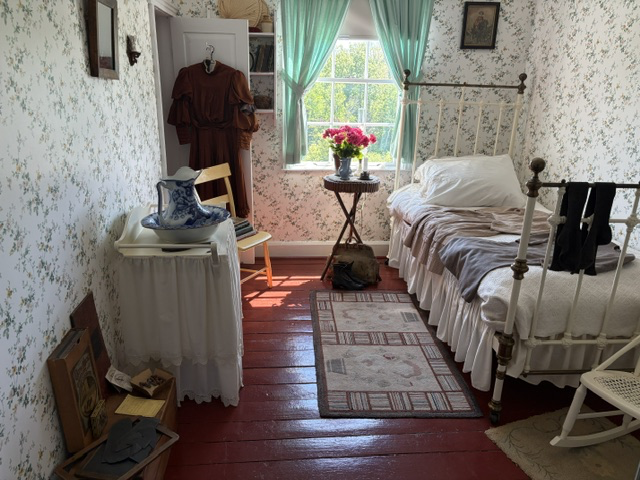
The room displayed today contains several objects associated with memorable episodes in the novel. The carpetbag recalls Anne’s arrival at the Bright River railway station carrying all her worldly possessions. The slate represents the one she broke over Gilbert Blythe’s head after he teased her about her red hair. The dress with puffed sleeves remembers Matthew’s realization that Anne’s plain clothing made her different from the other girls and his decision to arrange a special Christmas dress for her.
The apple-blossom wallpaper also reflects Montgomery’s description of the room’s transformation. Anne had imagined beauty even when confronted with bare walls, but the more cheerful decoration eventually surrounding her represented the growing sense of belonging she found at Green Gables. The room became more than a place to sleep; it represented the first home in which Anne was loved and permitted to become herself.
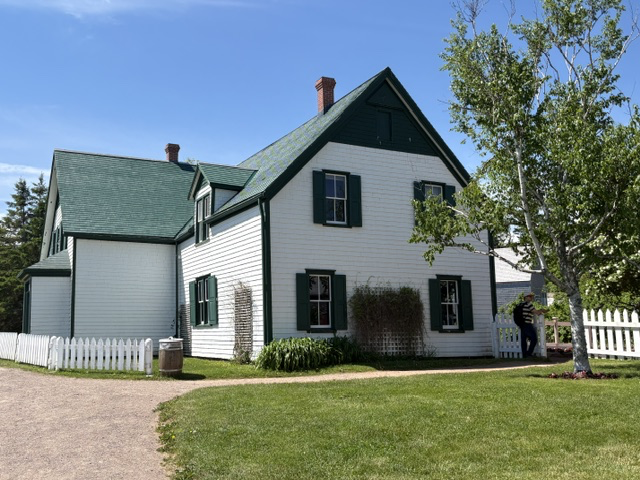
The real Green Gables farmhouse belonged to David and Margaret Macneill, relatives of Montgomery’s grandfather. Montgomery never lived in the house, but she knew the property well and drew upon its appearance and surrounding landscape when creating the fictional home of Matthew, Marilla, and Anne. The bedroom visitors see today was furnished later to interpret her story rather than to preserve a room she personally occupied.
Standing in the doorway allows visitors to see how completely Montgomery described Anne’s world. A carpetbag, a broken slate, a fashionable dress, and apple-blossom wallpaper may be fictional details, but together they communicate one of the novel’s central ideas: a lonely child had finally found a room, a family, and a place where she belonged.
Read More From Nancy
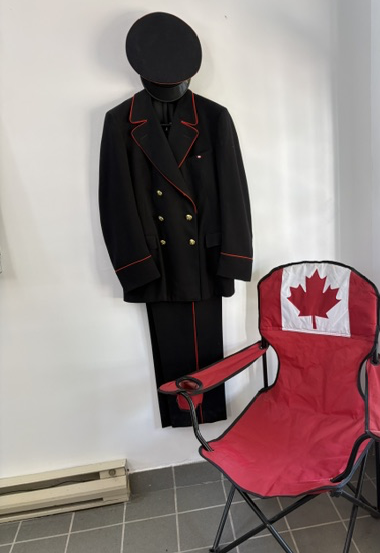
Canadian Postal Uniform
While visiting the historic post office at Cape Traverse, this heavy woolen postal uniform caught my attention. Today we rarely give much thought to the clothing worn by the person delivering our mail, but on Prince Edward Island a uniform like this belonged to someone whose work continued regardless of the season. The dark wool […]
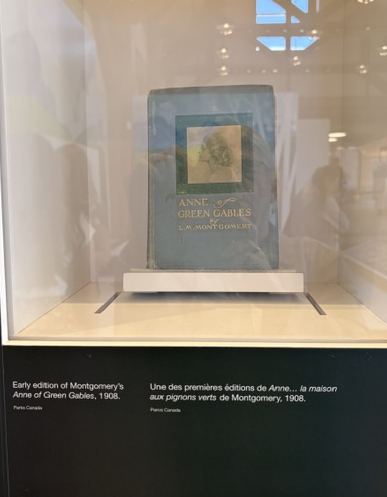
The Book That Made the Journey
This early edition of Anne of Green Gables, published in 1908, represents far more than the beginning of one of the world’s best-loved books. Looking at it after learning how Lucy Maud Montgomery’s manuscript reached her Boston publisher made me realize just how much had to happen before Anne could ever reach her readers. Montgomery […]
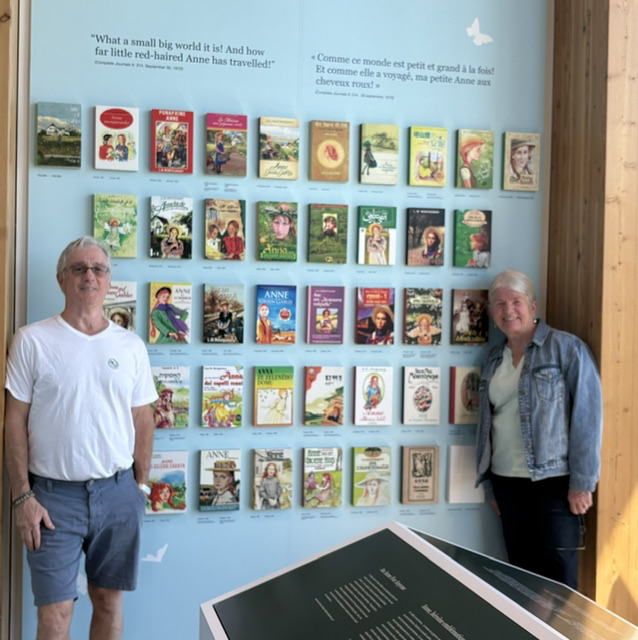
Lucy Maud Montgomery Museum
Standing before this wall of books at the Lucy Maud Montgomery Museum in Prince Edward Island, I found myself thinking less about Anne Shirley than about the remarkable woman who created her. The books represent far more than a successful literary career. They tell the story of a life shaped by loss, perseverance, imagination, and […]

