The Roman Theater
I especially enjoyed visiting Caesarea while we traveled through Israel. Its setting along the Mediterranean and the remains of so many different periods made it possible to experience several layers of history in one place.
Caesarea Maritima was developed by Herod the Great between approximately 22 and 10 BCE. He transformed a small coastal settlement into a magnificent Roman city with a deep-water harbor, palace, temples, public buildings and entertainment venues. He named the city Caesarea in honor of Caesar Augustus.
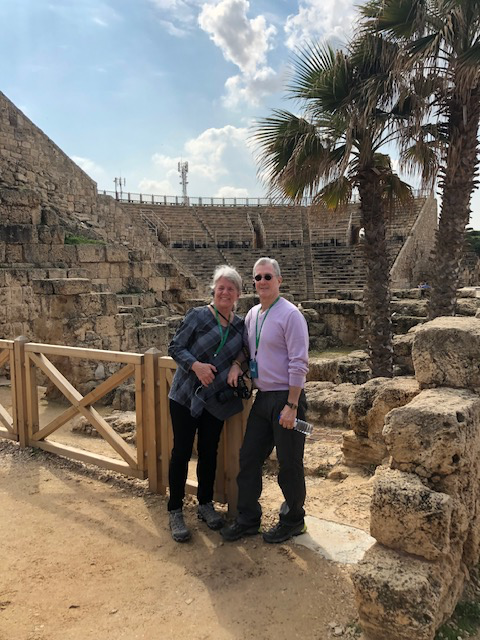
The Roman theater was one of the city’s most important public buildings. Its semicircular arrangement of seats surrounded an open performance area and a stage where audiences gathered for plays, ceremonies and other forms of entertainment. The theater was altered several times as Caesarea grew and changed under Roman and Byzantine rule.
The theater also became the setting for an important archaeological discovery. During excavations in 1961, a limestone block bearing the name and title of Pontius Pilate, prefect of Judea, was found reused in one of its stairways. Known as the Pilate Stone, the inscription is the only known contemporary archaeological object bearing his name and provides physical evidence connecting Caesarea to the Roman official described in the New Testament.
After centuries of abandonment, excavation and reconstruction returned the theater to its original purpose. Performances are once again held within its ancient semicircle, allowing a gathering place created more than two thousand years ago to remain part of the cultural life of Caesarea.
Read More From Nancy
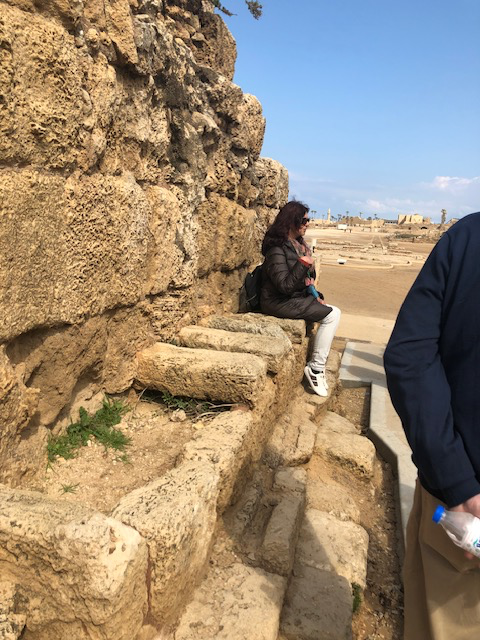
Roman Toilets
While exploring the ancient city of Caesarea on Israel’s Mediterranean coast, we encountered a row of worn stone seats built into the remains of a wall. At first, their purpose was not obvious. We were surprised when our guide explained that these were Roman toilets and were part of a public latrine used by the […]
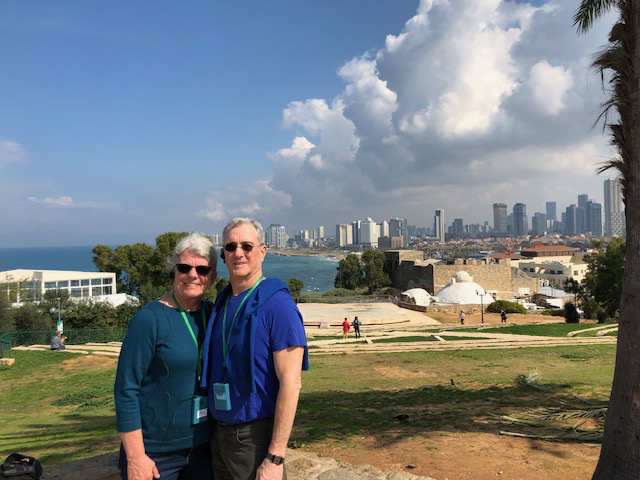
Abrasha Park
During our visit to Israel, Marty and I stopped at an overlook in Abrasha Park, high above the shoreline of Old Jaffa. From this peaceful spot, we could look north along the Mediterranean coast toward the modern skyline of Tel Aviv. The view brought two very different sides of Israel together: the ancient city of […]
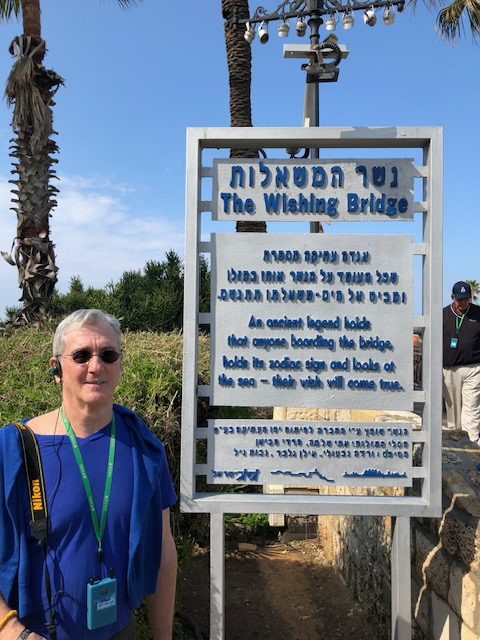
The Wishing Bridge
During our visit to Old Jaffa, we stopped at the entrance to the Wishing Bridge. The sign describes a local legend: anyone who stands on the bridge, holds the image of their zodiac sign, looks toward the sea, and makes a wish will have that wish come true. The bridge is decorated with twelve bronze […]

