Roman Toilets
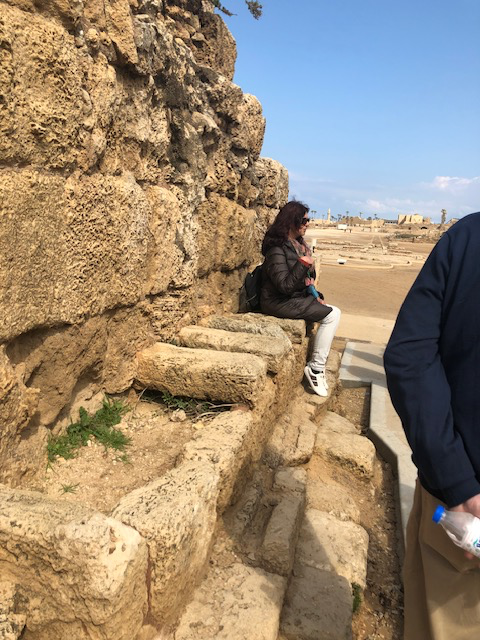
While exploring the ancient city of Caesarea on Israel’s Mediterranean coast, we encountered a row of worn stone seats built into the remains of a wall. At first, their purpose was not obvious. We were surprised when our guide explained that these were Roman toilets and were part of a public latrine used by the people who lived in this once-thriving city.
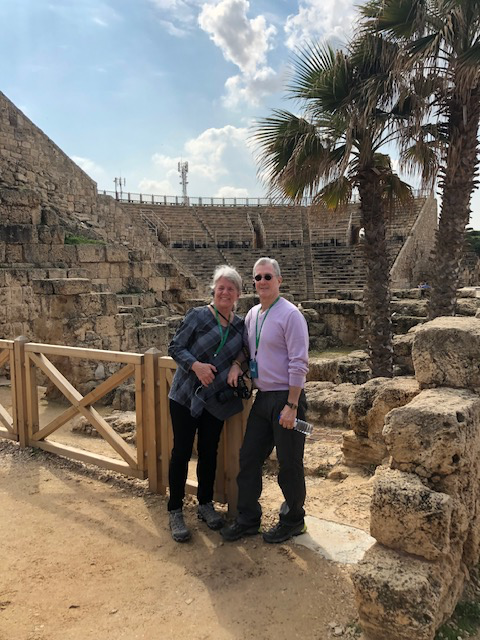
Caesarea was transformed by Herod the Great during the first century BCE into an impressive port city named in honor of Caesar Augustus. Herod constructed a harbor, palace, theater, hippodrome, temples, markets, and other public buildings intended to display the wealth and power of his kingdom. The city later became the administrative capital of the Roman province of Judaea and remained an important center of government, trade, and culture for centuries.
Supporting a city of this size required a dependable supply of water. Caesarea had no large natural source nearby, so Roman engineers constructed aqueducts to carry water from springs near the foothills of Mount Carmel. Using a carefully calculated slope, the water traveled for miles before reaching the city. It supplied drinking fountains, private homes, public bathhouses, gardens, and sanitation systems.
The public toilets were part of that larger network. The stone seats originally had openings, while a channel beneath them allowed running water to carry waste away. Another channel may have provided water for personal cleaning. The system was simple in appearance but depended upon careful engineering and the continued movement of water through the city.
What surprised us most was the lack of privacy. Roman public toilets often consisted of long benches where people sat beside one another without the walls or partitions, we would expect today. They could accommodate many people at the same time and were sometimes treated as social spaces where conversation and even business continued.
The great aqueduct demonstrated Rome’s ability to move water across long distances, but these stone seats showed where that engineering eventually reached: into the most ordinary and personal parts of city life. History at Caesarea was preserved not only in its grand theater and harbor, but also in the places where its residents carried out the simplest routines of their day.
Read More From Nancy
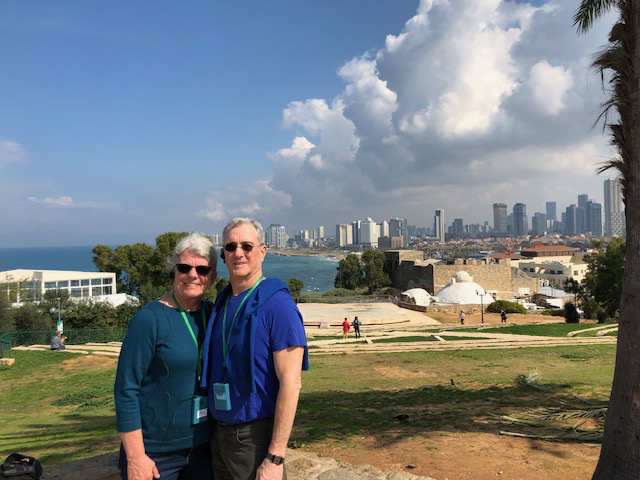
Abrasha Park
During our visit to Israel, Marty and I stopped at an overlook in Abrasha Park, high above the shoreline of Old Jaffa. From this peaceful spot, we could look north along the Mediterranean coast toward the modern skyline of Tel Aviv. The view brought two very different sides of Israel together: the ancient city of […]
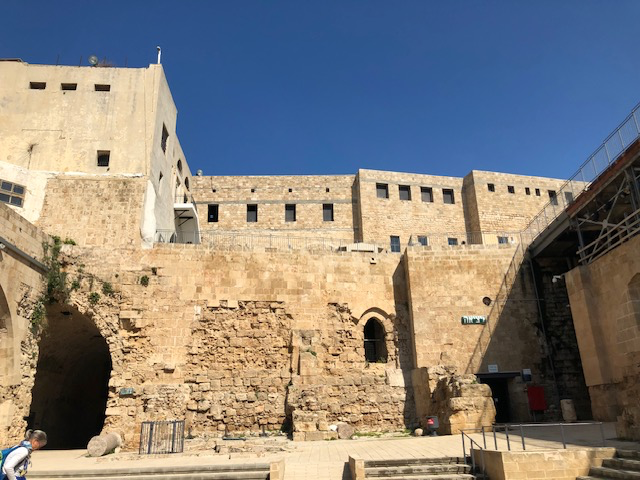
The Knights’ Halls and the Crusader City
The Knights’ Halls beneath the Old City of Acre preserve one of the most substantial surviving complexes from the age of the Crusades. Their vaulted chambers belonged to the Knights Hospitaller, one of the religious and military orders that became powerful forces in the Crusader states established along the eastern Mediterranean coast. The Crusades were […]
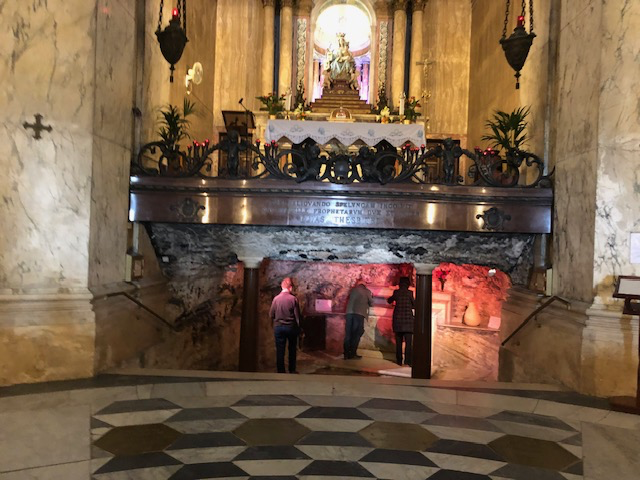
The Grotto of the Annunciation
During our visit to Nazareth, Marty and I entered the Basilica of the Annunciation, one of Christianity’s most important pilgrimage churches. Within the lower level of the basilica is the Grotto of the Annunciation, traditionally believed to be part of Mary’s home and the place where the Angel Gabriel appeared to her. According to the […]

