The Museum of Russian Icons
Erin and I headed out together to explore the Museum of Russian Icons in Clinton. This is one of those fascinating discoveries found in the middle of Massachusetts: a museum of international importance tucked inside a restored brick building in a former New England mill town.
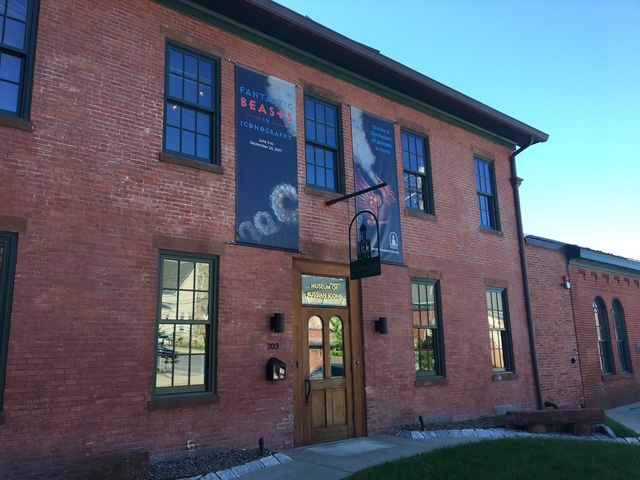
The museum was founded by Massachusetts industrialist Gordon B. Lankton. During a visit to Russia in 1989, he purchased his first icon at an open-air market. That single acquisition awakened an interest in Russian history, spirituality, and sacred art. Over the following years, he assembled a collection significant enough to share with the public. The Museum of Russian Icons opened in Clinton in 2006.
In the Eastern Orthodox Christian tradition, an icon is far more than a religious painting. It is a sacred image intended to connect the earthly and spiritual worlds. Icons commonly portray Christ, Mary, saints, angels, and events from the Bible. Their figures, gestures, colors, and symbols follow an established visual language that developed over centuries.
Many icons were painted on wooden panels covered with layers of linen and gesso. Artists applied pigments mixed with egg yolk in a process known as egg tempera. Gold leaf was frequently used in the background, not simply for decoration, but to represent divine light and a realm beyond ordinary time and place.
Traditionally, the individual artist was considered less important than the sacred subject. Icon painters followed recognized patterns passed from one generation to the next. Their purpose was not to create a realistic portrait or offer a personal interpretation. Each image was carefully constructed to communicate a religious meaning that worshippers would recognize.
Some icons were created for churches and monasteries, while smaller examples were kept in private homes or carried during travel. They were present during worship, prayer, family celebrations, and times of hardship. Together, they reveal the place faith held in the public and private lives of the people who used them.
The museum’s location adds another dimension to its story. Its restored buildings were once associated with Clinton’s industrial past. During the nineteenth century, the town grew around its mills, particularly the Bigelow Carpet Company. The surviving brick architecture recalls a period when manufacturing shaped Clinton and the daily lives of its residents.
Inside those New England industrial walls, Erin and I encountered sacred objects created thousands of miles away. Russian religious traditions, international travel, personal collecting, and the history of a Massachusetts mill town had all come together in one unexpected place.
The institution is now known as the Icon Museum and Study Center. Its expanded name reflects collections that include Russian, Greek, Veneto-Cretan, Ethiopian, and other Eastern Christian traditions. What began with one icon has grown into a museum, research library, and international center for the study of sacred art.
Our visit was another reminder of why I enjoy exploring the towns and communities around us. We do not always have to travel great distances to encounter something extraordinary. Sometimes an entire world of history, faith, and artistic tradition is waiting behind the brick walls of a building in the middle of Massachusetts.
Read More From Nancy
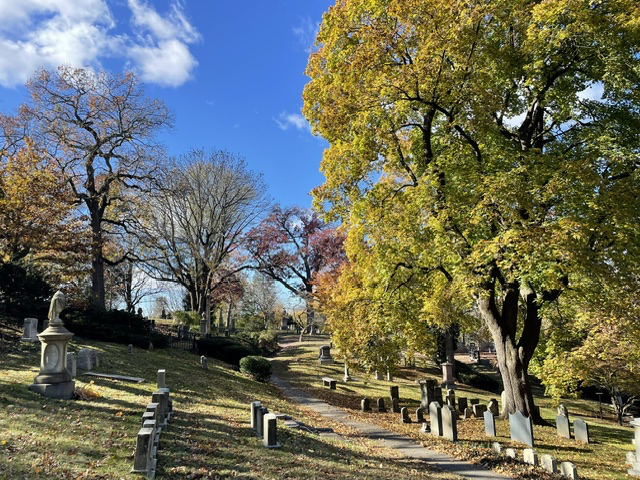
Mount Auburn Cemetery
Marty and I journeyed to Mount Auburn Cemetery because on a beautiful fall day. Surrounded today by the communities of Cambridge and Watertown, it is difficult to imagine that when it was created in 1831, this was countryside outside Boston. Walking through it on a beautiful autumn day, we quickly understood why Mount Auburn became much more […]
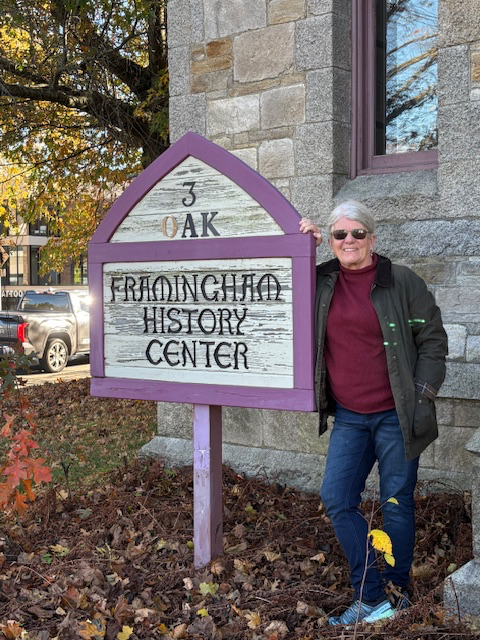
Framingham History Center
The home of the Framingham History Center is as much a historical artifact as the collections inside. The Center is housed in the former Edgell Memorial Library, a late 19th century structure that was completed in 1898. It was constructed as a public library through a private gift from philanthropist George Loring Edgell. This was an era when […]
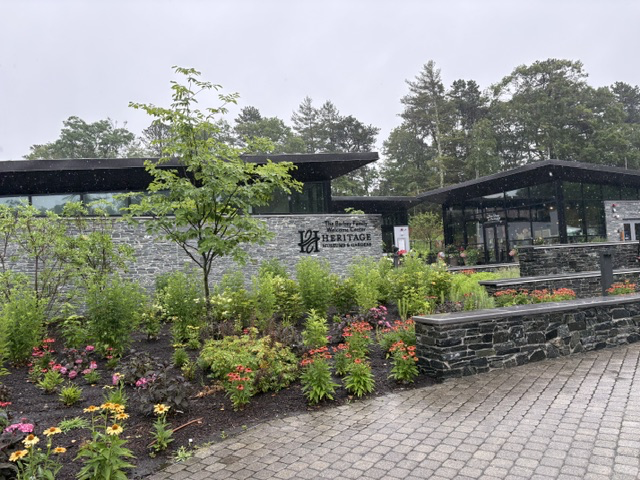
Heritage Museums & Gardens
One of the things I enjoy about exploring museums is discovering that the museum itself often has a story that is just as interesting as the collections inside. Heritage Museums & Gardens in Sandwich is a perfect example. Spread across 100 acres, it brings together Cape Cod history, gardens, art, automobiles and the stories of […]

