Chamberlin Mill
Standing beside the Still River in Woodstock Valley, Chamberlin Mill preserves an important part of the town’s agricultural and industrial history. Mills have operated at this location since the eighteenth century, when Manasseh Hosmer maintained a gristmill here. By the early nineteenth century, Abijah Sessions had established a sawmill on the property, beginning a family connection that continued for generations.
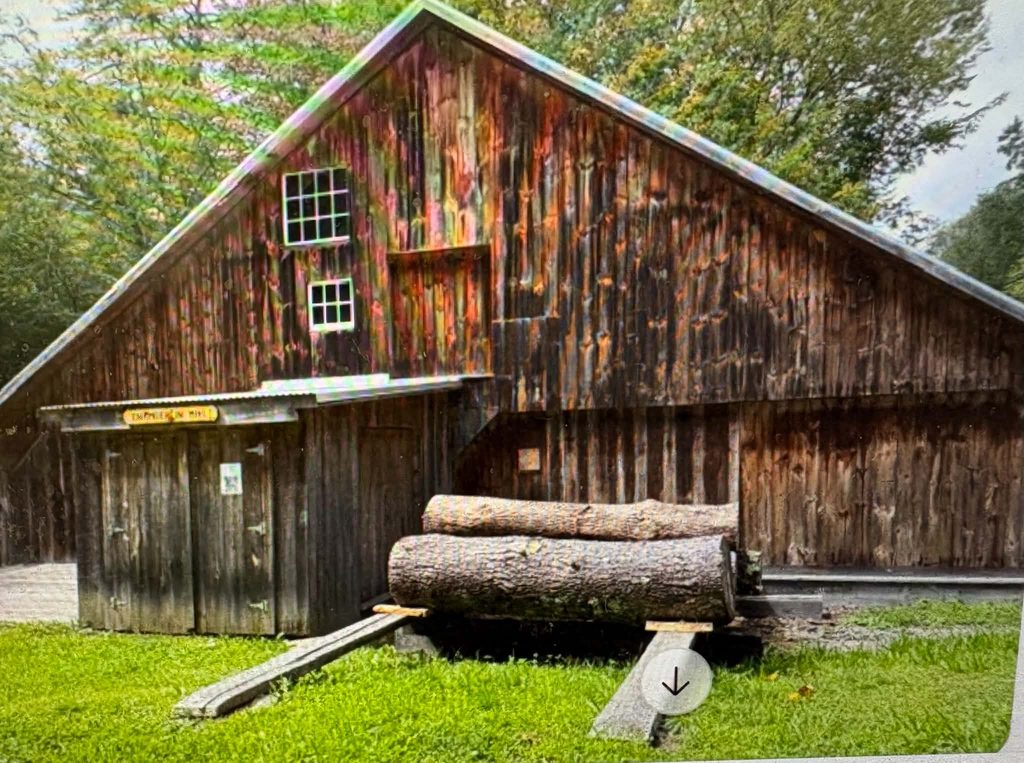
The present post-and-beam mill was constructed shortly after 1900. Water from the Still River was held in Lower Chamberlin Pond and directed through the mill’s turbine, which powered a network of gears, pulleys, and belts. These mechanisms operated an 1873 Lane circular saw that transformed logs from the surrounding forests into lumber needed for houses, barns, fences, and other buildings.
The Great Flood of 1936 damaged the dam and ended the mill’s ability to operate by waterpower. Two years later, the hurricane of 1938 brought down an enormous number of trees throughout New England. The Chamberlin family responded by adapting a 1928 Studebaker automobile engine to power the saw, allowing the mill to process the newly available timber and continue operating into the 1960s.
After the mill closed, its building and machinery remained remarkably intact. The property was acquired by The Nature Conservancy in 2008 as part of its effort to protect the Still River Preserve. Chamberlin Mill, Inc. later assumed ownership and began restoring the structure and its surviving equipment. Today, the historic circular saw can once again be operated using the rebuilt Studebaker engine.
Chamberlin Mill tells a story of work, ingenuity, and adaptation. Its survival allows visitors to understand how waterpower, skilled labor, and locally harvested timber helped sustain rural communities such as Woodstock for generations.
Read More From Nancy
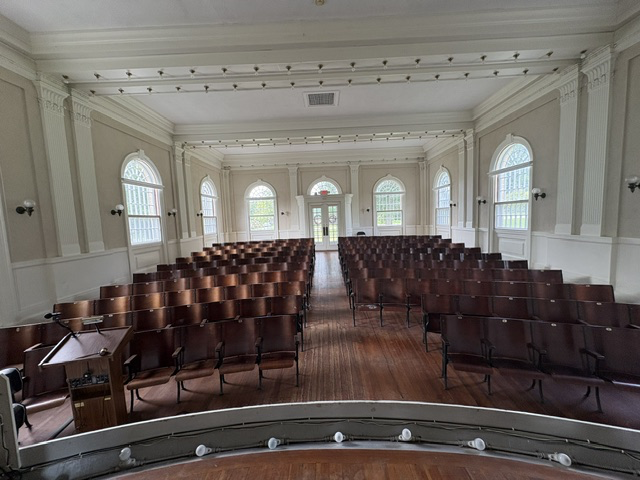
The Lecture Hall at Palmer Memorial Hall
The lecture hall inside Palmer Memorial Hall was designed to seat approximately two hundred people and included a stage and backstage area. Its sloping wooden floor, rows of folding chairs, and tall arched windows created a welcoming setting for lectures, performances, meetings, and other community gatherings. The first public program was held on May 2, […]
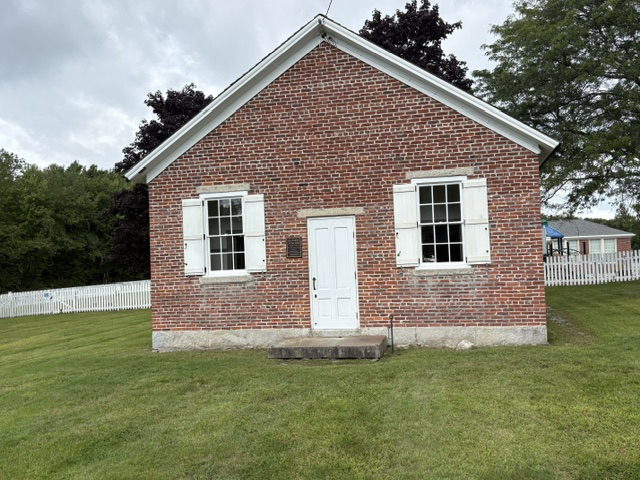
Quasset School
The history of Quasset School began in 1748, when a small district school was established to educate children living in this rural section of Woodstock. The surviving brick schoolhouse was constructed in 1854, replacing an earlier building while continuing a local educational tradition that had already existed for more than a century. Like other district […]
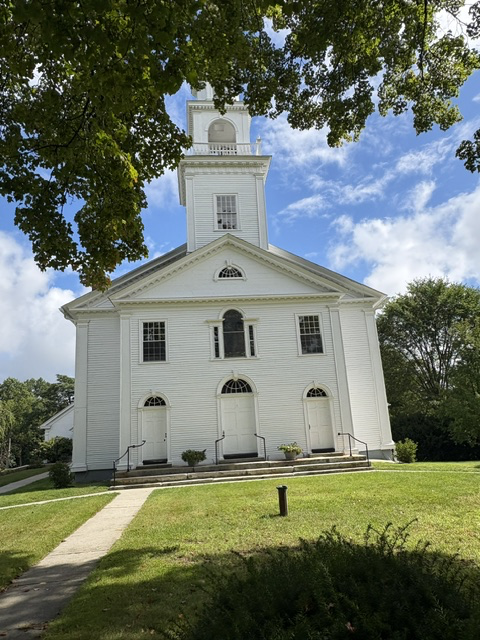
First Congregational Church of Woodstock
The First Congregational Church of Woodstock traces its beginnings to 1690, only a few years after settlers from Roxbury, Massachusetts, established the community they initially called New Roxbury. In early New England towns, the meetinghouse stood at the center of both religious and civic life. It was where residents worshiped, discussed community matters, and marked […]

