Washington in Blackout
December 1941Dearest Reader,
In the December 13, 1941, letter, my grandmother described another unsettling reality of those first days after Pearl Harbor, the fear that the war might reach the American mainland. Information was fragmentary, rumors circulated freely, and no one yet knew what form the conflict would take.
She wrote simply and without drama:
“They tell us here that we are in danger of an air attack, and Washington is partially blacked out at night.”
Her words reflect the atmosphere of those days. In the immediate aftermath of December 7, the federal government feared additional attacks, and cities along both coasts were places on heightened alert. Washington, DC, as the seat of government, was considered especially vulnerable. Civil defense measures were enacted almost at once. Streetlights were dimmed, windows were covered, and government buildings reduced nighttime illumination so the city would be less visible from the air.
These partial blackouts were as much about preparedness as they were about reassurance. They signaled to the public that authorities were taking action, even as uncertainty dominated daily life. Air-raid warnings, civil defense instructions and talk of possible attacks filtered through neighborhoods and households and quiet anxieties after dark.
Set alongside her concerns about the draft and the suspension of naturalizations, this brief observation reveals how quickly the war altered the rhythm of ordinary life. The lights going out in the nation’s capital were not just a precaution, they were a visible sign that American had entered a new and uncertain chapter.
Dr. Nancy Watson
Rambling With Nan
Washington
Read More From Nancy
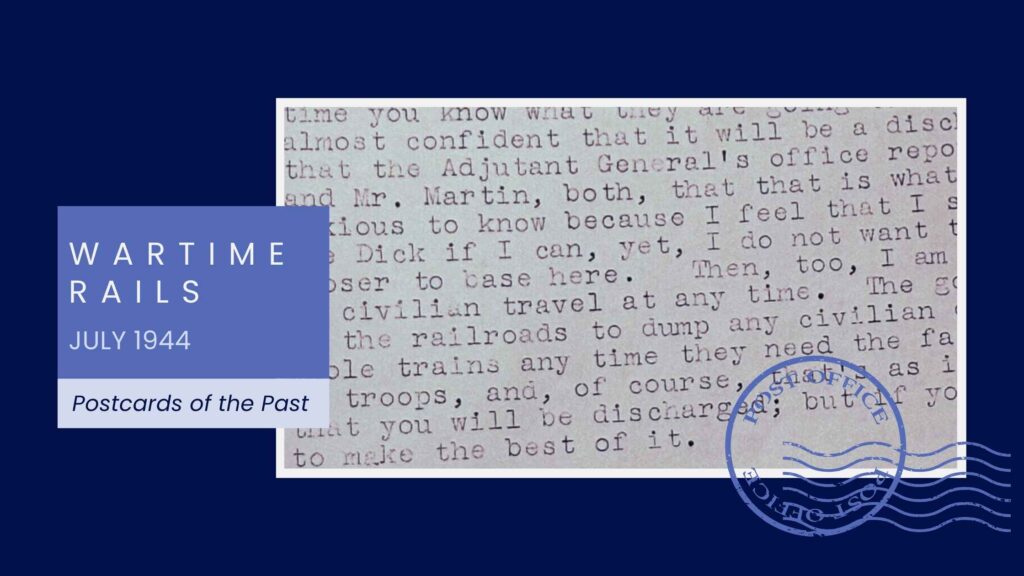
Wartime Rails
On Thursday, July 6, 1944, my grandmother sat at her typewriter once again to write to my father. It seems she wrote every day with letters mixed of small local happenings, the weather and some words of advice for her only son. In this letter her daily life intersects with the larger rhythm of a […]
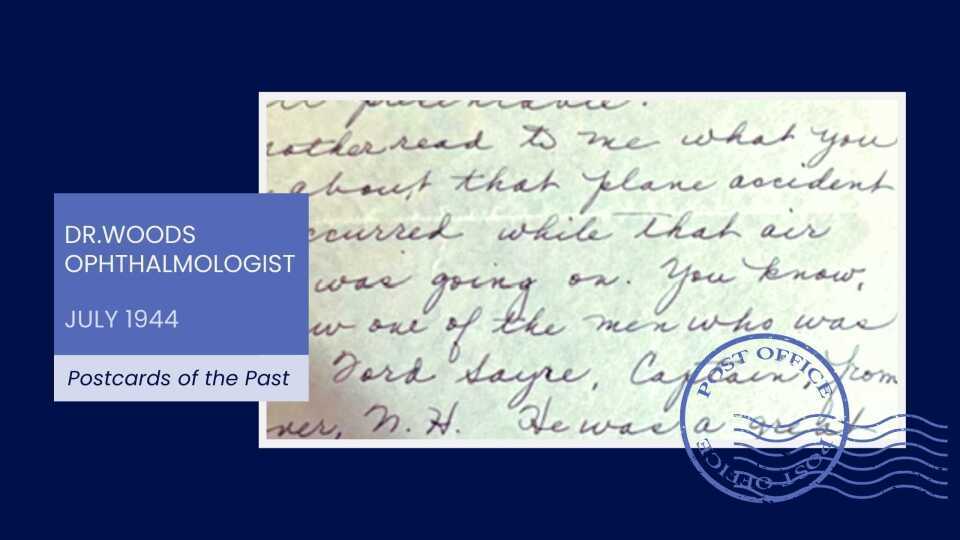
Dr. Woods – Ophthalmologist
“I would like to get you under Dr Woods who, I understand, is the head of the Wilmer Institute” Dr Alan Woods was one of the most respected ophthalmologists of the mid-20th century and a leading figure in American eye medicine. A graduate of Johns Hopkins, Woods trained under the pioneering ophthalmologist William Wilmer and went […]
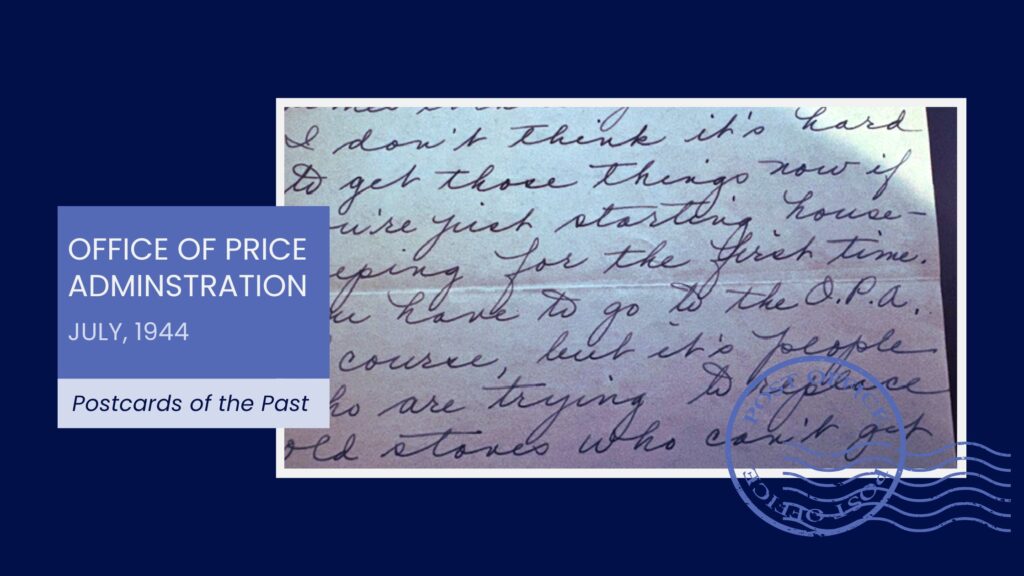
Office of Price Administration
In her July 19, 1944, letter, as my mother was already making plans to begin a life with my father, she turned her attention to the practical details of setting up a household, details shaped by wartime reality. With calm confidence, she wrote: “I don’t think it’s hard to get those things now if you’re […]

