Vietnam Women’s Memorial
Near the Vietnam Veterans Memorial Wall in Washington, D.C., three bronze women care for a wounded serviceman. One supports his body while concentrating on his injuries. Another kneels nearby holding his helmet, while the third stands and looks toward the sky, as though searching for help. Together, their expressions and postures convey the compassion, anxiety, exhaustion, and determination experienced by the women who served during the Vietnam War.
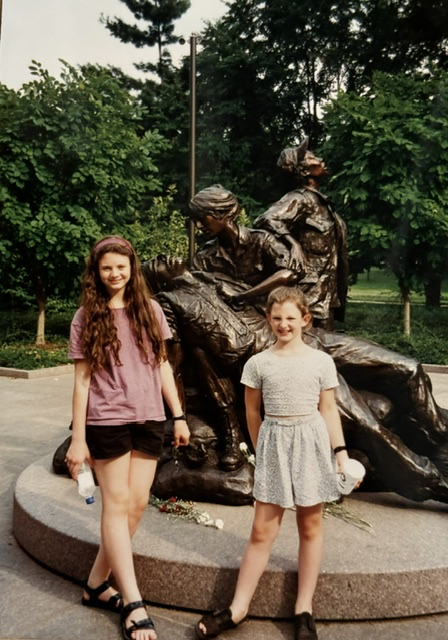
The sculpture is commonly called the Nurses’ Memorial because many of the women sent to Vietnam served in military hospitals as nurses. Its official name, however, is the Vietnam Women’s Memorial. It recognizes all American women who served during the Vietnam era, both in uniform and in civilian support roles. Approximately 265,000 women served throughout the world during this period, with nearly 11,000 serving in Vietnam.
For many years, their contributions received little public recognition. The movement to create the memorial was led by Diane Carlson Evans, a former Army nurse who had served in Vietnam. After attending the 1982 dedication of the Vietnam Veterans Memorial, she became determined that the women who had served should also have a visible place within the nation’s remembrance of the war. Her effort required a decade of organizing, fundraising, public education, and persistence before the memorial could be built.
The sculpture was created by New Mexico artist Glenna Goodacre and dedicated on Veterans Day, November 11, 1993. Rather than portraying military power or victory, Goodacre concentrated on the human experience of service. The women are shown performing the difficult work of preserving life amid suffering and loss. Their care for the wounded soldier also represents the thousands of personal connections formed between nurses and servicemen during the war.
Eight American military women who died while serving in Vietnam are named on the nearby Memorial Wall. The Vietnam Women’s Memorial expands that remembrance to include the many others who returned home carrying experiences that were not always recognized or understood.
Our daughters were young when we brought them to this memorial. Standing beside these figures gave them an opportunity to see that the history of war includes more than battles, generals, and political decisions. It also includes the women who cared for the wounded, comforted the dying, and served their country under extraordinarily difficult conditions.