Trolley Stop on Beacon Street
One of the features that gives Brookline its distinctive character is the Green Line trolley running directly down the center of Beacon Street. Unlike a subway hidden underground, the trolley remains part of the streetscape, with passengers waiting on platforms in the middle of one of the town’s busiest roads.
The trolley and Beacon Street developed together. In the 1880s, Frederick Law Olmsted and his associates redesigned what had been a relatively narrow country road into a broad landscaped boulevard. The plan incorporated streetcar tracks along its center, helping connect the developing neighborhoods of Brookline with Boston. Electric trolley service along Beacon Street began in 1888, making this one of the pioneering electric streetcar routes in the country.
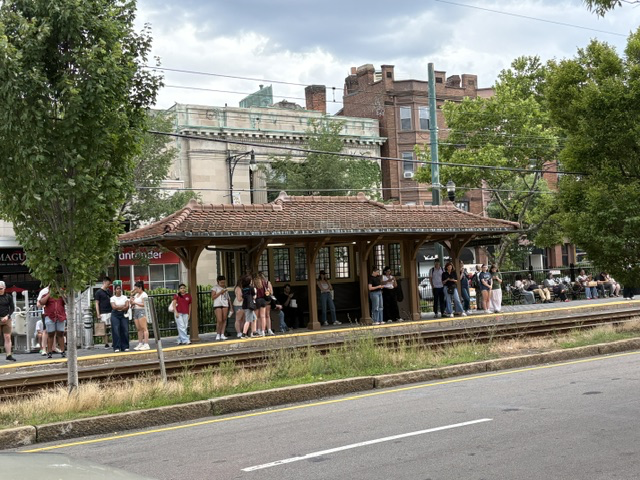
The arrival of convenient transportation had an enormous influence on Brookline’s development. People could live outside the increasingly crowded city while still traveling easily into Boston for work. Houses and apartment buildings appeared along Beacon Street, while commercial centers developed around the trolley stops. Coolidge Corner became one of the most important of these, helping establish Brookline as an early example of the American streetcar suburb.
What I had not realized was that the little tile-roofed shelters at Coolidge Corner are historic landmarks themselves. Built around 1901, these are the original trolley shelters rather than later reproductions. Their open sides, wooden supports, benches, and broad red-tile roofs reflect a time when even small pieces of public transportation infrastructure were designed to complement the character of the surrounding neighborhood. They are believed to be the only surviving original trolley shelters of their kind in the Boston area.
Historic photographs from the early twentieth century show passengers waiting at these same platforms while streetcars traveled along Beacon Street. The shelters were restored around the turn of the twenty-first century, allowing them to continue serving the purpose for which they were built. Today the Green Line’s C Branch still follows Beacon Street through Brookline, connecting the town with Boston just as the earlier streetcars did more than a century ago.
Read More From Nancy
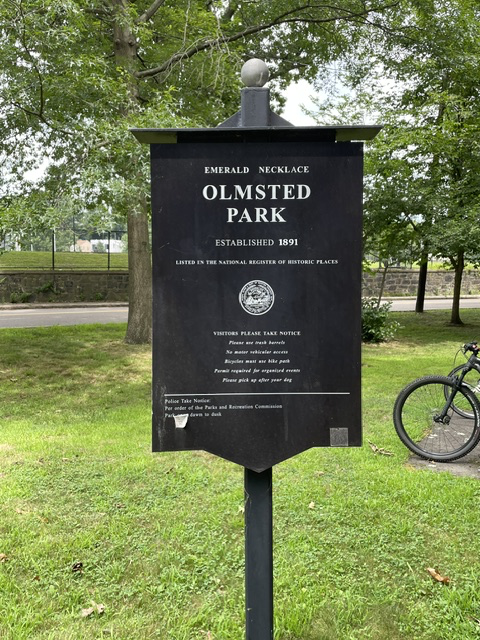
Olmsted Park
Olmsted Park is one of the places that helps tell the story of how Brookline developed differently from the growing city beside it. Although the park crosses the Boston-Brookline boundary, I think of it as particularly connected to Brookline because Frederick Law Olmsted chose Brookline as his home and made the town the center of […]
The Original St Aidan’s Church
I have visited John F. Kennedy’s birthplace several times, so today, I decided to walk through the neighborhood to find St. Aidan’s Church, where he had been baptized. I knew it was only a few blocks away, so I expected it would be easy to find. Instead, I found myself wandering the quiet streets of […]
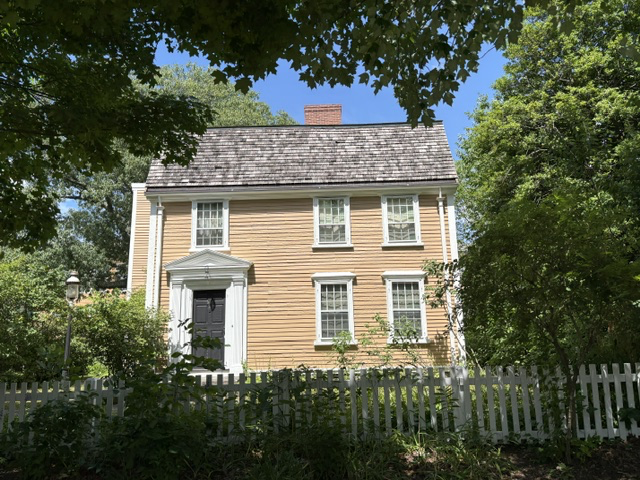
The Edward Devotion House
There are places we deliberately seek out because of their history, and then there are places that have been sitting right in front of us for years before we finally notice them. That was the Edward Devotion House for me. I have visited Brookline countless times. I know this part of Harvard Street well and […]

