Theodore Roosevelt Maltese Cross Cabin
This small log cabin at Theodore Roosevelt National Park was once Theodore Roosevelt’s home in the Dakota Badlands. Long before he became president, Roosevelt came to this part of North Dakota and, for a relatively brief but enormously influential period of his life, became a cattle rancher.
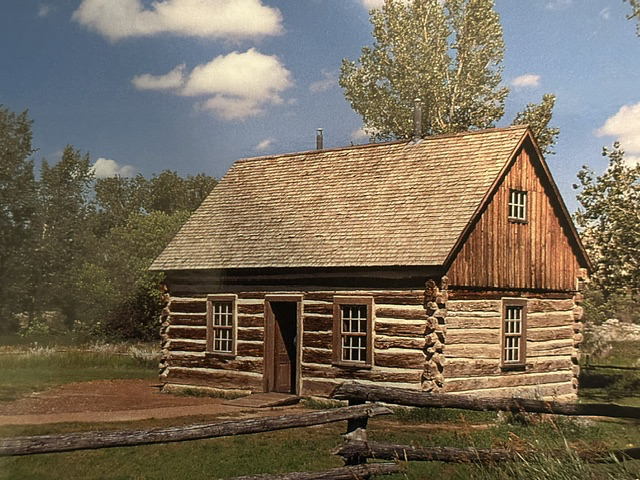
Roosevelt first arrived in the Badlands in September 1883 on a bison-hunting trip. He became so interested in the country that he invested in the Maltese Cross Ranch, about seven miles south of Medora. His ranch managers, Sylvane Ferris and Bill Merrifield, built this cabin for him during the winter of 1883–84.
When Roosevelt returned to North Dakota in June 1884, the cabin became his home. It was more substantial than many frontier cabins, with three rooms, a living room, bedroom, and kitchen, and a wooden floor and shingled roof. Roosevelt brought books and some furnishings with him, creating a place where he could read and write when he wasn’t riding, hunting, or working alongside the ranchers and cowboys of the region.
His return to the Badlands came during one of the most difficult periods of his life. In February 1884, his young wife, Alice, and his mother, Mittie, had died in the same house in New York on the same day. Roosevelt returned to Dakota Territory several months later and threw himself into ranching and the strenuous outdoor life.
The Maltese Cross Cabin was Roosevelt’s principal Dakota home during his first ranching period, particularly in 1884. Later that year, he established the more remote Elkhorn Ranch about 35 miles north of Medora. By the spring of 1885, the Elkhorn cabin had been completed, and that became his primary home when he was in the Badlands.
What makes this cabin especially interesting to me is that it really was Roosevelt’s home. It was not constructed later as a memorial or recreated to represent his life. He slept here, ate here, read and wrote here, and returned here after long days riding through the Badlands. The cabin provides a very personal connection to Roosevelt during the years before he became the national figure we know today.
The original cabin has traveled considerably since Roosevelt lived in it, including being exhibited at the 1904 World’s Fair in St. Louis and the 1905 Lewis and Clark Centennial Exposition in Portland. Eventually it returned to North Dakota, and today it stands at the South Unit visitor center of Theodore Roosevelt National Park.

