The Turtle
One of the greatest gifts Marty and I were able to give our daughters was the opportunity to travel with us and experience history firsthand. Museums, historic homes, national parks, and battlefields became part of our family vacations. Here they stand beside one of America’s most remarkable inventions in Groton, Connecticut.
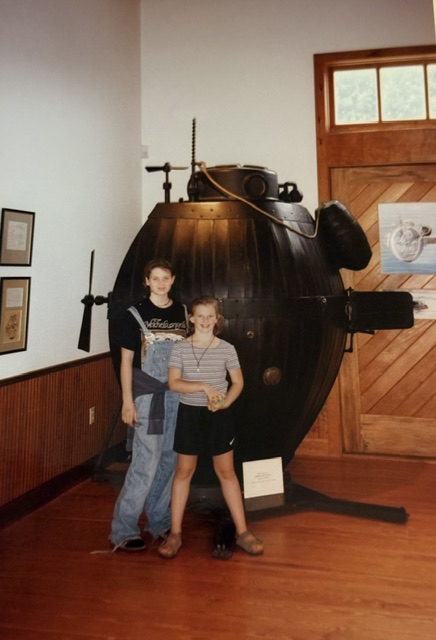
Housed at the Submarine Force Museum, the Turtle is a full-size replica of the first military submarine ever used in combat. Built in 1775 by David Bushnell, a Connecticut native and Yale graduate, this one-man vessel represented an extraordinary leap of imagination during the American Revolution. Long before modern submarines existed, Bushnell envisioned a craft that could travel beneath the surface of the water, approach an enemy ship unseen, and attach an explosive charge to its hull.
The Turtle was powered entirely by one person, who cranked the propellers by hand and operated the ballast system by foot while navigating in complete darkness. In September 1776, Sergeant Ezra Lee piloted the tiny craft beneath the British warship HMS Eagle in New York Harbor. Although he was ultimately unable to attach the explosive device, the mission demonstrated that underwater warfare was possible and marked the beginning of submarine technology.
Standing beside the Turtle, it is difficult to imagine the courage it took to climb inside such a small wooden vessel with only a limited supply of air, knowing there would be little chance of escape if something went wrong. It is one of those inventions that reminds us how innovation often begins with someone willing to imagine what others believe is impossible.
Looking at this photograph today, I remember far more than the submarine itself. I remember watching my daughters explore the museum. Those moments are one of the reasons I have always loved traveling. Every historic site became an opportunity not only to learn about the past but also to share that history with the next generation.
The Turtle never accomplished its original mission, yet its influence reached far beyond the American Revolution. It proved that a single creative idea could change the future of naval warfare. More importantly, it reminds us that history is often shaped not only by great victories but also by the bold imagination of those willing to try something entirely new.