The Stroh Building
Walking through Jim Thorpe, I kept noticing names carved into the façades of buildings. High above the windows of this handsome brick building is one of them: STROH. The name leads back to a family that was part of the commercial and industrial life of old Mauch Chunk during the nineteenth century.
The Stroh family’s connection to the town went back to its early years. Abraham Stroh arrived in Mauch Chunk in 1824 and worked as a millwright for the Lehigh Coal & Navigation Company. He helped complete one of the community’s early mills and later died from injuries sustained while working on a large water wheel. His son William H. Stroh became a prominent local businessman. By the latter part of the nineteenth century, he owned the Mauch Chunk Iron Works, which produced machinery and castings for the mining, railroad and construction industries that surrounded the town.
The family was also involved in retail business. William H. Stroh and his son William Righter Stroh operated W. H. Stroh & Son, selling boots, shoes, leather and related goods. Their business had roots extending back to the 1840s. William Righter Stroh eventually entered politics and was elected to represent Carbon County in the Pennsylvania House of Representatives. He died in Mauch Chunk in 1902 while still in office. Today the building continues to serve the community with shops occupying its street level. But the old family name remains prominently embedded in the architecture.
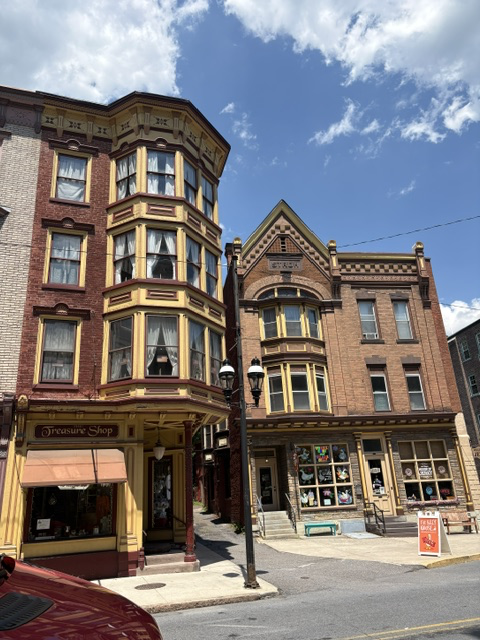
Stepping back from the Stroh Building reveals even more about the character of old Mauch Chunk. Beside it stands another elaborate nineteenth-century building with a tall projecting bay window and decorative cornice. The two buildings are separated by little more than a narrow passageway, with the steep hillside rising behind them.
There was very little level ground on which to build Mauch Chunk. Businesses and homes crowded together along the narrow streets of the valley, and buildings often grew upward rather than outward. Storefronts occupied the street level while the floors above provided additional commercial or residential space. Elaborate bay windows, decorative cornices and names worked into the façades gave these narrow buildings an impressive presence. That was what caught my attention, not only the name STROH, but the streetscape surrounding it.
Throughout Jim Thorpe, the buildings themselves preserve names that once would have been immediately familiar to the people of Mauch Chunk. Looking up and noticing a single word carved into an old façade can open another small window into the families, businesses and industries that created the town. And sometimes stepping back and looking at the buildings together tells an even larger story: how a prosperous nineteenth-century community managed to fit itself into the small amount of space the mountains allowed.
Read More From Nancy
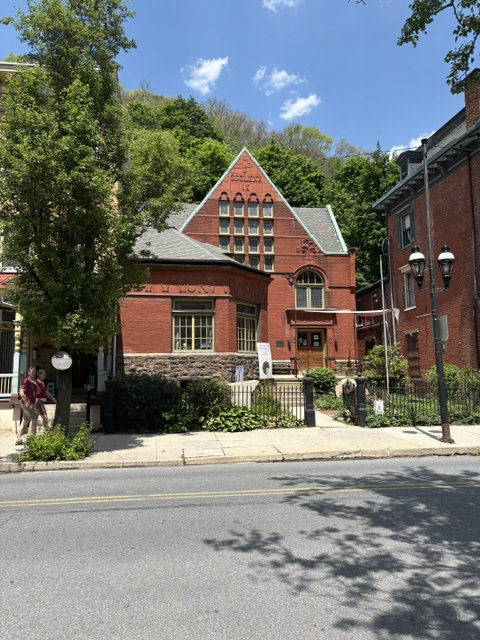
The Dimmick Memorial Library
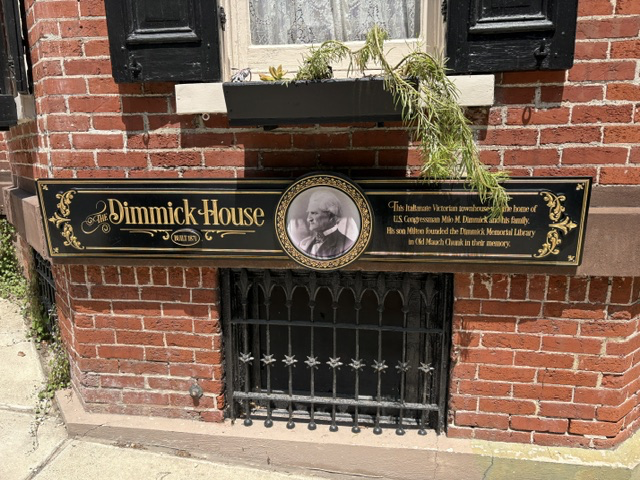
Among the beautiful buildings lining Broadway in Jim Thorpe, the Dimmick Memorial Library immediately stands out. Its red brick, steep gables, large arched windows and decorative terra-cotta details give it a character very different from the houses surrounding it. But after seeing the Dimmick House, the library becomes even more interesting because the two buildings […]
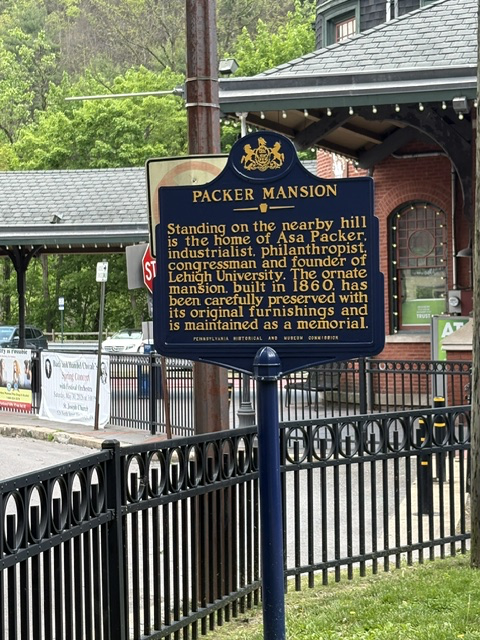
The Asa Packer Mansion
As we explored Jim Thorpe, one name seemed to appear repeatedly: Asa Packer. His story is inseparable from the development of Mauch Chunk, and the mansion overlooking the town provides perhaps the clearest picture of just how successful and influential he became. Packer’s beginnings were far more modest. Born in Connecticut in 1805, he worked […]
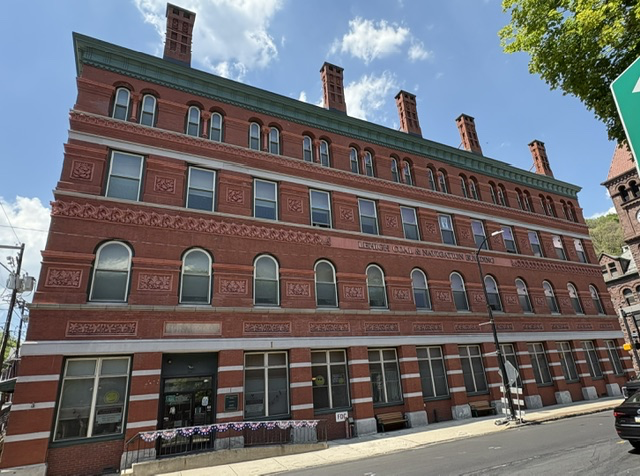
The Lehigh Coal & Navigation Building
Standing prominently near the center of Jim Thorpe is the former headquarters of the Lehigh Coal & Navigation Company. After seeing the enormous piece of anthracite displayed nearby, this building helps complete the story. The coal beneath the mountains created the opportunity, but the Lehigh Coal & Navigation Company developed the transportation system that helped […]

