The Lorraine Motel
While in Memphis, I made a point of driving to the Lorraine Motel. As I pulled up to this site I was struck by how surreal it felt. The exterior of the motel appears almost frozen in time. Looking up at the second-floor balcony, I immediately recognized the scene that has been etched in my memory for decades: the image of Dr. Martin Luther King Jr. standing outside Room 306 shortly before he was assassinated. Seeing that balcony in person, preserved just as it appeared on that fateful day in April 1968, was a powerful experience.
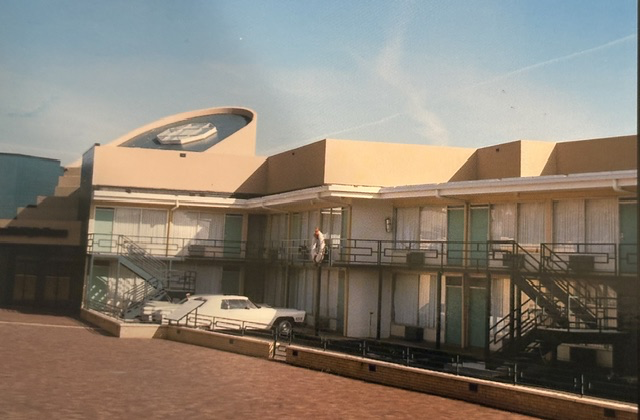
What makes the Lorraine Motel even more significant is that it was much more than simply a place to spend the night. Opened in 1949 by Black entrepreneur Walter Bailey, the motel quickly became one of the South’s premier Black-owned hotels. During the years of segregation, when many hotels refused to accommodate African American guests, the Lorraine welcomed Black families, entertainers, clergy, business leaders, and civil rights activists from across the country. It was known as a place of dignity, hospitality, and excellence at a time when opportunities for Black travelers were often severely limited.
Dr. King was not staying there by chance. The Lorraine had become the preferred hotel for many leaders of the Civil Rights Movement whenever they were in Memphis. In fact, Room 306 was informally known as the “King-Abernathy Suite” because Dr. Martin Luther King Jr. and Rev. Ralph Abernathy stayed there so frequently. Other notable guests over the years included Thurgood Marshall, Jesse Jackson, Aretha Franklin, Nat King Cole, Count Basie, Cab Calloway, Sarah Vaughan, and Lionel Hampton.
Today, the motel has been transformed into the National Civil Rights Museum, one of the finest museums dedicated to the history of the American Civil Rights Movement. Inside, visitors follow the story from the era of segregation through the struggles, sacrifices, and victories that reshaped our nation. Yet one room remains untouched. Dr. King’s room has been preserved as he left it, offering a poignant reminder that history is often changed in an ordinary moment, in an ordinary place.
The museum has also carefully preserved the exterior of the motel. Even the vintage automobiles parked beneath the balcony have been placed to recreate the scene exactly as it appeared on April 4, 1968. Standing in the courtyard, it is easy to understand why so many visitors describe the experience as if time has stopped. The images we have all seen in history books and on television suddenly become real.
Some historic sites impress us with their beauty or their architecture. Others leave a lasting impression because of what happened there. The Lorraine Motel is one of those places. It is a place where the past feels remarkably present, and where every visitor leaves with a deeper appreciation for the ongoing pursuit of justice, equality, and the enduring power of one person’s vision to change the course of history.
.

