The Field Museum
During our family travels, we visited the Field Museum in Chicago. That is our family on the steps in this photograph, entering a place devoted to exploring the natural world and the many ways people have lived within it. Museums offered another dimension to our travels as an opportunity to encounter objects, discoveries, and histories that reached far beyond the city we were visiting.
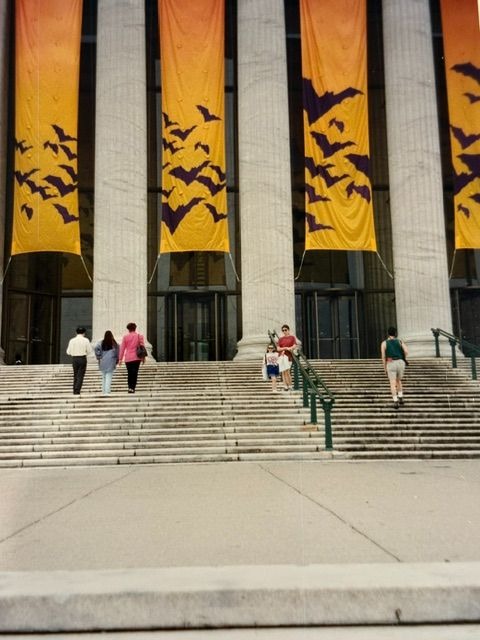
The Field Museum grew out of Chicago’s World’s Columbian Exposition of 1893. When the fair ended, supporters wanted to preserve many of its scientific specimens and cultural collections in a permanent institution. Chicago businessman Marshall Field contributed $1 million toward that effort, and the museum was named in his honor. It opened to the public on June 2, 1894, in the exposition’s former Palace of Fine Arts in Jackson Park.
As the collections expanded and the original building deteriorated, the museum needed a new home. Construction of its present lakefront building began in 1915, and it opened on May 2, 1921. Its monumental entrances, marble exterior, and classical architectural details gave the museum a commanding presence. Inside, the immense Stanley Field Hall created space for exhibits on a scale few buildings could accommodate.
The collections brought together fossils, minerals, plants, animals, and objects documenting human cultures. Some of the museum’s early holdings came directly from the exposition, including the Tiffany & Co. gem display. Others arrived through later expeditions and research. Taxidermist and sculptor Carl Akeley helped transform the presentation of animals through carefully constructed habitat displays. His Four Seasons deer dioramas, completed in 1902, showed animals within settings that helped visitors understand their lives and surroundings.
The public galleries represent only part of the institution’s work. Behind the exhibitions are collections used by researchers to investigate life on Earth, its history, and its diversity. Specimens and objects can be examined again as new questions arise and methods improve. The museum also connects that research to conservation, using knowledge of the past and present to help protect ecosystems.
For our family, this visit was part of the experience of learning as we traveled. A museum gives children and adults something tangible to consider together: the size of an animal, the detail of a mineral, or the ingenuity expressed in an everyday object. Looking back at this photograph, I see a moment from our family’s travels and an opportunity we shared to explore more of the world.

