The Cummings Guest House
Old Orchard Beach was a place people came to enjoy the ocean, the pier, and the music that filled its summer nights. Yet for Black travelers, finding a room in town could be difficult. At 110 Portland Avenue, Rose Cummings opened her family’s home to guests who were often turned away elsewhere. The house offered them a place to stay, eat, and enjoy a vacation by the sea.
Rose and her husband, Charles, bought the former farmhouse in 1917. In 1923, they adapted it into a seasonal guest house. As business grew, additions joined the original house and barn, and the porch extended across the front. Rose kept a register recording her guests’ names, addresses, and visits. Its entries began in 1923 and continued for seventy years. Some families returned summer after summer, and their visits eventually spanned generations.
The Cummings family made those stays possible together. They prepared breakfast and evening meals and packed lunches for days at the beach. After dinner, guests could gather on the porch to talk, play cards, and catch the ocean breeze. Rose’s daughter Ann remembered that her mother wanted to welcome people who might never otherwise have had the chance to vacation in Old Orchard Beach, including domestic workers, chauffeurs, writers, and musicians. When all eleven guest rooms were occupied, Rose and her children made room for themselves on the back porch or in the shed.
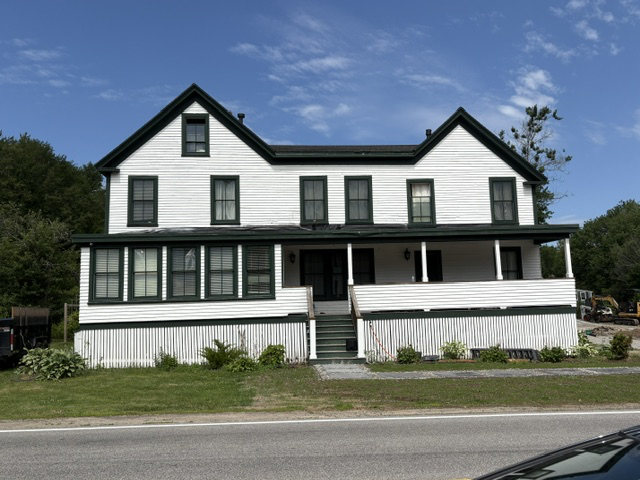
The guest house also became part of the town’s celebrated music history. Black performers appearing at the Pier Casino found their way to the Cummings home. The National Register account names Duke Ellington, Cab Calloway, Count Basie, Lionel Hampton, and Ellington’s saxophonist Harry Carney among its visitors. It distinguishes between musicians who stopped in to rest before a performance and those who stayed overnight. Carney and his family returned to stay year after year, while Ellington and his band used the house’s piano room to practice.
Rose died in 1959, and her children continued welcoming guests. The final entry in the register was made in September 1993. By then, the house had served travelers for seven decades. It was listed on the National Register of Historic Places in 2004 for its place in the history of Black travel and recreation.
it would be easy to pass the house without knowing what happened inside. Its rooms held family vacations and returning friendships, as well as some of the musicians whose performances helped make Old Orchard Beach famous. Rose Cummings made space for all of them in a town where a welcome could not be taken for granted.
Read More From Nancy
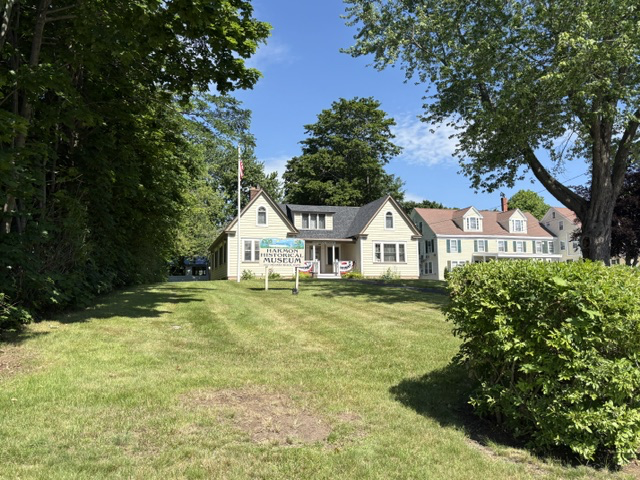
The Harmon Historical Museum
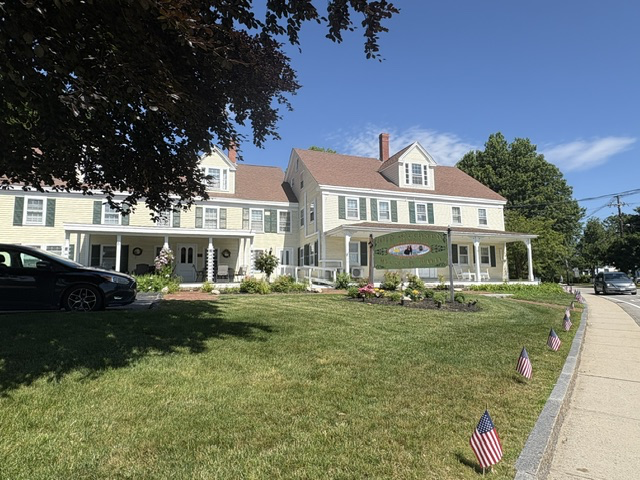
The house on Portland Avenue has a quieter presence than Old Orchard Beach’s busy waterfront. Its porch, lawn, and pitched roof make it easy to imagine as a family home. That is what it was built to be, although the family story behind it reaches back to the beginnings of the town’s summer resort. Josephine […]
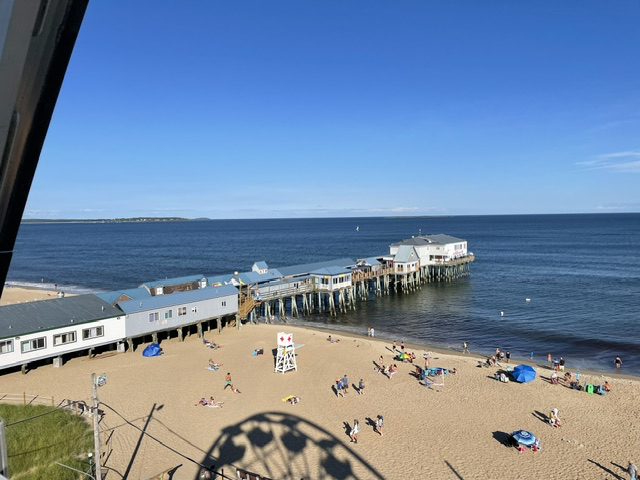
The Old Orchard Beach Pier
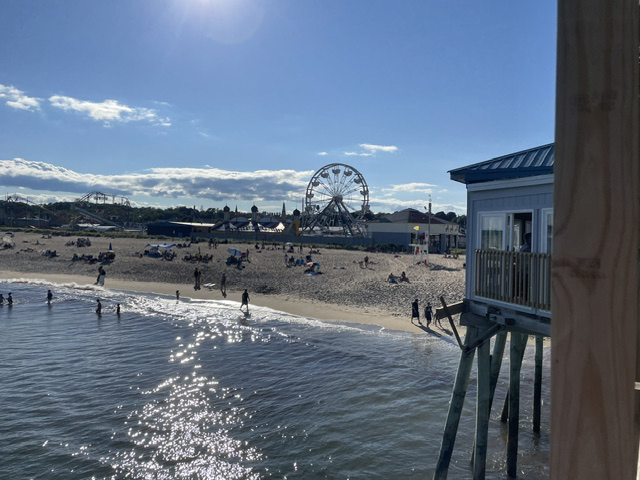
From above the beach, the pier looks like a simple invitation to walk out over Saco Bay. Swimmers and sunbathers spread across the sand below it, while the buildings at its far end seem to float above the water. This stretch of shoreline has drawn generations of visitors, and the pier has given them a […]
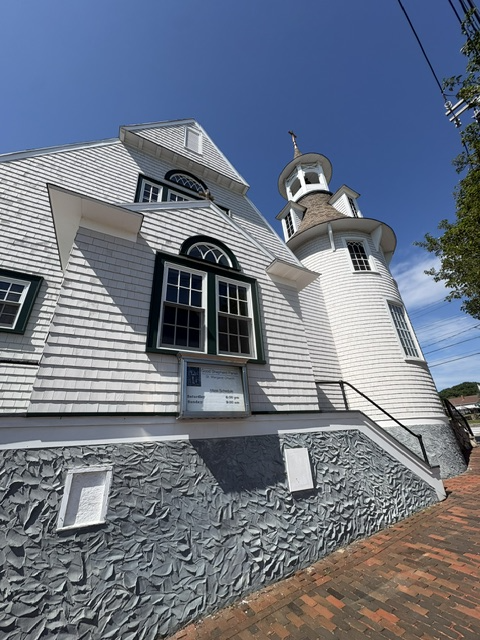
St. Margaret’s Church
The tower of St. Margaret’s Church caught our attention as we walked through Old Orchard Beach. Its rounded shape, shingled walls, and small cupola give the building a character unlike the storefronts around it. The church stands at the corner of Old Orchard Street and Saco Avenue, on a route that has carried generations of […]

