The Alcázar of Segovia
In 2009, we took a driving trip through Spain, giving us the freedom to move beyond the largest cities and explore the history preserved in smaller communities. One of the places we visited was Segovia, an ancient city northwest of Madrid known for its Roman aqueduct, medieval streets, cathedral and remarkable castle. Standing high above the surrounding landscape, the Alcázar of Segovia was one of the most memorable sights from our visit.
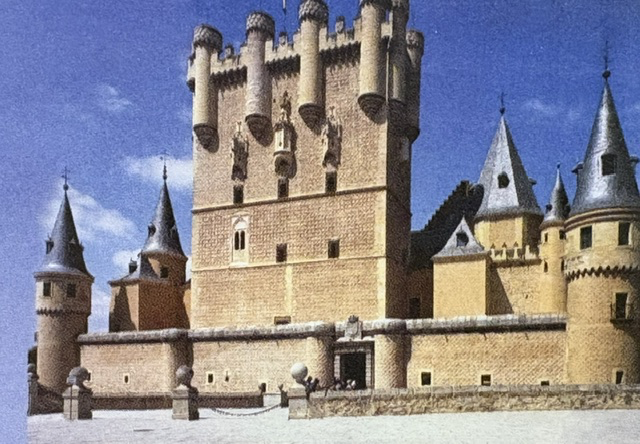
Rising above the valleys of the Eresma and Clamores rivers, the Alcázar is one of Spain’s most recognizable castles. Its towers, fortified walls and steep slate roofs give it the appearance of a storybook palace, but the building has served many practical and important purposes. During its long history, it has been a military fortress, royal residence, treasury, state prison, artillery college, military archive and museum.
The rocky promontory provided a naturally defensive location. Archaeological evidence suggests that the site may have been fortified during the Roman period, but the earliest surviving written reference to the medieval fortress dates from 1125. By the middle of the twelfth century it was being described as an alcázar, a Spanish word derived from the Arabic term for a fortress or palace.
As Segovia grew in political importance, the fortress became one of the principal residences of the monarchs of Castile. Successive rulers enlarged and transformed it, combining the strength of a defensive castle with the ceremonial rooms of a royal palace.
Alcázar was closely associated with Isabella I of Castile. Following the death of her half-brother, Henry IV, Isabella left the palace on December 13, 1474, and traveled to Segovia’s Plaza Mayor, where she was proclaimed Queen of Castile. Her reign with Ferdinand of Aragon helped shape the creation of a unified Spanish monarchy and supported Christopher Columbus’s voyage across the Atlantic in 1492.