The “Abe Lincoln of New Hampshire”
November 1947Dearest Reader,
My mother saved a remarkable number of newspaper clippings following the death of John Gilbert Winant in November 1947. Taken together, they suggest just how deeply his death affected Concord. This clipping from the New York World-Telegram adds something different to the story because of the way it describes the man people believed they had lost.
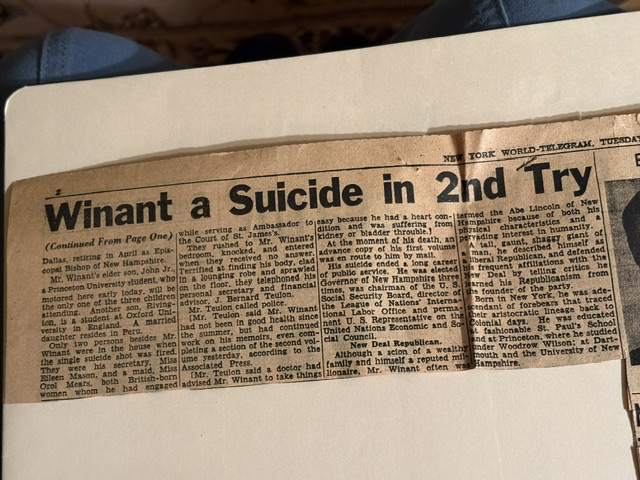
It calls Winant the “Abe Lincoln of New Hampshire.”
The comparison was partly physical. Winant was tall, thin, somewhat awkward and often rumpled. Contemporary accounts describe him as shy and an uncomfortable public speaker. TIME recalled that even his students at St. Paul’s School thought he resembled Lincoln.
Like the popular image of Lincoln, Winant developed a reputation for identifying with ordinary people despite having been born into privilege. During the Depression, as governor of New Hampshire, he expanded relief efforts and helped struggling communities. The Concord Historical Society records stories of Winant personally giving money to unemployed men and even anonymously paying for breakfasts for men jailed for minor offenses such as vagrancy.
He could also place principle ahead of political loyalty. Although a Republican, Winant supported Franklin Roosevelt and the New Deal when he believed those policies were necessary to help people suffering during the Depression. His support for Roosevelt and Social Security damaged his standing within his own party, but he accepted that political cost.
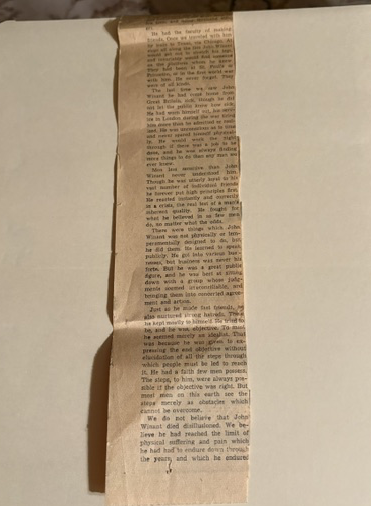
And perhaps this clipping tells me something about my mother as well. She lived in Concord, and Winant was not simply a national figure she read about from a distance. He had taught at St. Paul’s School, served three terms as New Hampshire’s governor and returned to Concord after representing the United States in wartime Britain. He died there on November 3, 1947, at only 58.
The fact that my mother saved so many different accounts of his death makes me think about how large this event must have felt in her community. Each clipping preserved another piece of the story. This one preserved something particularly valuable, not simply what John Winant had accomplished, but how people remembered him at the moment they lost him.
The “Abe Lincoln of New Hampshire” was gone. And my mother thought the words were worth saving.
Dr. Nancy Watson
Washington
Read More From Nancy
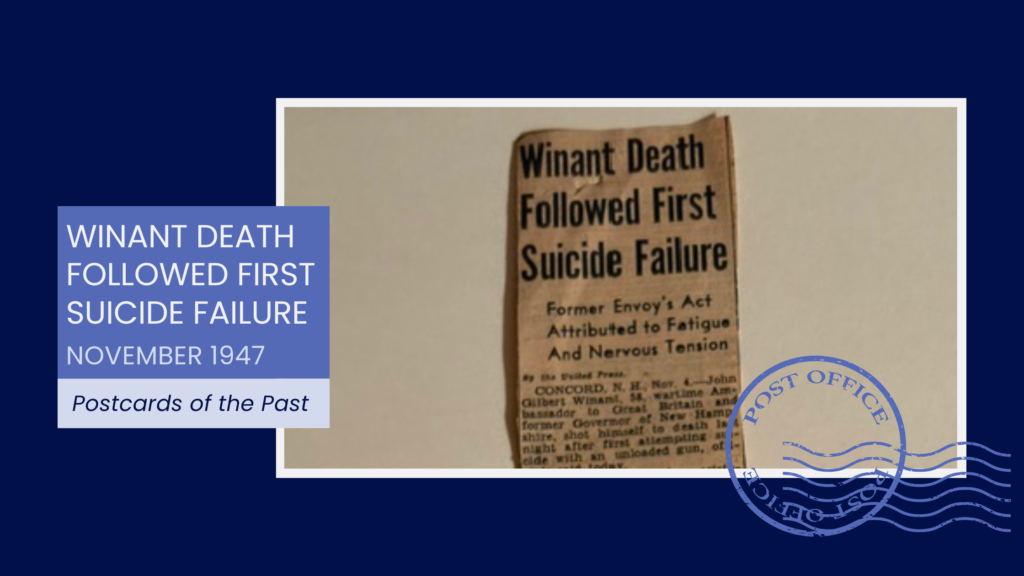
Winant Death Followed First Suicide Failure
Among my mother’s collection of John Gilbert Winant clippings was this newspaper article announcing his death. The headline is stark: “Winant Death Followed First Suicide Failure.” It reports the facts as they were known on November 4, 1947, describing the discovery of Winant at his home in Concord, New Hampshire, and the investigation that followed. Reading the […]
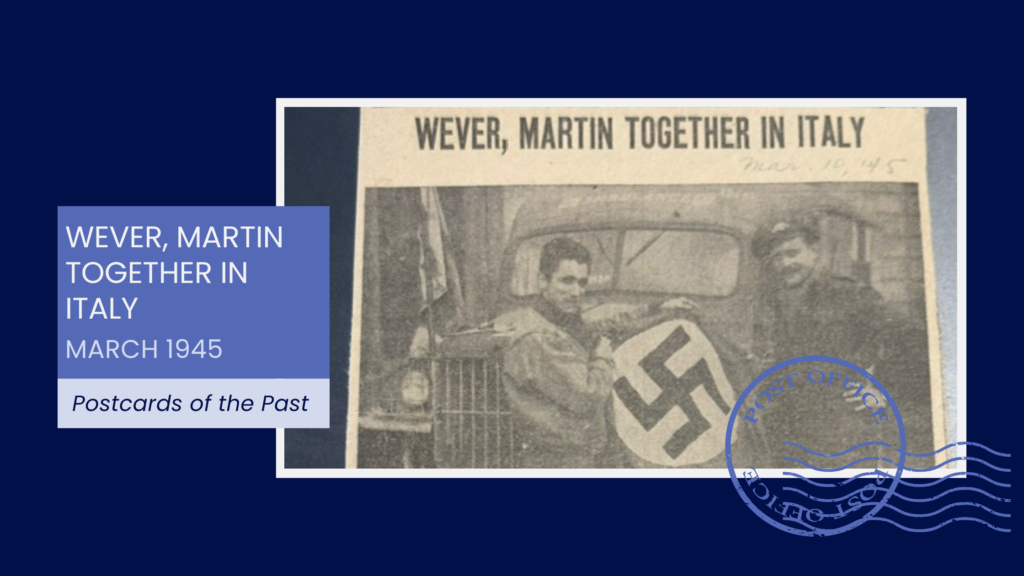
Wever, Martin Together in Italy
Among the newspaper clippings preserved through the years is a remarkable wartime photograph dated March 10, 1945. This hometown news item tells a larger story about World War II, the bonds of community and the unexpected encounters that occurred thousands of miles from home. These two young men are from Martinsburg, West Virginia, standing together in Italy […]

Obtains New Rating Now in Pacific
Among the newspaper clippings saved by my parents is this small wartime article about Navy serviceman Donald R. Edmonds. I have not discovered a connection between the Edmonds and my own, yet for some reason, this clipping was preserved through the years. The article, published during the final months of World War II, reports that Edmonds had […]

