Six Days After Pearl Harbor
December 1941Dearest Reader,
In another passage of her December 13, 1941 letter, my grandmother reveals how personally the attack on Pearl Harbor was being felt, even far from Hawaii. The war was no longer an abstract headline, it had names, faces and families attached to it. She wrote:
“Vincent McDowell was at Schofield Barracks in Honolulu. Mrs McDowell is ill in bed and under Dr Martin care. Sr Ignatia is taking food over to her and trying to keep her courage up. I don’t believe he was killed, because those barracks are quite some distance from Pearl Harbor and Hickman Field where most of the damage was done.”
Her words show both fear and an instinctive effort to reason through it. With information still fragmented and rumors widespread, she turns to geography and logic as a form of reassurance, distinguishing between Schofield Barracks and the primary targets at Pearl Harbor and Hickam Field.
This paragraph captures a powerful truth of those first days after December 7, before official reports, before casually lists, families lived in an emotional in-between. Concern traveled by word of mouth and sustained by small acts of kindnesses
Dr. Nancy Watson
Rambling With Nan
Washington
Read More From Nancy
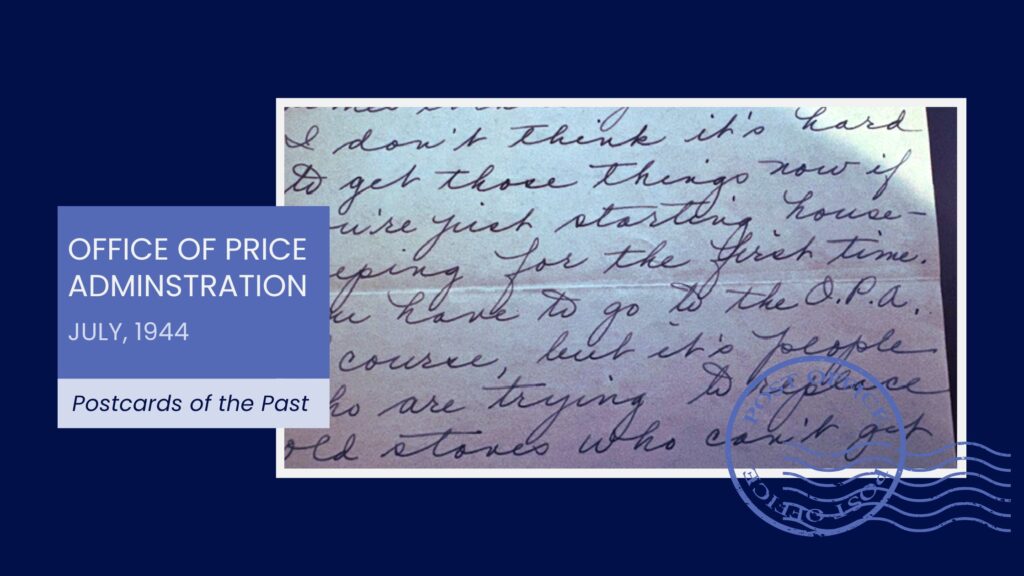
Office of Price Administration
In her July 19, 1944, letter, as my mother was already making plans to begin a life with my father, she turned her attention to the practical details of setting up a household, details shaped by wartime reality. With calm confidence, she wrote: “I don’t think it’s hard to get those things now if you’re […]
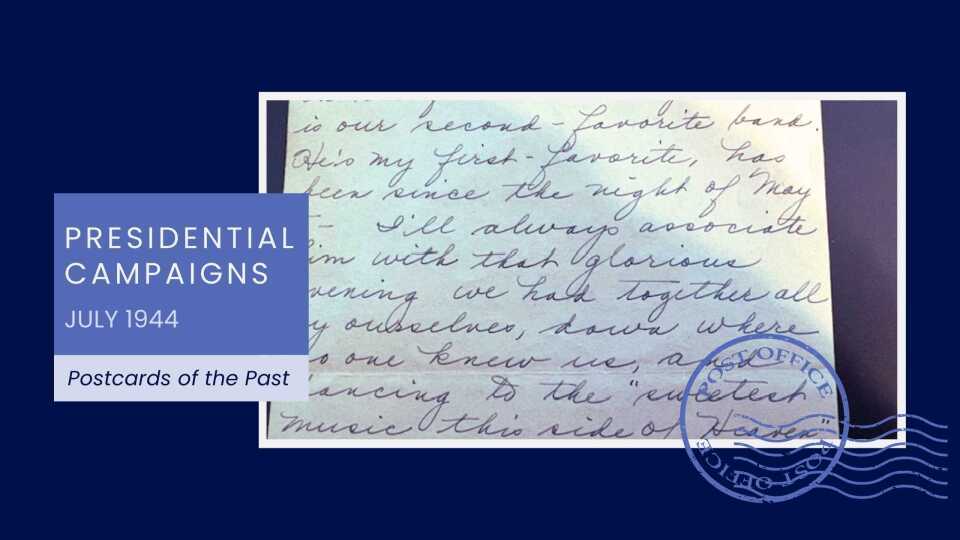
Presidential Campaigns
My mother’s letter of July 11, 1944, contains a single line that instantly reveals just how different presidential campaigns were then compared to today: “I see by tonight’s headlines that Roosevelt says he is going to run for a fourth term very reluctantly. Humph!” There was no televised announcement, no rally, no choreographed campaign rollout. Instead, Americans opened […]
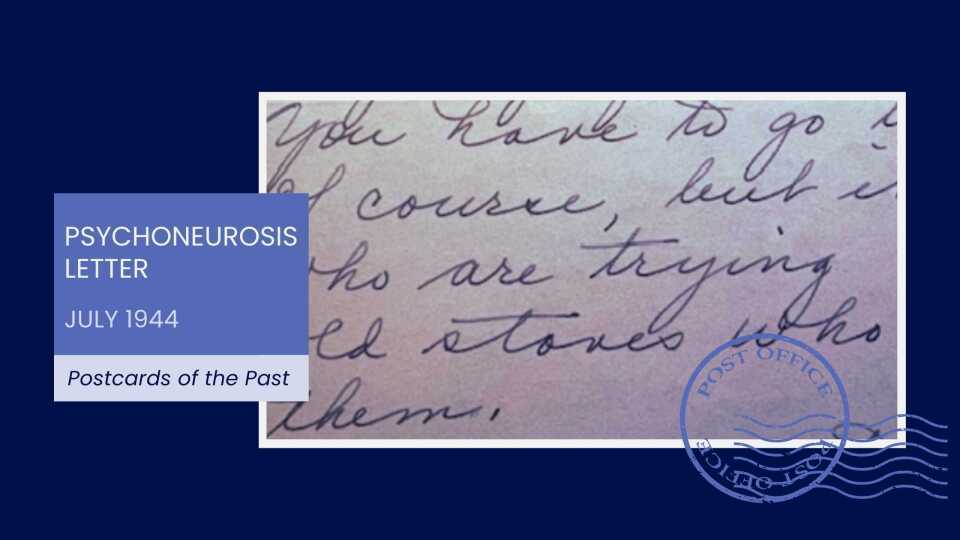
Psychoneurosis Letter
Reading my grandmother’s words, it is clear how complicated and emotionally charged the term psychoneurosis was in 1944, She writes: “You will note that Dr. Link, a noted psychologist, does not believe in the use of that term, that to call a man a ‘psychoneurotic’ is to go a long way towards making him one. […]

