Sacre-Coeur Cathedral
Rising above the rooftops of Paris from the summit of Montmartre, the domes of Sacre-Coeur dominate the skyline. From almost anywhere in the city, the basilica’s white stone catches the light by day and glows softly at night, anchoring the northern horizon.
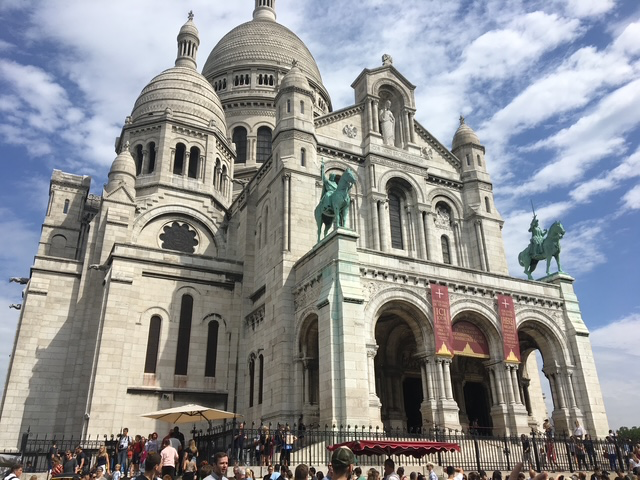
The church was conceived in the emotional aftermath of France’s defeat in the Franco-Prussian War and the turmoil of the Paris Commune. Supporters vowed to build a grand sanctuary dedicated to the Sacred Heart of Jesus as a gesture of repentance and hope for the nation. Parliament approved the project in 1873, and construction began two years later. With political controversy, funding challenges and the disruption of World War I stretched the timeline, and the basilica was not consecrated until 1919, nearly forty years after the first stones were laid.
Its appearance marked a drastic departure from the Gothic cathedrals that defined so much of medieval Paris. Part of the basilica’s magic lies in its color. Built from Chateau-Landon travertine limestone, the stone releases calcite when rain falls, giving the surface a pale and luminous surface. Even after more than a century, the Sacre-Coeur continues to shine.
For some, this monument symbolized a conservative reaction to revolutionary ideals because of its location atop Montmartre. This is a quarter of Paris long associated with radical politics, working-class activism and bohemian artists.
As generations passed, Sacre-Coeur slowly detached from the passions that shaped its birth. Pilgrims came to pray. Tourists climbed the steps for the view. Artists sketched its domes. Today the basilica is inseparable from Paris. It is a working church, a monument to a turbulent chapter of national history and one of the capital’s most cherished vantage points.
Read More From Nancy
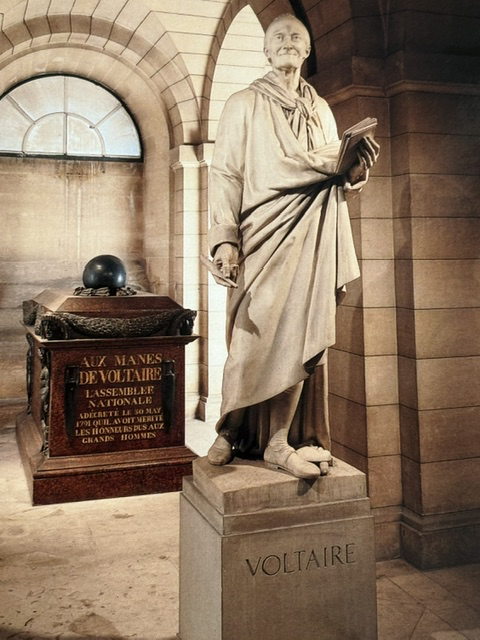
Voltaire in Pantheon
During our visit to the Pantheon in Paris, I took this photo of Voltaire, one of the leading figures of the French Enlightenment. Born in 1694, he was a writer, philosopher and outspoken advocate for freedom of thought and religious tolerance. His ideas challenged the institutions of his day. The statue stands near the entrance to the […]
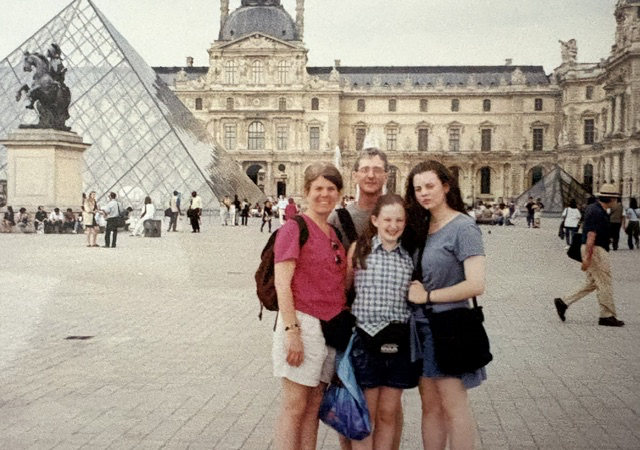
The Louvre Museum
The exterior of the Louvre reveals the long history of a building that was never created according to a single plan. Its courtyards, wings, pavilions and richly ornamented façades developed over centuries as successive rulers altered and expanded the structure to reflect their own needs and ambitions. The story began around 1190, when King Philip […]
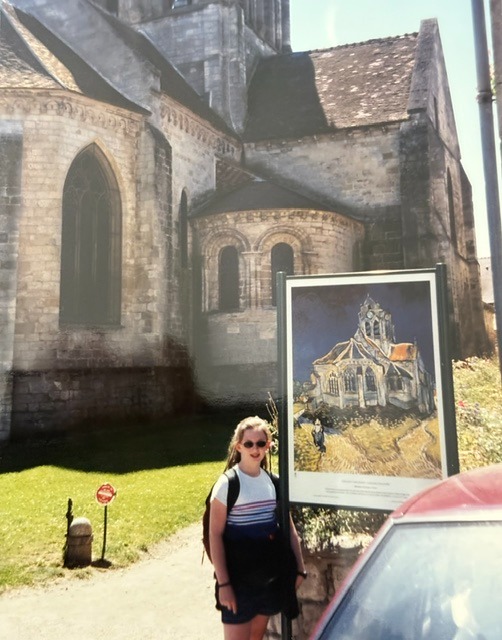
The Church at Auvers-sur-Oise
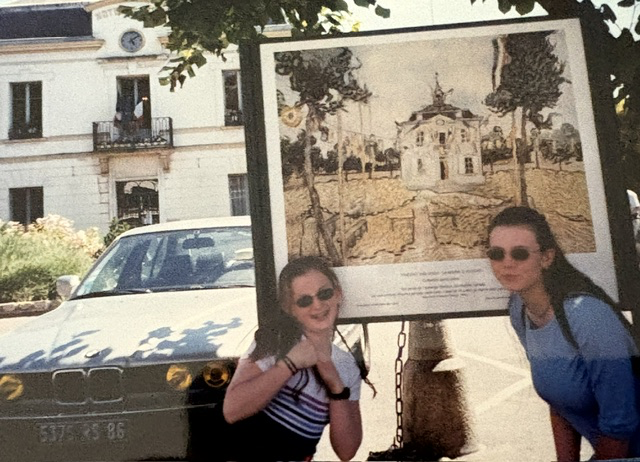
Erin stands outside the church at Auvers-sur-Oise, beside a reproduction of the painting Vincent van Gogh made of it in 1890. The building and its painted interpretation share the same setting, offering an opportunity to compare the place with the artist’s vision. Van Gogh painted the church in June 1890, shortly after settling in the […]

