Recovering and Looking Ahead
Among my father’s papers is this letter from November 2, 1944, written during a transitional period in his life. Only a few months earlier, he had received an honorable discharge from military service. Although my parents had married in May 1944 while he was home on leave, they were temporarily living apart. My mother had returned to New Hampshire, while my father went back to Martinsburg, West Virginia, where his mother lived and where he could receive medical care for his eyes from doctors who were already familiar with his condition.
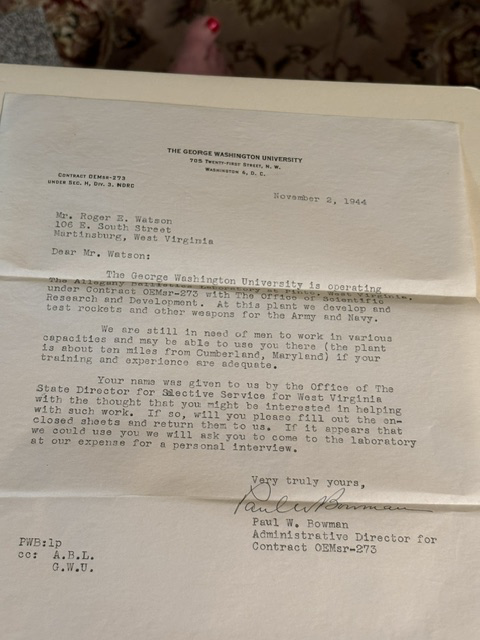
While recovering, this letter came from The George Washington University, which was conducting research for the U.S. Office of Scientific Research and Development. During World War II, universities across the country played an important role in military research, and the laboratory in nearby Cumberland, Maryland, was developing and testing secret rockets and other weapons for the Army and Navy. Rather than responding to an application from my father, the university explains that his name had been provided by the West Virginia Selective Service office because of his military experience. If his background met their needs, they would invite him to Cumberland for an interview at the government’s expense.
It is a reminder of how quickly many veterans were encouraged to transition from military service into civilian work that continued to support the war effort. Men with technical training and military experience were in demand, and government agencies actively recruited them for research, manufacturing, and engineering positions.
I do not know whether my father ever pursued this opportunity. There is no reply among his papers, nor any indication that he traveled to Cumberland for an interview. What the letter does preserve is a moment in time. He had completed his military service, was recovering from the injuries and health concerns that brought him back to West Virginia and was preparing to begin married life with my mother. The future was still taking shape.
As I sort through these family papers, I have come to appreciate documents like this for what they reveal. They remind me that history is not made only through dramatic events but also through the ordinary decisions that shape a life. This single letter captures one of those moments of a young veteran, recently married, recovering at home, and being presented with yet another possible direction for his future.
Looking back today, I know the path he ultimately chose. He and my mother built their life together, raised a family, and created the home in which I grew up. This letter offers a brief glimpse into the months just before that chapter truly began, when several roads still lay open before him.
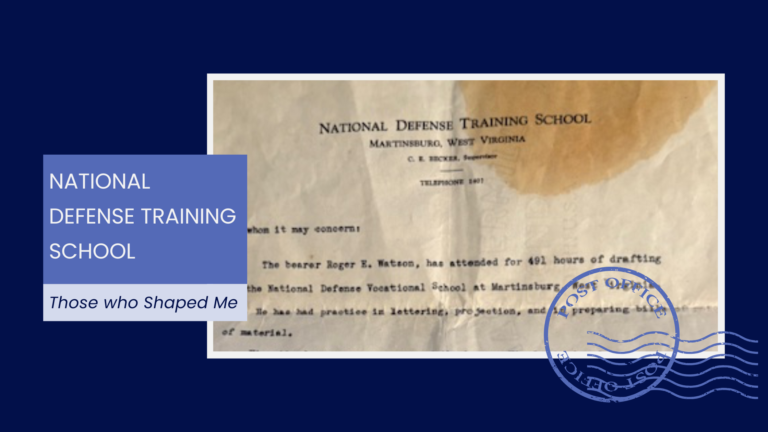
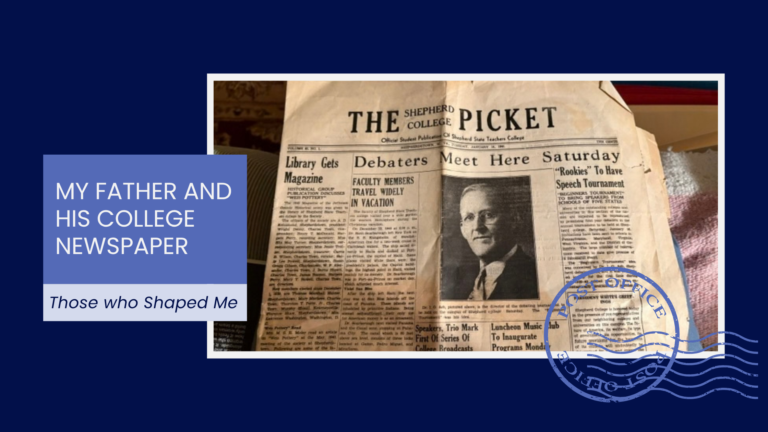
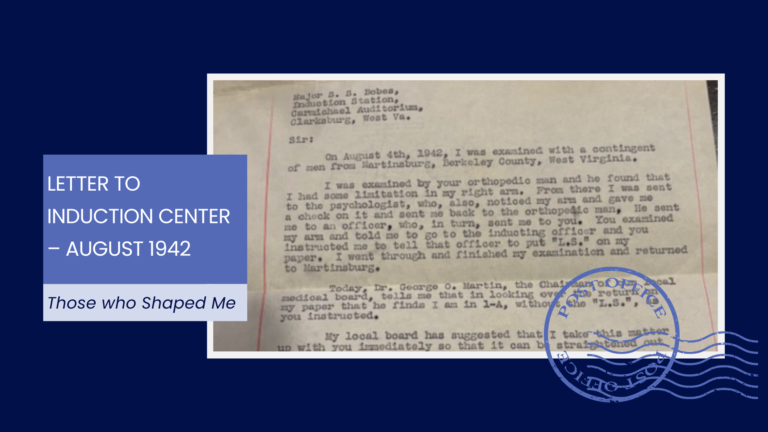
Read More From Nancy
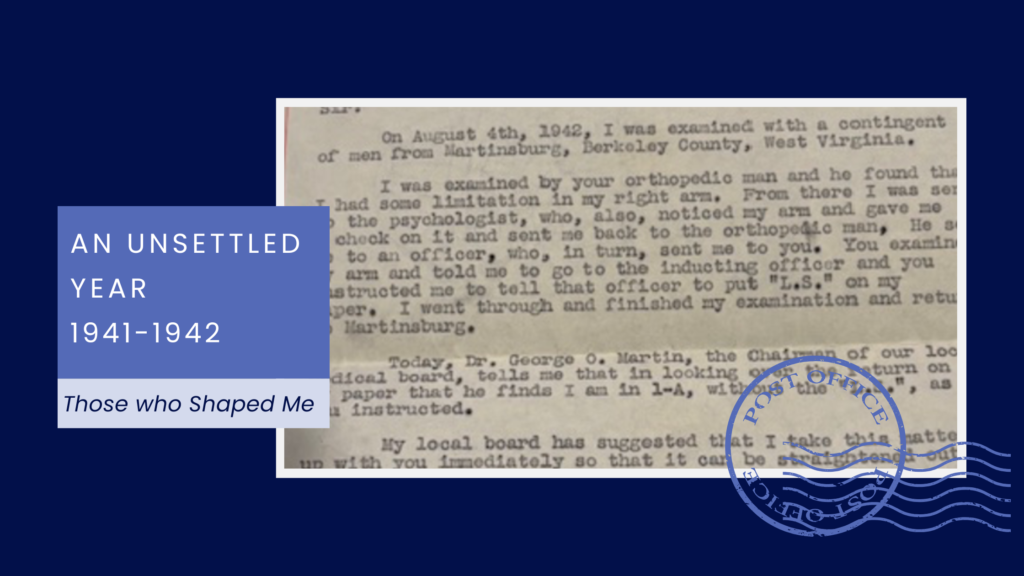
An Unsettled Year – 1941-1942
There is a year of my father’s life that I am slowly piecing together: 1941. He is twenty years old, and his life looks unsettled and scattered across a map. Through my grandmother’s letters, I can trace him from Concord, NH in December of 1940, to Martinsburg, WV in the summer of 1941 and then to […]
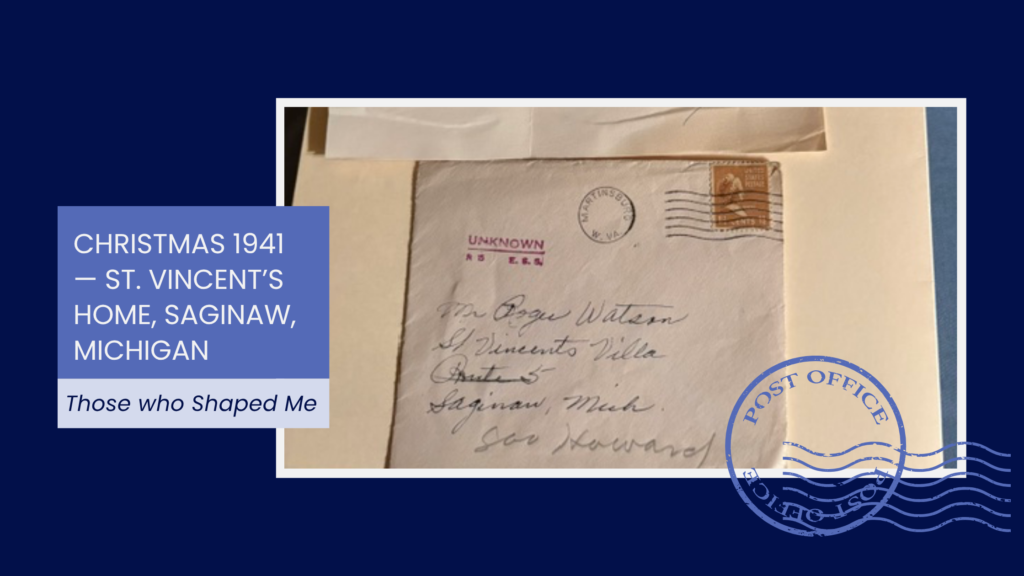
Christmas 1941 — St. Vincent’s Home, Saginaw, Michigan
Among my father’s papers are several Christmas cards that help document a period of his life that I know only in pieces. In the weeks before Christmas 1941, he was living at St. Vincent’s Home at 800 Howard Street in Saginaw, Michigan. The envelopes themselves establish this address, while the postmarks and Christmas greetings place […]
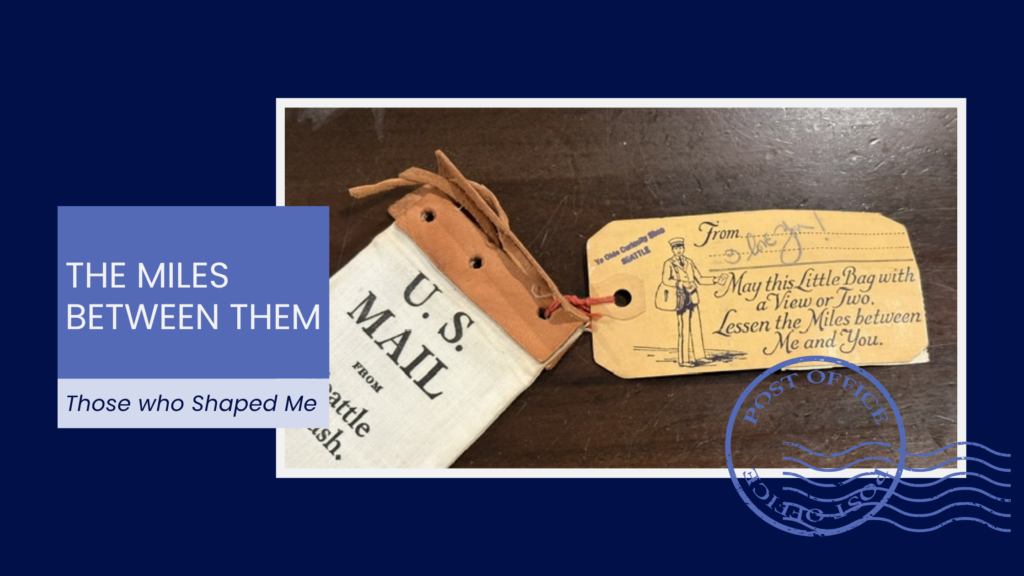
The Miles Between Them
Among the papers my mother saved is a small cloth pouch that, at first glance, might be easy to overlook. Printed across it are the words “U.S. Mail from Seattle, Wash.” A leather strip closes the bottom, and still attached to it is the original mailing tag. The tag is addressed to Miss Mary Hannigan, […]

