Prisoners of War in Vietnam
The American Heritage Museum in Hudson contains an extensive collection of military vehicles and artifacts, but one of its most affecting displays focuses on American prisoners of war held in North Vietnam. The thoughtfully constructed exhibition moves beyond weapons and military strategy to examine the individual experience of captivity.
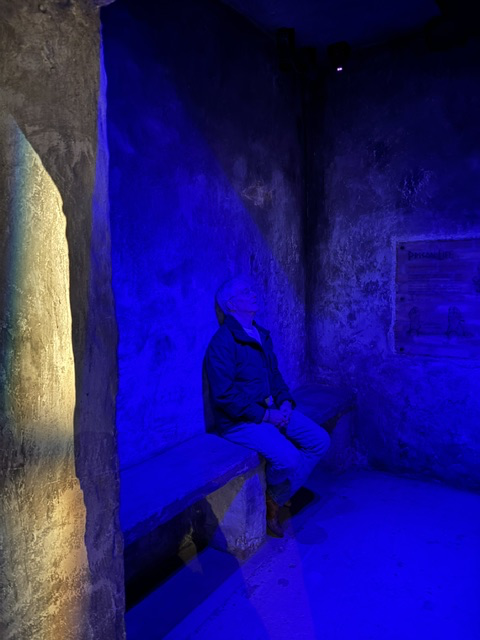
At its center is a reconstruction of part of Hỏa Lò Prison in Hanoi, which American prisoners sarcastically called the “Hanoi Hilton.” Originally constructed by the French colonial government, the prison was later used by North Vietnam to hold captured American servicemen, particularly pilots shot down during bombing missions.
The museum’s exhibition incorporates original bricks, doors, beds, and other materials preserved when portions of Hỏa Lò Prison were demolished. Walking through the confined spaces provides a physical sense of the isolation and uncertainty experienced by the men imprisoned there.
One section recreates the “Knobby Room,” an interrogation chamber named by the prisoners for the rough lumps of plaster covering its walls. The display explains the torture used to force prisoners to provide military information or make propaganda statements. The darkened room and solitary figure present this history powerfully without turning suffering into spectacle.
Despite separation, punishment, and close surveillance, prisoners developed ways to communicate with one another. They used coded taps, coughs, gestures, and other signals to share information and offer encouragement. This communication helped maintain a sense of order and connection among men whom their captors were attempting to isolate.
Many of the prisoners remained in captivity for years before returning home in 1973. Their experiences did not end with their release; physical injuries, emotional trauma, and the difficulties of returning to ordinary life continued long afterward.
Although much of the American Heritage Museum examines warfare through machines and technology, this exhibition places human endurance at the center of the story. It was a difficult section to experience, but its restraint and attention to the prisoners’ own accounts made it one of the most thoughtful and memorable parts of our visit.
Read More From Nancy
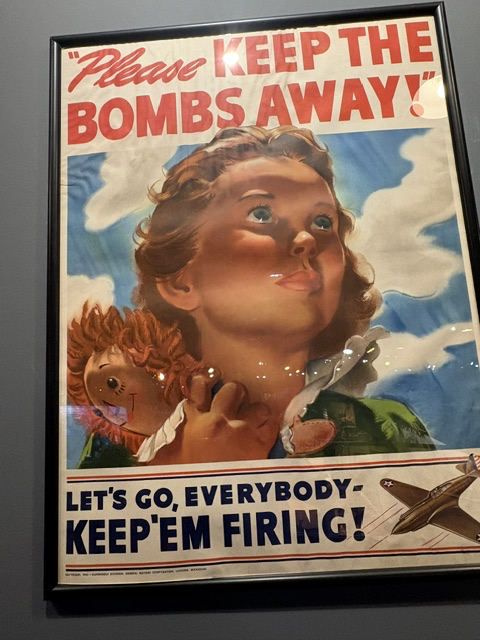
“Please Keep the Bombs Away” Poster
One of the exhibits at the Heritage Museum in Hudson is this colorful World War II propaganda poster. A young girl clutches her doll while looking anxiously toward the sky as military aircraft fly overhead. Beside her are the words, “Please Keep the Bombs Away! Let’s Go, Everybody—Keep ‘Em Firing!” It is a powerful reminder […]
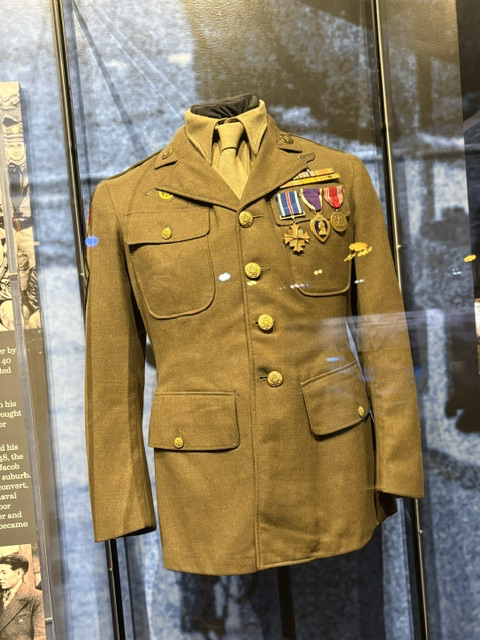
Sargeant Jacob DeShazer’s Uniform
All the exhibits at the Heritage Museum are thoughtful and well-planned. One of the exhibits that caught my attention was the uniform of Staff Sergeant Jacob DeShazer, displayed with the medals he earned during World War II. The story connected to this is one of courage, suffering, survival and ultimately forgiveness. DeShazar volunteered for one of the most daring missions […]
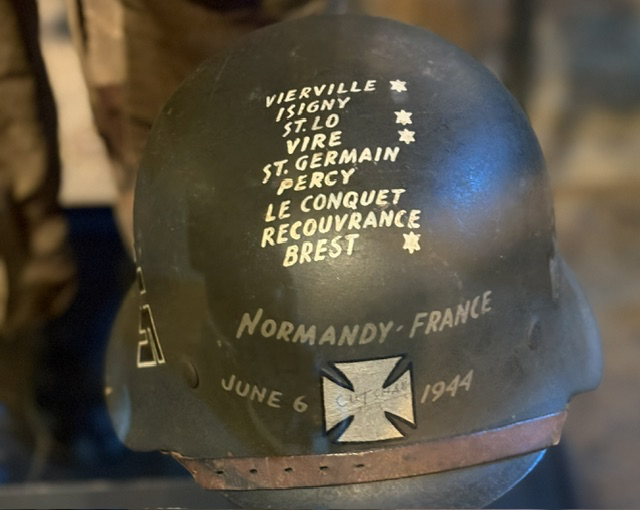
The Journey Written on a Helmet
This German M-42 combat helmet, displayed at the American Heritage Museum, tells a story that extends beyond the battlefield. Sometime after its capture, the helmet was carefully personalized, likely by an American serviceman or possibly a German prisoner of war Painted on its surface are the names of towns and cities associated with the Allied […]

