Mary Baker Eddy’s Home
I have written about Mary Baker Eddy and her life in the Concord, New Hampshire posts, where the founder of Christian Science built the church headquarters that would become the center of a worldwide movement. But this house in Newton tells the final chapter of her story. Located at 400 Beacon Street in Chestnut Hill, the Mary Baker Eddy Historic House was her last residence and the place where she spent the final years of her life before her death in 1910.

Set on a hill overlooking the Boston area, the large stone home reflects both the success and controversy that surrounded Eddy during her later years. By the time she moved here in 1908, she was already an internationally known religious leader, author, and founder of the First Church of Christ, Scientist. Her book Science and Health with Key to the Scriptures had spread far beyond New England, and the movement she created had established churches throughout the United States and abroad.
The house itself is substantial and protected with its heavy stone exterior and commanding position above the street. It also reflects the privacy Eddy increasingly sought during the final years of her life. Much of her work continued from within these walls through correspondence, church leadership and oversight of the movement she founded. Even while largely secluded, she remained deeply involved in directing Christian Science and protecting the future of the church.
The property is historically significant not only because Eddy lived here, but because important events in the development of Christian Science occurred during her residence. From this house, she continued publishing writings, meeting with trusted associates and shaping the direction of the faith she had established decades earlier after her own experiences with illness and healing.
Newton’s home is the closing chapter of a remarkable and unconventional life. Mary Baker Eddy became one of the most influential religious figures in American history and this house stands as the place where that long journey came to an end.


Read More From Nancy

Echo Bridge Reflection Plaza
Along the banks of the Charles River in Newton is a quiet place known as Echo Bridge Reflection Plaza, a small overlook designed to encourage visitors to pause and appreciate the engineering history of the area. The plaza faces the calm waters near Hemlock Gorge Reservation, where the Charles River narrows before passing beneath the famous […]

War Memorial
The War Memorial in Newton stands with classical symmetry and a sense of permanence. Built in 1931 in the Colonial Revival style, the building was built to serve two purposes: a new city hall and as a memorial to the men who served in the First World War. The building is monumental in scale, with striking […]
In Memory of Our Departed Comrades
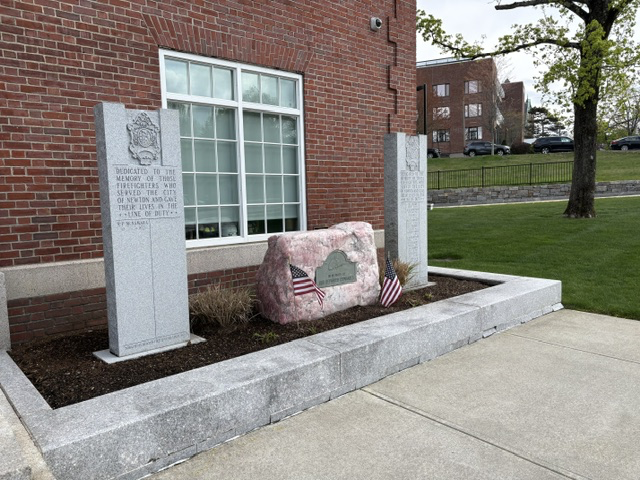
Outside Newton Fire Department Headquarters stands a memorial that is easy to overlook but difficult to forget. Unlike many public monuments that commemorate a single event or a particular war, this memorial honors the firefighters of Newton who made the ultimate sacrifice in the line of duty. Its inscription reads simply: “Dedicated to the memory […]

